
ESP32-S3-Nano Microcontroller
5.0Editor score
Cost-effective development board
8MB PSRAM and 16MB Flash
Arduino and MicroPython compatible
This guide compares the top Arduino Nano ESP32 boards and compatible ESP32 options for IoT, wireless projects, and embedded development in October 2026.
The Arduino Nano ESP32 represents a significant leap in embedded development, combining powerful wireless capabilities with a compact form factor ideal for modern IoT projects.
We evaluated ten top-rated development boards based on processing power, connectivity options, ease of use, and community support to help you find the perfect match.
Each pick highlights unique strengths for specific applications, and while we list current availability, please verify pricing and stock before making your final purchasing decision today.
5.0Editor score

4.6Editor score

4.7Editor score
This table provides a side-by-side overview of the leading development boards, highlighting key specifications to help you quickly identify the best fit for your project needs.


The Arduino Nano ESP32 stands out as the premier choice for developers seeking a balance of performance and ease of use in 2026.
We may earn a commission when you buy through this link, at no additional cost to you.
Its dual-core ESP32-S3 processor running at 240 MHz provides exceptional speed for complex IoT tasks like real-time data processing and voice recognition.
While the board offers extensive features like HID support and MicroPython compatibility, users may need to invest time in learning specific libraries for full utilization.
We recommend this board for professional projects and advanced hobbyists who need reliable Wi-Fi and Bluetooth connectivity without sacrificing processing power.
The integrated Wi-Fi and Bluetooth 5.0 enable robust communication with cloud platforms and other devices effortlessly.
Modern USB-C port ensures faster programming and stable power delivery compared to older micro-USB standards.
We may earn a commission when you buy through this link, at no additional cost to you.
This development board offers an exceptional value proposition for those entering the world of ESP32 microcontrollers without breaking the bank.
We may earn a commission when you buy through this link, at no additional cost to you.
Equipped with 8MB PSRAM and 16MB Flash, it handles data-heavy applications smoothly while supporting both Arduino and MicroPython environments.
While it lacks some of the polished features of branded boards, its raw performance and connectivity make it ideal for prototyping and learning.
Choose this board if you want a powerful, cost-effective tool for building smart home systems or custom input devices today.
Get enterprise-grade processing power at a fraction of the cost, perfect for scaling multiple sensor nodes.
Switch between Arduino C++ and MicroPython effortlessly to suit your project requirements and coding preferences.
We may earn a commission when you buy through this link, at no additional cost to you.
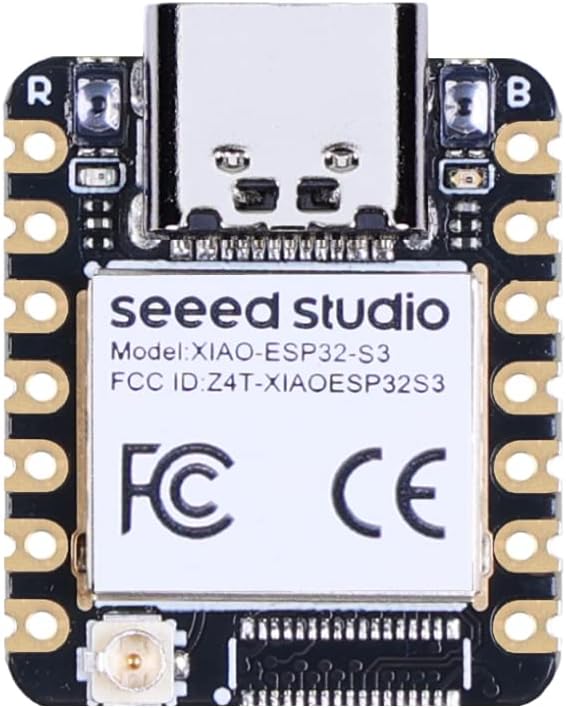
The XIAO ESP32S3 is designed for space-constrained projects, offering a thumb-sized footprint without compromising on essential wireless features.
We may earn a commission when you buy through this link, at no additional cost to you.
Its power efficiency allows for deep sleep modes consuming as little as 14μA, making it perfect for battery-operated wearable devices.
While the small form factor limits the number of accessible GPIO pins, it remains powerful enough for most lightweight sensor and control tasks.
Ideal for makers building wearable tech or compact IoT nodes where size and battery life are primary concerns for success.
The compact design fits easily into wristbands or small enclosures for personal health monitoring devices.
Four distinct power consumption models ensure your project runs longer on a single charge or battery.
We may earn a commission when you buy through this link, at no additional cost to you.
This board pushes the boundaries of what ESP32 technology can achieve, introducing RISC-V architecture and advanced image processing capabilities.
We may earn a commission when you buy through this link, at no additional cost to you.
With onboard MIPI-CSI and DSI interfaces, it supports high-resolution displays and camera modules for visual recognition projects.
While the feature set is robust, it requires a deeper understanding of embedded systems to utilize all the available hardware interfaces effectively.
Select this option for industrial applications, robotics, or any project requiring heavy computation and visual data handling power.
Built-in JPEG codecs and image signal processors enable real-time video analysis on the edge device.
Hardware access protection and cryptographic accelerators ensure your device security meets modern standards.
We may earn a commission when you buy through this link, at no additional cost to you.
The Waveshare mini board offers flexibility with its castellated module design, allowing for direct soldering onto custom carrier boards.
We may earn a commission when you buy through this link, at no additional cost to you.
Its independent power supply settings enable optimized energy consumption for various scenarios, making it suitable for portable devices.
Although the design is straightforward and lacks some conveniences like onboard USB-C, it provides reliable Wi-Fi and Bluetooth performance.
This board is an excellent choice for production prototypes or custom PCB designs where space and connectivity customization are paramount.
The module design simplifies mass production by reducing the need for complex assembly processes on custom boards.
Adjustable clock frequencies allow you to balance performance and battery life dynamically during operation.
We may earn a commission when you buy through this link, at no additional cost to you.
This super starter kit is a comprehensive solution for beginners, providing everything needed to explore electronics and IoT in one box.
We may earn a commission when you buy through this link, at no additional cost to you.
It includes over 35 modules and components, supported by online tutorials that guide you through 30+ projects step by step.
While it uses the standard ESP32, the focus is on broad educational value rather than specific advanced board features or optimizations.
If you are new to electronics or want to teach others, this kit offers the best structured learning path available on the market.
Complete code and clear circuit diagrams accelerate the learning process for students and hobbyists alike.
Build real-world projects like weather stations to apply theoretical knowledge effectively and gain confidence.
We may earn a commission when you buy through this link, at no additional cost to you.
While not strictly an ESP32, this board is often grouped with modern IoT options due to its robust wireless features and Arduino ecosystem support.
We may earn a commission when you buy through this link, at no additional cost to you.
It features a secure element that ensures hardware-level encryption, making it ideal for projects where data privacy is a critical requirement.
Compared to newer ESP32 boards, it may lack raw processing power, but its stability and pre-soldered headers make it very user-friendly.
Choose this if you prioritize security features and official Arduino IDE compatibility over the latest wireless bandwidth specifications.
The ATECC608A Secure Element protects your cloud communication from unauthorized access or data interception.
Built-in inertial measurement units allow for motion detection without adding external components to your circuit.
We may earn a commission when you buy through this link, at no additional cost to you.
This is the classic development board that established the ESP32 reputation for performance and connectivity in embedded systems.
We may earn a commission when you buy through this link, at no additional cost to you.
It offers dual-mode Wi-Fi and Bluetooth with ultra-low power consumption options for efficient IoT applications and sensor networks.
While newer boards offer faster Bluetooth and USB-C, this model remains a standard for reliability and widespread documentation online.
It is a solid choice for projects where proven stability and a massive library of existing code are more important than speed.
Supports AP, STA, and AP+STA modes for flexible network configurations in various IoT scenarios.
Optimized power usage allows for long-term deployment without frequent battery changes or recharges.
We may earn a commission when you buy through this link, at no additional cost to you.
Offering three boards in a single package, this kit provides exceptional value for teams or multiple project prototypes requiring similar hardware.
We may earn a commission when you buy through this link, at no additional cost to you.
It includes USB-C for convenient programming and supports over-the-air updates, reducing the need for physical connections after deployment.
While Bluetooth 4.2 is older compared to 5.0 options, the boards handle standard connectivity tasks reliably and efficiently for most users.
Select this option if you need multiple units for testing, classroom use, or distributed projects where cost efficiency is key.
OTA functionality simplifies maintenance by allowing firmware updates over Wi-Fi without physical access to the device.
Dynamic clock scaling adjusts processing power based on load to optimize energy usage effectively.
We may earn a commission when you buy through this link, at no additional cost to you.
The UNO R4 WiFi brings the ESP32-S3 chip to the familiar UNO form factor, combining powerful wireless with traditional Arduino simplicity.
We may earn a commission when you buy through this link, at no additional cost to you.
It includes unique features like a 12×8 LED matrix and CAN bus support, making it ideal for visual feedback and industrial communication.
While larger than the Nano, its rich set of built-in peripherals eliminates the need for external modules in many display and control projects.
This is the premium choice for projects requiring analog precision, visual feedback, and robust wireless connectivity in one package.
The built-in LED matrix displays messages or data patterns directly on the board for immediate status updates.
CAN bus support allows for reliable communication in automotive or industrial environments where stability is key.
We may earn a commission when you buy through this link, at no additional cost to you.
Selecting the right development board requires understanding your specific project needs and balancing performance with cost.
Look for boards with dual-core processors like the ESP32-S3 which run at 240 MHz to handle complex tasks efficiently.
Higher processing power ensures your device can manage real-time data processing and multiple connections simultaneously.
Ensure the board supports both Wi-Fi and Bluetooth 5.0 for modern wireless standards and longer range capabilities.
Check for Ethernet or CAN bus support if your project requires industrial-grade communication networks.
Opt for boards with ample Flash and PSRAM memory to store large datasets and complex firmware without errors.
Generous memory allows for local data processing and storage which reduces reliance on cloud servers.
Check for low-power modes and deep sleep capabilities if you plan to run the device on batteries.
Efficient power management extends the lifespan of your project and reduces maintenance requirements.
Consider boards that support MicroPython or Arduino IDE to speed up development and simplify coding tasks.
Language flexibility allows you to choose the tools you are most comfortable with for rapid prototyping.
Select a board size that fits your enclosure constraints, from thumb-sized XIAO units to standard UNO formats.
Smaller boards save space but may limit the number of available GPIO pins for connections.
Choose boards with active communities and clear documentation to help troubleshoot issues and find code examples.
Strong community support ensures you have access to resources and help when your project encounters challenges.
Look for features like Qwiic connectors or built-in DACs to simplify interfacing with sensors and analog components.
Integrated features reduce the need for external wiring and make your final build cleaner and more reliable.
Begin by connecting your board to a computer using a high-quality USB-C cable to ensure stable power and data transfer.
Install the latest version of the Arduino IDE or MicroPython firmware to access all available features and security updates.
Handle the board with care, avoiding static discharge which can damage sensitive microcontrollers during installation or testing.
The ESP32-S3 offers a more powerful dual-core processor and enhanced AI capabilities. It also includes native USB support which simplifies hardware design.
Most modern boards in this list support MicroPython but you may need to flash the firmware manually for some generic options.
Yes, many boards include deep sleep modes and power efficiency features ideal for battery-operated devices like sensors.
Arduino IDE is often recommended for its extensive library support, while MicroPython is great for simpler, faster scripting.
You can use tools like esptool or the Arduino IDE upload function to update firmware via USB or OTA over Wi-Fi.
Some boards like the UNO R4 come with pre-soldered headers, but others may require you to solder them for easy prototyping.
The Arduino Nano ESP32 offers unmatched performance for its size while the UNO R4 provides robust features for industrial needs.
Prioritize connectivity options and power efficiency based on whether your project is battery-powered or mains-driven.
Always verify current stock and compatibility before purchasing to ensure you get the exact specs your design requires.