
MINI1300 Antenna Analyzer
4.4Editor score
0.1 to 1300MHz frequency range
Portable and compact design for travel
Single point and scan measurement modes
Finding the right tool for antenna aiming is crucial for reliable connectivity. A high-quality signal meter helps you locate the strongest cellular signal by providing real-time feedback on signal strength and quality during installation or adjustment processes.
We have evaluated ten distinct products designed to measure RF signals across various bands. Our comparison focuses on frequency coverage, display clarity, battery life, and ease of use to ensure you can select the device that best fits your specific technical requirements.
Each pick highlights unique strengths suitable for different user needs. Keep in mind that product availability and pricing can fluctuate over time, so verifying current details before purchasing is always recommended for the best value and availability.
4.4Editor score

4.3Editor score

As an Amazon Associate we earn from qualifying purchases.
This section provides a side-by-side comparison of all ten products listed in this guide. We examine key specifications and features to help you quickly identify the most suitable device for your specific antenna aiming and signal testing needs.


The SureCall Five-Band RF Signal Meter is a reliable tool for installing cell phone signal boosters. It holds a rating of 4.3 stars and stands out due to its ability to cover five distinct frequency bands essential for modern cellular networks.
We may earn a commission when you buy through this link, at no additional cost to you.
Its five-band support includes PCS, Cellular, AWS, and LTE bands, allowing users to pinpoint the exact frequency with the strongest signal. The long working time of 2.5 to 3.5 hours ensures you can complete full installations without interruption.
While it is highly effective for signal boosting tasks, the unit is relatively heavy and the batteries are not user-replaceable without tools. These trade-offs are acceptable considering the device is purpose-built for professional or serious DIY installation scenarios.
This meter is ideal for anyone installing or optimizing cellular signal boosters. If you need accurate feedback on multiple bands to ensure optimal antenna aiming, this device is a strong recommendation for your toolkit.
Supporting PCS, Cellular, AWS, and LTE ensures you measure the right signals for your specific carrier and booster setup.
With over 2.5 hours of operation on rechargeable NiMH batteries, you can complete full installation jobs without recharging.
We may earn a commission when you buy through this link, at no additional cost to you.
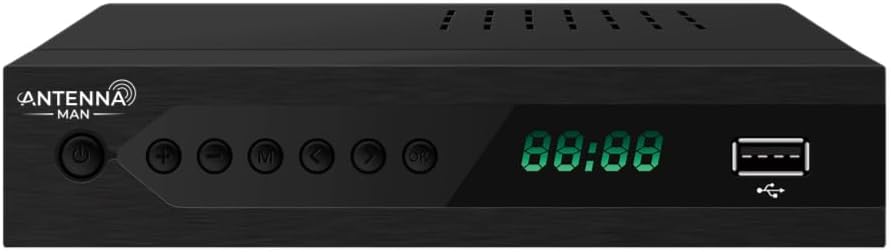
The Antenna Man Signal Meter is primarily designed for ATSC digital TV signals rather than cellular networks. It offers a practical solution for those aiming to improve over-the-air TV reception with a simple plug-and-play approach.
We may earn a commission when you buy through this link, at no additional cost to you.
Its real-time signal strength display allows users to adjust antenna orientation instantly to maximize channel quality. The device integrates a digital converter box with a TV tuner and recording capabilities to enhance the viewing experience.
However, it does not support cellular frequencies like LTE or PCS, making it unsuitable for mobile signal boosting projects. This limitation is acceptable if your sole goal is optimizing TV antenna alignment for broadcast channels.
Consider this device if you need a dedicated tool for TV antenna installation. For cellular signal aiming, you will need a meter that explicitly supports mobile network frequencies.
Real-time signal strength metrics allow immediate adjustment of your TV antenna to capture the best possible broadcast.
Beyond signal metering, this unit includes a tuner and recording feature to expand TV functionality.
We may earn a commission when you buy through this link, at no additional cost to you.
The Berkeley Varitronics Octopus is a high-end tool designed for professional environments like EV charging stations and cell booster installations. It carries a rating near 4.6 stars and provides true RSRP, RSRQ, and RSSI measurements for detailed analysis.
We may earn a commission when you buy through this link, at no additional cost to you.
Unlike consumer meters, this device requires no SIM cards or subscriptions, relying on built-in hardware to detect signals from all U.S. regional carriers. Its precision makes it ideal for optimizing wireless IoT devices and critical infrastructure.
The higher price point and specialized feature set may not be necessary for casual home users. However, for professionals who need reliable, data-driven feedback to ensure network stability, this investment is justified.
Choose this meter if you require professional-grade accuracy for industrial or commercial cellular projects. It sets a high standard for signal measurement reliability in critical infrastructure applications.
Measures true RSRP, RSRQ, and RSSI to provide detailed insights into network quality beyond simple strength bars.
Operates independently of SIM cards or carrier contracts for unrestricted and versatile field testing.
We may earn a commission when you buy through this link, at no additional cost to you.
The RF Explorer Pro Spectrum Analyzer is a sophisticated device offering deep insights into RF environments. It covers a wide frequency range from 15MHz to 6.1GHz and includes advanced tools like GPS heatmaps and tracking generators.
We may earn a commission when you buy through this link, at no additional cost to you.
Its 8-inch high-definition touchscreen provides clear real-time visualization of signals, making it easier to identify interference or weak spots. The five-hour battery life ensures you can work through long field sessions without needing a power source.
While powerful, the device is priced for engineers and advanced users who need full spectrum analysis capabilities. If you only need basic signal strength readings, a simpler meter might be more cost-effective.
Opt for this analyzer if you need to troubleshoot complex interference issues or visualize signals in 3D. It represents a significant upgrade for serious professionals working with wireless networks.
An 8-inch HD touchscreen offers clear real-time visualization of RF signals and measurement data for better analysis.
Includes GPS heatmap and frequency coordination modes to help engineers resolve complex interference scenarios.
We may earn a commission when you buy through this link, at no additional cost to you.
The NetAlly AirCheck G3 Pro Kit is a comprehensive tool designed for Wi-Fi and Bluetooth networks rather than cellular signals. It includes a full tri-band spectrum analyzer and an external directional antenna for detailed testing.
We may earn a commission when you buy through this link, at no additional cost to you.
It supports Wi-Fi 6 and 6E, providing physical location detection for clients and access points across 2.4GHz, 5GHz, and 6GHz bands. The kit also enables remote collaboration so engineers can troubleshoot from a distance.
Due to its specialized focus on wireless LANs, it is not suitable for cellular antenna aiming tasks. The price point is also significantly higher than dedicated cellular meters, making it a premium choice for IT professionals.
Choose this kit if you manage complex enterprise Wi-Fi networks requiring deep analysis. For cellular signal aiming, stick to meters explicitly designed for mobile frequencies.
Quickly find the physical location of Wi-Fi access points and clients across 2.4GHz, 5GHz, and 6GHz bands.
Enable remote engineers to troubleshoot with on-site technicians to solve problems without travel.
We may earn a commission when you buy through this link, at no additional cost to you.
The Extech 480836 is designed for measuring RF EMF strength across a range of 50MHz to 3.5GHz. It offers isotropic measurement capability, which captures signals from all directions for accurate environmental assessments.
We may earn a commission when you buy through this link, at no additional cost to you.
Its three-channel triaxial probe ensures that you do not miss signals due to orientation, making it useful for checking base stations or microwave leakage. You can store up to 99 sets of readings for later comparison.
While it provides general RF strength data, it lacks the specific LTE band breakdown found in dedicated cellular meters. This makes it better for safety checks or general field strength surveys rather than precise booster installation.
Use this meter if you need to verify RF exposure levels or general signal presence. For optimizing booster antennas, consider a device that specifies cellular band frequencies.
Non-directional triaxial measurement ensures you capture signal strength regardless of probe orientation.
Manually store and recall up to 99 measurement sets to track changes over time.
We may earn a commission when you buy through this link, at no additional cost to you.
The MINI1300 Antenna Analyzer offers a budget-friendly solution for antenna testing with a 4.3 inch touchscreen. It covers a frequency range from 0.1 to 1300MHz, making it versatile for various antenna types.
We may earn a commission when you buy through this link, at no additional cost to you.
It provides single point measurement, frequency sweeps, and TDR mode to analyze antenna performance. The compact design makes it easy to carry in a field bag for on-site adjustments and checks.
One limitation is that the firmware cannot be updated, which means features are fixed after manufacturing. Additionally, it stops at 1300MHz, so it does not cover higher cellular bands like some modern devices.
For hobbyists or basic antenna setups, this is an excellent choice. It balances cost and functionality well for general RF and amateur radio applications.
A 4.3 inch LCD touching screen makes navigating menus and viewing data straightforward for users.
Its compact and lightweight build ensures you can carry it easily for antenna adjustments anywhere.
We may earn a commission when you buy through this link, at no additional cost to you.
The SA6 6GHz Portable Spectrum Analyzer combines signal analysis with a built-in signal generator. This dual functionality allows you to switch modes instantly for RF testing and characterizing amplifiers or filters.
We may earn a commission when you buy through this link, at no additional cost to you.
It covers a broad 35 to 6200MHz frequency range, which includes Wi-Fi, LTE, GSM, and CDMA bands. The 3.2 inch touchscreen provides real-time viewing of the spectrum during your testing sessions.
Battery life depends on the batch but typically lasts 3 to 4 hours. The USB Type-C port facilitates charging and data transmission to a PC for further analysis of your field data.
This device is useful for technicians who need to test both active and passive components. Its versatility makes it a strong option for general RF testing and antenna tuning.
Switch between analysis and generation modes to test amplifiers and filters without extra tools.
The 35 to 6200MHz range covers many common wireless standards including LTE and GSM.
We may earn a commission when you buy through this link, at no additional cost to you.
The For Sa6 6GHz Handheld provides a more affordable entry into spectrum analysis for WiFi and LTE signals. It covers 35 to 6200MHz and includes a tracking generator to characterize components effectively.
We may earn a commission when you buy through this link, at no additional cost to you.
Its compact 5.9 x 3 x 0.9 inch housing makes it easy to handle in tight spaces. Real-time spectral measurement features include fixed and variable sweep options for rapid environment assessments.
The kit includes extension cables, a data cable, and other accessories so you can start testing right away. However, the overall build quality may not match that of higher-end professional devices.
Select this device if you need a cost-effective analyzer for routine checks. It is a practical choice for hobbyists and small maintenance teams.
Includes extension cables, data cables, and other items needed to start analyzing immediately.
A lightweight 5.9 by 3 by 0.9 inch housing fits easily in work pockets or tool kits.
We may earn a commission when you buy through this link, at no additional cost to you.
The Channel Master TV Antenna Signal Strength Meter is a dedicated tool for aligning Over-The-Air TV antennas. It displays both RF Signal Level and Signal-to-Noise Ratio to ensure you capture the strongest broadcast.
We may earn a commission when you buy through this link, at no additional cost to you.
It includes a stylus pen and protective carrying case to keep the device safe during transport. The built-in rechargeable battery ensures you do not need to replace batteries mid-installation.
Because it focuses on ATSC TV frequencies, it is not useful for cellular signal aiming tasks. Users looking to boost mobile data will need a meter that supports those bands.
Use this device for installing or optimizing TV antennas at home. It simplifies the process of finding the best position for your TV receiver.
Shows both RF Signal Level and Signal-to-Noise Ratio to help you optimize antenna alignment for best quality.
Includes a stylus pen and protective carrying case for easy and safe field use.
We may earn a commission when you buy through this link, at no additional cost to you.
Choosing the right signal meter depends on your specific application, from cellular boosters to TV antennas. Understanding key factors ensures you select a tool that provides accurate and actionable data.
Ensure the meter supports the frequencies used by your network or carrier. For cellular boosters, look for PCS, Cellular, AWS, and LTE bands to get precise measurements.
Select a device that explicitly lists support for the frequencies you intend to measure.
High sensitivity and accuracy are crucial for detecting weak signals. Look for ratings like -110dBm receiving sensitivity to ensure the meter can find marginal spots.
Higher sensitivity ensures you do not miss weak signals that could affect performance.
A clear and large display helps you read values while positioning the antenna. Touchscreens or large LCDs with backlighting are ideal for outdoor or low-light conditions.
Choose a display that is easy to read in various lighting conditions.
Installation jobs can take hours, so long battery life is essential. Rechargeable batteries are more convenient than disposable ones to avoid interruptions.
Opt for devices with at least 3 hours of operation on a single charge.
The interface should be intuitive so you can adjust settings quickly. Simple button controls or touchscreens reduce the time needed to get accurate readings.
Pick a device with a user-friendly interface to minimize setup time.
Since you will carry the device to the roof or mast, it should be lightweight and compact. A carrying case or bag adds protection and convenience.
Ensure the device fits easily in your tool bag or carrying case.
Features like tracking generators or SNR displays provide deeper insights into signal quality. Advanced tools help you troubleshoot interference or weak connections more effectively.
Consider extra features that match your technical needs and budget.
Start by connecting the meter to your antenna system securely. Ensure the cables are in good condition to avoid signal loss during measurement. Power on the device and allow it to initialize before taking readings.
Move the antenna slowly while watching the signal strength meter. Adjust the direction until you see the highest reading for the desired frequency band. Lock the antenna in place once you find the optimal position.
Clean the device regularly with a soft cloth to remove dust and debris. Store it in a protective case to prevent damage from impacts or moisture during transport. Check the battery levels periodically to ensure it is always ready for use.
Essential bands include PCS, Cellular, AWS, and LTE as these are commonly used by major carriers. Always verify that the meter covers the specific frequencies your booster or device supports.
No, TV signal meters typically measure ATSC frequencies which differ from cellular bands. You need a dedicated cellular signal meter to accurately measure mobile network signals.
Look for high sensitivity ratings such as -110dBm to ensure the meter can detect weak signals. Professional-grade meters often provide more consistent readings compared to basic models.
Most rechargeable signal meters last between 2 to 5 hours on a single charge. Some professional models may offer longer battery life for extended field use.
No, a standard signal strength meter is usually sufficient for aiming antennas. A spectrum analyzer is better suited for complex interference analysis or detailed RF troubleshooting.
Always store the device in a protective carrying case to avoid damage. Keep the lens and display clean and avoid exposing the meter to extreme weather conditions.
Touchscreens offer easier navigation and viewing but can be harder to use with gloves. Physical buttons are often more reliable in harsh weather or cold conditions.
Most standalone signal meters do not require a SIM card as they measure RF signals directly. Some advanced models may need a SIM for carrier-specific testing but are not mandatory for basic use.
We have reviewed ten distinct signal meters ranging from budget options to professional-grade analyzers. The SureCall Five-Band RF Signal Meter stands out for its balance of features and usability for booster installations.
When making your choice, prioritize frequency coverage and measurement accuracy to ensure reliable results. Consider your specific needs such as portability or advanced features to find the best match.
Prices and availability can change frequently so always check the latest details on the product pages before buying. This ensures you get the best value and current features for your project.