
Upgraded Version Bed Sensor Alarm
4.5Editor score
Motion sensor on floor
Nine one eight feet range
Dual power supply options
Finding the right safety device for loved ones can be challenging for families managing dementia or mobility issues. A bed alarm provides essential alerts when a patient attempts to rise, offering caregivers crucial time to assist and prevent falls.
We evaluated ten leading products based on sensor accuracy, range, comfort, and ease of use. Our comparison includes wireless pressure pads, motion sensors, and floor mats designed to fit various care environments and patient needs effectively.
Each pick highlights specific strengths like long battery life or quiet alerts. Prices and availability change frequently so check current listings before purchasing to ensure you get the best value for your specific caregiving situation.
4.5Editor score
4.8Editor score
4.6Editor score
As an Amazon Associate we earn from qualifying purchases.
The following table provides a side-by-side comparison of the top ten bed alarms evaluated in this guide. Each entry includes key specifications and features to help you quickly identify the right fit.
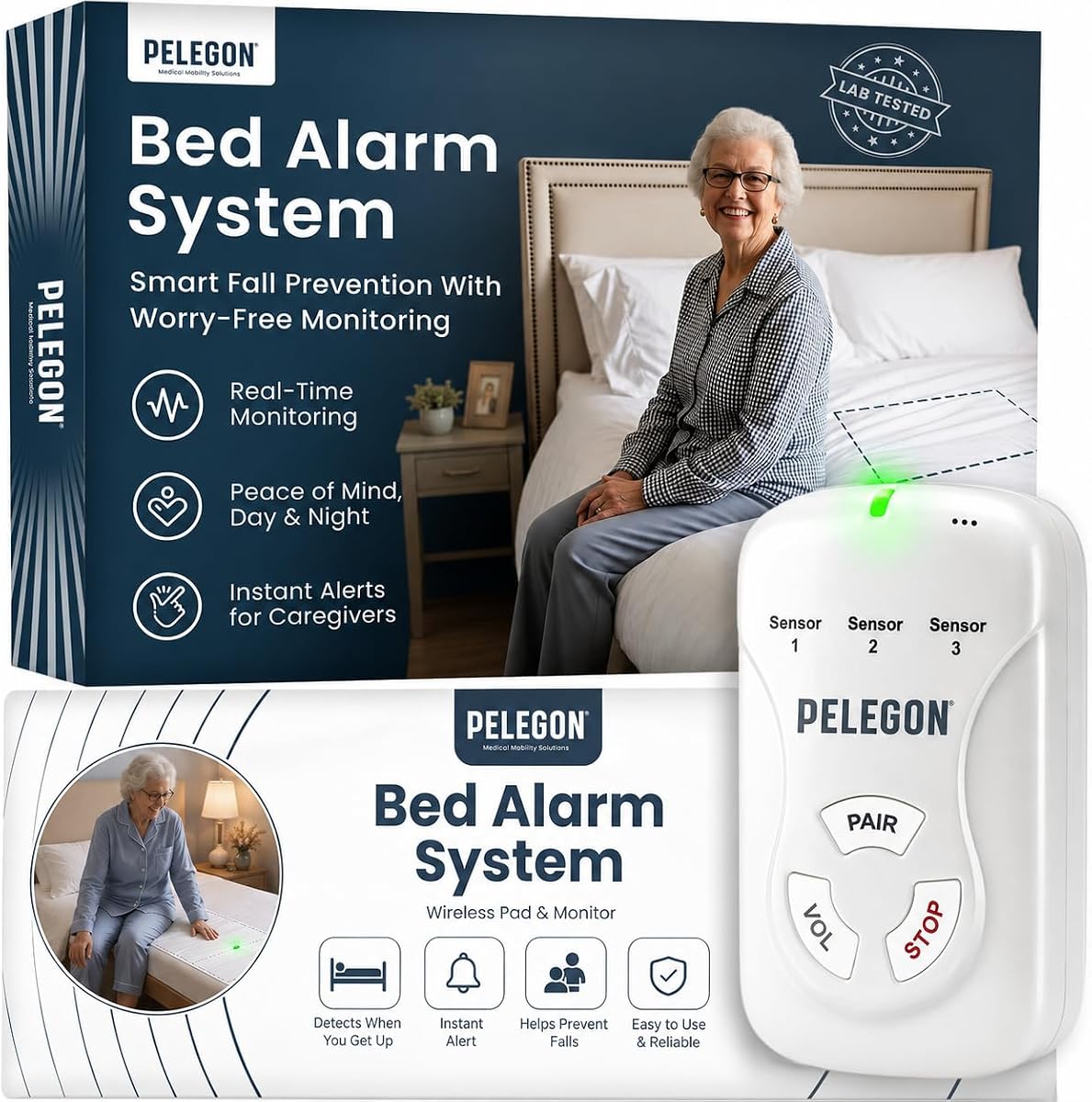


The PELEGON Bed Alarms stand out as a top choice for caregivers needing reliable fall prevention. With a strong rating and comprehensive features, this system detects movement as a loved one begins to rise. This early detection provides essential seconds to assist safely before a fall risk occurs.
We may earn a commission when you buy through this link, at no additional cost to you.
Its wireless pager offers impressive range coverage up to 328 feet, allowing caregivers to monitor from another room comfortably. The custom volume and vibration modes ensure alerts are noticeable without startling the patient or disrupting sleep. This flexibility is vital for shared rooms or quiet night shifts.
While the setup is tool free and simple, some users may find the pager unit slightly bulky for pockets. However, the reliability and peace of mind it offers outweigh minor inconveniences. The focus on dementia care specifically makes it a tailored solution for wandering risks.
This alarm is best suited for families seeking a balance of range and sensitivity. Its design prioritizes safety without compromising the dignity of the patient. We recommend it for primary caregivers who need consistent alerts across the home.
The system detects motion immediately upon rising attempts, giving caregivers valuable time to intervene safely.
Alerts help reduce unsafe wandering and nighttime accidents by notifying caregivers of immediate bed exits.
We may earn a commission when you buy through this link, at no additional cost to you.
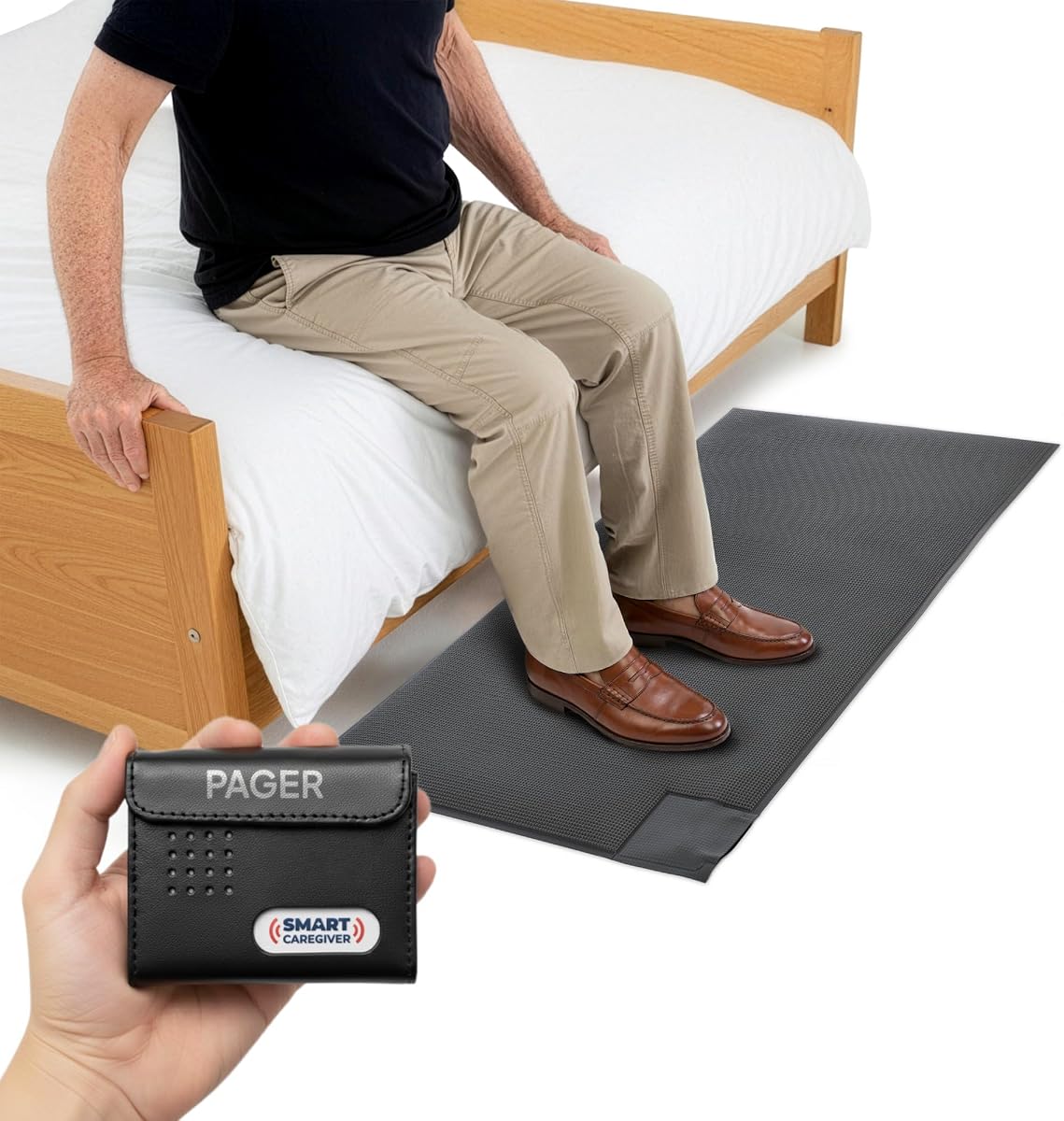
The Smart Caregiver Bed Alarm offers a straightforward solution for monitoring elderly adults. Its vinyl pad is designed for durability and ease of cleaning, making it ideal for daily use. The alarm sounds when pressure is removed, instantly alerting caregivers that the patient has moved.
We may earn a commission when you buy through this link, at no additional cost to you.
This unit provides flexible alert options, including a quieter approach for those who prefer less noise. A reset button on the front allows for easy silencing. Low battery lights ensure you are always aware of the system status, preventing unexpected downtime.
The cord linking the pad to the monitor can be less flexible than fully wireless models. However, this wired connection often ensures consistent signal transmission without interference. It is a reliable option for home environments where simplicity is key.
We recommend this for budget-conscious families needing a basic but effective alarm. Its design focuses on essential safety features without unnecessary complexity. It works well for patients who move frequently but need standard monitoring.
The vinyl sensor pad is sealed for incontinence protection and can be wiped clean easily.
Alarm sounds instantly when pressure is removed, ensuring you know if the patient is safe in bed.
We may earn a commission when you buy through this link, at no additional cost to you.
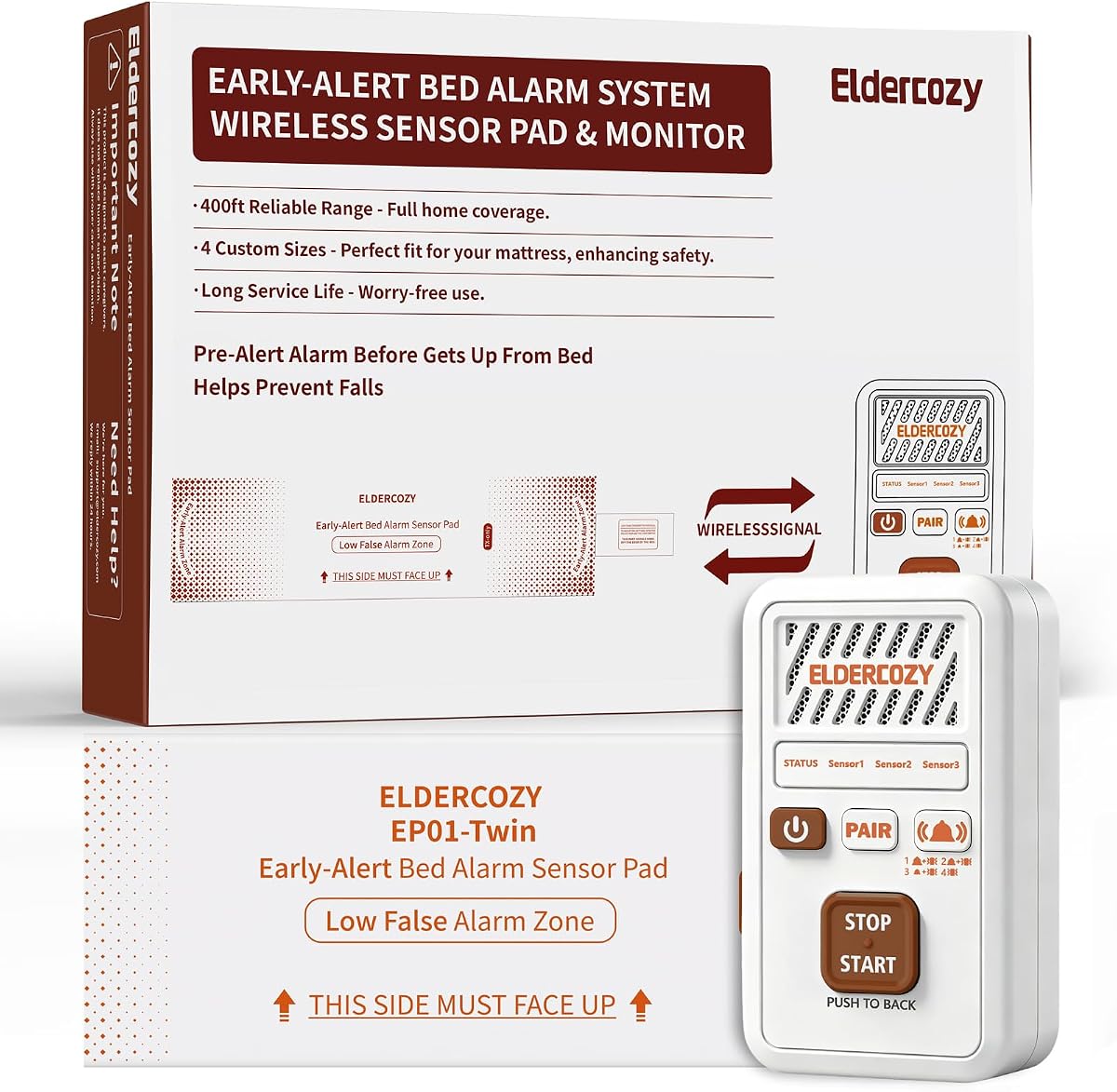
This system prioritizes comfort with a soft TPU composite that avoids noisy crunching sounds. It alerts at the hip level when a patient sits on the edge, ensuring early detection before they stand up. This feature helps maintain independence while keeping them safe from falls.
We may earn a commission when you buy through this link, at no additional cost to you.
With a wireless range of up to 400 feet, caregivers have freedom to move throughout the home. The unlimited lifespan of replaceable batteries means no need for disposable pads. Caregiver mode allows you to pause alarms during assistance without triggering false alerts.
While the cost is higher than basic models, the durability and advanced features justify the investment. The waterproof design adds hygiene benefits for home use. It offers a premium experience that respects the patient's sleep quality.
Ideal for families who value long-term reliability and comfort. This is the top choice for dementia patients who need a non-intrusive alert system. It provides peace of mind with advanced technical capabilities.
TPU material is skin friendly and silent when patients roll over, ensuring uninterrupted sleep.
Pause alerts temporarily for twenty minutes to assist patients without triggering false alarms.
We may earn a commission when you buy through this link, at no additional cost to you.
This motion sensor offers a unique alternative to bed pads by placing the detector on the floor. It triggers when a foot touches the ground, allowing alerts to happen outside the patient room. This design prevents startling the patient with loud noise directly by the bed.
We may earn a commission when you buy through this link, at no additional cost to you.
The range extends up to 918 feet in open areas, suitable for large properties. It includes both LED light and sound reminders, ensuring you get the notification. Dual power supply options let you use batteries or USB power as needed.
Testing the sensing range is crucial before installation to ensure it works correctly. The device must face the right direction for optimal detection. However, once set up, it provides a discreet way to monitor movement without touching the patient.
Best for those who want to avoid contact with the patient. This unit is great for patients who are easily agitated by sounds. It provides reliable fall prevention with a distinct approach to sensor placement.
The alarm does not sound in the patient's room, potentially startling them and causing a fall.
Motion sensor placed on the floor under the bed detects when feet touch the ground.
We may earn a commission when you buy through this link, at no additional cost to you.
This system is designed to alert when someone steps on a durable floor mat. It is effective for preventing wandering by placing the mat by doorways or beds. The wireless pager ensures caregivers are notified immediately regardless of where they are in the house.
We may earn a commission when you buy through this link, at no additional cost to you.
The mat is large and robust, making it suitable for heavy use. Caregivers can carry the pager to handle other tasks safely. The audible or vibrate options help avoid startling residents in shared living spaces or hospitals.
Placement requires floor space which might be tight in some rooms. However, its effectiveness in detecting wandering behavior makes it valuable. It integrates well with other Smart Caregiver alarms for comprehensive monitoring.
Recommended for facilities or homes focused on preventing exits. It is excellent for dementia patients who try to leave the house. The reliable detection helps caregivers manage safety during the night effectively.
Place by an exit door to alert you if the patient is wandering towards the exit.
Wireless caregiver pager alerts to up to 300 feet away from the mat.
We may earn a commission when you buy through this link, at no additional cost to you.
This alarm features a full-coverage weight sensor that wirelessly alerts caregivers when pressure is removed. The system supports up to six different sensors, allowing monitoring of beds, chairs, and doorways. This expandability makes it ideal for comprehensive fall prevention plans.
We may earn a commission when you buy through this link, at no additional cost to you.
Caregivers can rely on both vibrate and sound options for notifications. The reduced false alarm design ensures trust in the system's alerts. It allows for better night sleep by offering freedom to carry on with daily tasks while staying informed.
The wireless range might vary based on home layout and interference. Ensuring a solid connection requires some testing. However, the support for multiple sensors adds significant value for complex caregiving needs.
We suggest this for those needing flexible monitoring options. It fits well in setups requiring multiple alerts. The company support is helpful if technical issues arise during installation.
The pager supports up to six different sensors, allowing comprehensive monitoring of multiple areas.
Weight sensing pad alerts caregivers when pressure is removed and the patient has left the bed.
We may earn a commission when you buy through this link, at no additional cost to you.
This model offers silent and vibrate options, perfect for caregivers who want alerts without noise. The sensor detects feet touching the ground before the patient is fully standing. It is designed to reduce false triggers from restlessness, making it more reliable for sleep monitoring.
We may earn a commission when you buy through this link, at no additional cost to you.
The receiver includes 18 ringtones and adjustable volume levels. It has a Type-C charging port, reducing battery dependency. This feature adds convenience for daily use in shared environments where quiet is a priority.
The detection range is shorter than some other models, requiring careful placement. However, the silent modes make it great for night shifts. It balances affordability with useful features for discreet monitoring.
Recommended for shared rooms or sensitive sleepers. It provides a portable solution that is easy to charge. This is a solid choice for those prioritizing quiet alerts over high range.
Use vibration only mode to rest easy without disturbing the patient or sleeping partner.
Receiver has a Type-C charging port for easy recharging and portability around the house.
We may earn a commission when you buy through this link, at no additional cost to you.
The system features four distinct alert modes, including light and sound combinations. It connects wirelessly to a receiver within 918 feet in open areas. This distance allows flexibility for caregivers moving around the house or large properties.
We may earn a commission when you buy through this link, at no additional cost to you.
Power can be supplied via battery or USB, ensuring continuous operation. The factory paired design simplifies setup. However, testing the direction is critical for consistent performance. This unit is built for durability and long-term use.
The bulk of the receiver might be a minor inconvenience for some. Yet, the robust signal range compensates for this. It is a professional solution for those needing reliable wireless motion detection.
Best for large homes where signal range is critical. It provides flexibility for different alert preferences. This is a solid investment for professional or long-term care environments.
Switch between sound plus light flashing or LED light only using the receiver button.
Wireless sensor and receiver powered by battery or MICRO USB to avoid socket issues.
We may earn a commission when you buy through this link, at no additional cost to you.
This system includes pads for both bed and chair use. It alerts when the person attempts to leave either seat or bed. The phone-style clip allows for easy switching between monitor locations. It is a versatile option for those needing multi-surface monitoring.
We may earn a commission when you buy through this link, at no additional cost to you.
The vinyl pads are sealed for incontinence protection, ensuring durability. Volume can be adjusted inside the battery compartment. Low battery lights help ensure safe operation without unexpected failures.
The monitor stays on one surface, which may limit mobility compared to pagers. However, it is straightforward and reliable for seated or lying monitoring. It is ideal for care centers or homes using chairs frequently.
Suggested for caregivers needing both bed and chair alerts. It offers a classic solution with simple controls. The design is effective for preventing falls from multiple positions.
Alarm pads immediately alert the caregiver when the person under care attempts to get out of a bed or chair.
Phone-style clip makes it easy to switch between using the bed and chair pad with your monitor.
We may earn a commission when you buy through this link, at no additional cost to you.
This pad uses pressure detection to monitor patient movements. It is latex free and water resistant for easy cleaning. The wireless pager provides notifications for caregivers moving around the home. It is a straightforward system for basic fall prevention needs.
We may earn a commission when you buy through this link, at no additional cost to you.
Installation is simple with clips under fitted sheets. The system offers customizable alerts including music and vibration. This flexibility helps caregivers adapt the device to personal preferences. It is a lightweight option for portable use.
The range is shorter compared to premium models, limiting movement to a single floor. However, for small apartments, it remains effective. It is an entry-level choice for those new to bed alarms.
We suggest this for those needing basic monitoring. It is best for small living spaces. The latex free design adds hygiene benefits for patients.
Highly sensitive sensor pad accurately monitors patient movements and triggers an immediate alarm.
Constructed from latex free and water resistant materials for simple wiping and hygiene.
We may earn a commission when you buy through this link, at no additional cost to you.
Choosing the right bed alarm requires understanding specific patient needs and home layouts. This guide outlines key factors to ensure you select a system that balances safety with comfort.
Sensor types vary from pressure pads to motion detectors. Pressure pads work well under sheets but may be less comfortable. Motion sensors on the floor avoid contact but require precise placement. Choose the one that matches the patient's sleeping habits.
Consider the patient's sensitivity and environment when selecting a sensor type. Motion sensors reduce false alarms from tossing while pads offer early detection. Both options have distinct advantages depending on care requirements.
Wireless range determines how far you can move from the sensor. Homes with multiple floors need systems with hundreds of feet of range. Check the open area range to ensure coverage in your home layout.
Ensure the range covers all areas where you might be at night. A wider range offers more freedom to relax or attend to other tasks.
Alert modes include sound, light, and vibration. Vibration is best for noisy environments or shared rooms. Sound alerts can be louder and more urgent. Some models offer silent modes to avoid startling patients.
Choose an alert mode that fits your sleeping habits and home environment. Silent modes are excellent for night shifts where noise is a concern.
Battery life varies between built-in and replaceable options. Systems with replaceable batteries can last longer without disposal. Built-in rechargeable units reduce waste but need charging. Long battery life means less maintenance for caregivers.
Check battery requirements to ensure you can maintain the system easily. Replaceable options offer flexibility for long-term use without power interruptions.
Comfort is critical for patients who may resist wearing or lying on sensors. Pads made from soft materials like TPU reduce noise. Ensure the device does not disrupt sleep cycles. A comfortable device improves compliance.
Select a device that does not cause discomfort. Patients are more likely to accept safety measures that do not hinder sleep quality.
Some systems allow multiple sensors to connect to one receiver. This is useful if you need to monitor chairs and doors too. Expandable systems provide comprehensive coverage for complex care environments.
Look for models that support multiple inputs if you need multi-room monitoring. This feature future-proofs your system for changing needs.
Setup can range from simple plug-and-play to complex wiring. Tool-free installation is preferred for quick adoption. Systems with clear instructions reduce frustration. Simple setup means you can start protecting loved ones immediately.
Prioritize devices that do not require technical expertise. Quick setup ensures you do not delay safety measures.
Reliable customer support is essential if the device fails. A warranty ensures you are protected against defects. Look for companies with experience in care products. Support helps resolve issues quickly.
Choose a brand with proven support resources. This ensures help is available when technical problems arise.
Start by testing the system before the first night. Place the sensor under the sheet or on the floor as directed. Test the trigger by sitting on the edge of the bed to ensure the alarm works. This step ensures reliability when you need it most.
Regularly check battery levels to maintain functionality. If using replaceable batteries, replace them at least every six months. For rechargeable units, follow the charging schedule to prevent power loss. Consistent checks prevent unexpected failures.
Clean the sensor pad according to manufacturer instructions. Wipe down surfaces to maintain hygiene, especially for pads that contact the patient. Avoid harsh chemicals that could damage the device. Proper care extends the lifespan of the alarm.
Most modern bed alarms alert only the caregiver via a pager or remote sound. The alarm does not sound in the patient's room to avoid startling them. However, some models with loud in-room options exist. Check the settings to ensure quiet monitoring if needed.
Ranges vary by model but typically cover 300 to 900 feet. Open areas allow for better range than walls. Check the product specs for maximum distance. Ensure the pager works throughout your home layout.
False alarms can occur with sensitive pressure pads. Motion sensors reduce this by detecting foot movement. Some systems offer pause modes for false alarms. Proper placement helps minimize unwanted triggers during sleep.
Many pads are designed with incontinence protection. Waterproof materials resist stains and moisture. However, check the specific product details for waterproof ratings. Proper cleaning ensures long-term hygiene and performance.
Battery life depends on usage and system type. Replaceable batteries may last months. Rechargeable systems need regular charging. Always check the battery status indicator to prevent power loss during night shifts.
Some models support chair pads for monitoring seated patients. Look for systems with expandable sensors. This feature helps detect exits from chairs as well as beds. It provides comprehensive safety for various care scenarios.
Many systems are designed for tool-free setup. Simple instructions allow quick installation without technical skills. If help is needed, caregivers can assist in placing the pad. Most models require minimal adjustment for daily use.
High sensitivity sensors may trigger from rolling. Check if the system offers pause modes. Place the sensor under hips or shoulders for better detection. Proper positioning reduces false alerts from sleep movements.
We have explored ten top-rated bed alarms for elderly and dementia patients. The PELEGON and Twin Size Wireless models stand out for their range and comfort. Each system offers unique features to support caregivers effectively.
When choosing, prioritize comfort and range for your specific home. Wireless pagers allow more freedom to manage tasks while monitoring. Ensure the alarm mode fits your noise tolerance and care style.
Always check current prices and availability before purchasing. Safety devices can vary in stock and offers. By selecting the right alarm, you gain peace of mind and better protection for your loved ones.