
Acxico 3Pcs Mini Micro N20
4.6Editor score
3V-6V Low Voltage
Full Metal Gearbox
D-type 3mm Shaft
This guide compares the top 10 DC motors for robots, evaluating torque, speed, gear types, and compatibility for DIY robotics and automation projects.
Selecting the right DC motor is crucial for any robotics project. A good motor provides reliable torque, efficient power usage, and precise control. Whether you are building a simple line follower or a complex manipulator, the motor choice defines performance.
We evaluated ten top-rated DC motors based on user feedback, technical specifications, and build quality. Our comparison considers voltage ranges, gear ratios, shaft types, and encoder availability to help you match the motor to your specific robot design needs.
Each pick highlights key strengths and ideal use cases for different robotic applications. Please note that availability and pricing can change over time, so always check the latest product details before making your final purchase decision for your build.
4.6Editor score

4.7Editor score

4.6Editor score
The following table provides a side-by-side technical comparison of all ten motors evaluated in this guide. It highlights key specifications such as voltage, gear ratios, shaft sizes, and primary features to aid in quick selection for your robotics project.



This high-performance motor is rated at 4.7 stars and stands out for its integrated encoder and all-metal construction. It is designed for advanced robotics that require accurate speed and position feedback.
We may earn a commission when you buy through this link, at no additional cost to you.
The 1:90 gear ratio provides exceptional torque for heavy loads while the Hall encoder allows microcontrollers to track rotation precisely. This makes it ideal for smart cars and automated systems needing closed-loop control.
While the encoder adds complexity compared to simpler motors, the trade-off is worth it for projects needing precise movement. The all-metal box also ensures longevity under continuous operation stress.
Buy this if you need reliable, high-torque motors with feedback for a serious robotic build. It offers a professional balance of power and control for DIY and education projects.
The upgraded metal construction provides superior strength compared to plastic gears, ensuring longer service life under high torque loads.
The 12 PPR encoder outputs quadrature signals enabling accurate measurement of speed and position for advanced motion control systems.
We may earn a commission when you buy through this link, at no additional cost to you.
Rated 4.6 stars, this motor is an excellent choice for beginners needing small, efficient motors. It features a full metal gearbox despite its low price point and is ideal for lightweight robots.
We may earn a commission when you buy through this link, at no additional cost to you.
The 3V to 6V range makes it compatible with standard battery packs and low-power controllers. The slow speed design ensures better control for small educational robot cars and DIY models.
While not suitable for heavy lifting, it excels at small-scale tasks like moving wheels on a chassis. The metal gears add a level of durability often missing in budget motors.
Choose this for basic projects where cost and size are priorities. It provides reliable performance for hobbyist builds without breaking your budget or space limits.
Despite its small size, the motor uses full metal gears to ensure durability and consistent performance over extended use.
The 3mm D-type shaft offers secure wheel attachment preventing slipping during operation and simplifying mechanical assembly.
We may earn a commission when you buy through this link, at no additional cost to you.
With a 4.6 rating, this motor delivers industrial-level torque for demanding robotic tasks. The 90kg.cm output makes it suitable for rotating tables and heavy lifting mechanisms in automation.
We may earn a commission when you buy through this link, at no additional cost to you.
The 6-22V range offers flexibility in power supply options and allows you to control speed through voltage adjustments. The planetary gear system ensures efficient power transmission and high load capacity.
Due to its power, it requires careful mounting and power management to avoid overloading. However, for tasks needing significant force, it outperforms standard hobby motors easily.
Invest in this motor for professional or heavy-duty robotics where strength is critical. It handles demanding loads reliably and supports complex mechanical designs with ease.
The 90kg.cm torque output enables the motor to drive heavy loads like rotating tables and industrial actuators with ease.
Planetary gearing provides better power transmission and reduced backlash compared to standard spur gears for precise heavy-duty control.
We may earn a commission when you buy through this link, at no additional cost to you.
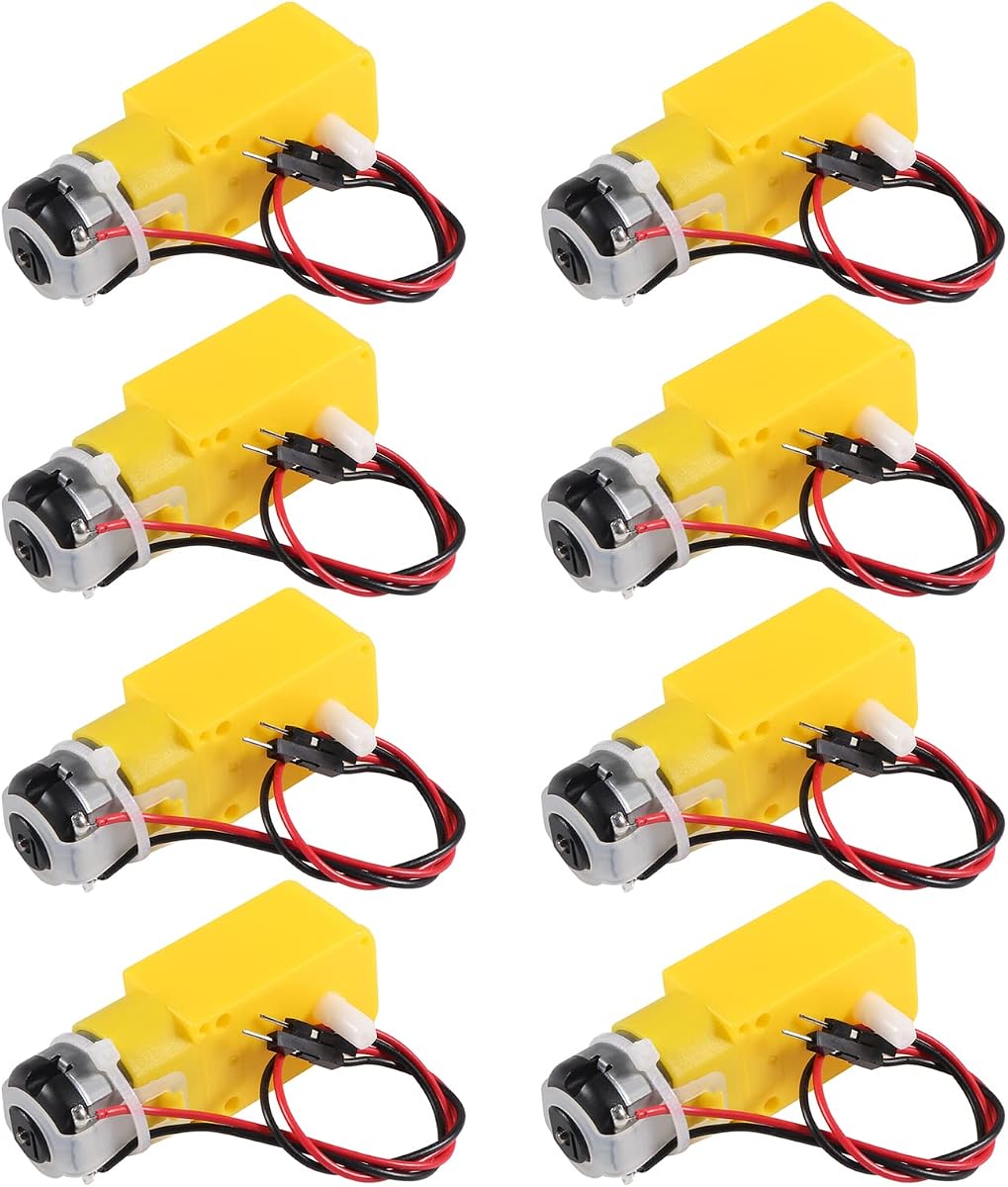
Rated 4.5 stars, this set offers excellent value for classroom or group projects needing multiple motors. Each motor comes with pre-attached wires making connection to Arduino straightforward.
We may earn a commission when you buy through this link, at no additional cost to you.
The 1:48 ratio balances speed and torque for educational smart cars. The included wheels and wires reduce setup time and allow students to focus on coding and logic rather than wiring.
While the wires limit customization, the convenience is high for quick prototyping. The pack size ensures you have spares if any motor fails during a project.
Select this for schools or robotics clubs where bulk needs are common. It simplifies deployment and provides reliable performance for learning environments effectively.
Each motor comes with pre-attached wires featuring male 2.54mm connectors allowing easy integration into breadboards and terminal blocks.
The eight motor set provides ample spares and allows building multiple robots simultaneously in educational group settings.
We may earn a commission when you buy through this link, at no additional cost to you.
This 4.4 star rated motor is designed for stability with a dedicated mounting bracket and included rubber tire kit. It simplifies the assembly process for smart car chassis needing reliable wheels.
We may earn a commission when you buy through this link, at no additional cost to you.
The full metal gears ensure durability under 12V operation. Low heat generation and pure copper coils allow for longer continuous use without overheating issues common in smaller motors.
Although it is larger and less flexible regarding voltage, the mounting options save time. It is a robust choice for builds prioritizing mechanical integrity.
Use this when you need a complete wheel and motor solution without extra parts. It offers a streamlined path to a sturdy functional robot car.
The package includes a mounting bracket and rubber tire wheels providing an all-in-one solution for quick chassis assembly.
Pure copper coils offer low resistance and low heat generation ensuring stable performance during extended operation sessions.
We may earn a commission when you buy through this link, at no additional cost to you.
Rated 4.6 stars, this motor delivers high torque at low speeds ideal for precise movements. The 70:1 ratio is perfect for applications needing force rather than speed like robotic arms.
We may earn a commission when you buy through this link, at no additional cost to you.
The 12V stall torque of 27kg.cm ensures strong holding power even when the motor stops. The metal bracket and long shaft facilitate secure mechanical coupling in tight spaces.
While not suitable for high-speed vehicles, its force output is excellent for static positioning tasks. It provides the reliability needed for accurate mechanical control systems.
Choose this for projects requiring significant torque and precise control. It excels in applications like robotic manipulators and automated valves needing strength.
The 27kg.cm stall torque at 12V allows the motor to hold heavy loads securely without stalling.
The 16mm long shaft provides ample space for mounting gears or wheels securely on the output end.
We may earn a commission when you buy through this link, at no additional cost to you.
With a perfect 5.0 rating, this motor is praised for its quiet, high-torque performance in RC car builds. The double-shaft design offers flexibility for attaching mechanical components on both sides.
We may earn a commission when you buy through this link, at no additional cost to you.
All-metal gears and efficient copper rotors ensure long-lasting strength even under heavy use. The D-shaped shaft prevents slipping during acceleration, providing reliable traction for small vehicles.
While it lacks encoder feedback, its mechanical reliability is strong for hobby RC projects. It balances power and low noise making it suitable for indoor use too.
Pick this for reliable RC car upgrades needing strong, silent performance. The dual-shaft design adds versatility for custom mechanical attachments effectively.
The strong magnetic double-shaft configuration provides flexibility for connecting components on both ends of the motor.
Heat and wear-resistant metal gears ensure quiet operation which is ideal for indoor and educational use.
We may earn a commission when you buy through this link, at no additional cost to you.
Rated 4.2 stars, this motor is known for its impressive 16000 RPM speed at 3V. It is ideal for lightweight fans and high-speed spinning applications rather than heavy driving.
We may earn a commission when you buy through this link, at no additional cost to you.
The compact size and pre-wired leads make it easy to integrate into small projects. The six-pack offers great value for multiple small hobby builds needing speed over force.
While torque is low, the speed potential allows for unique projects like brush-bots or windmills. It is best used for tasks requiring rotation rather than physical load pushing.
Select this when high speed is your main priority. It provides a cost-effective way to add rapid movement to small DIY and robotics prototypes.
The motor reaches speeds of 16000 RPM at 3V making it suitable for fans and high-speed spinning applications.
Its small dimensions allow it to fit into tight spaces where larger motors cannot be installed.
We may earn a commission when you buy through this link, at no additional cost to you.
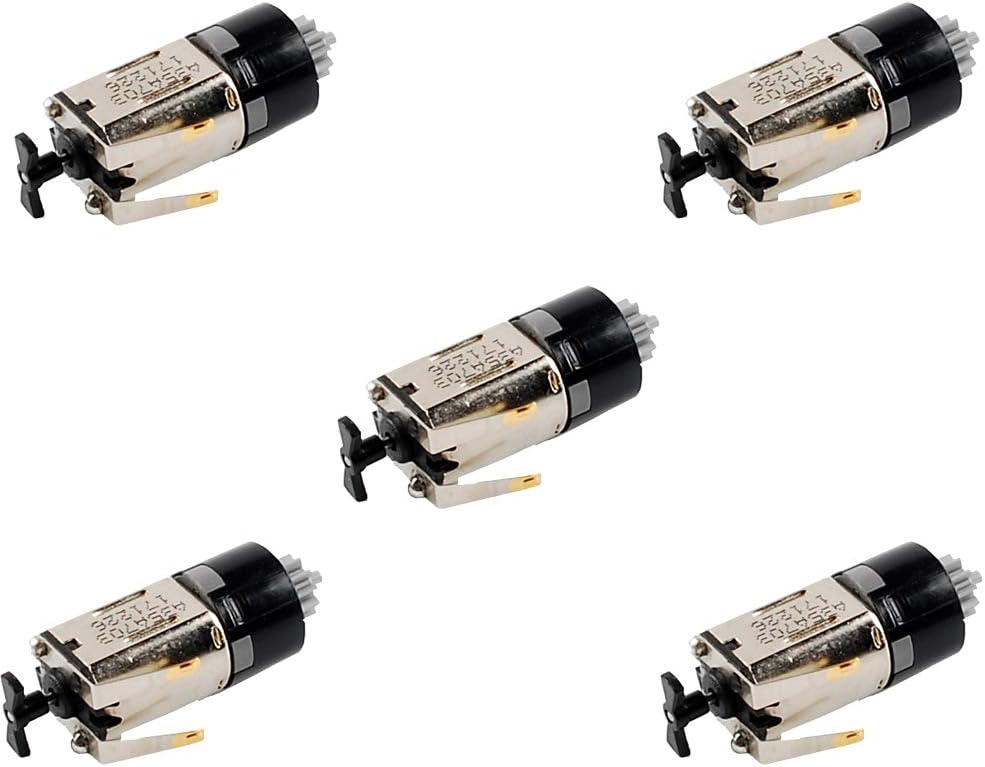
This motor pack rates 4.4 stars for delivering high torque in a tiny package. The 3V operation makes it perfect for battery-powered micro robots where space is limited.
We may earn a commission when you buy through this link, at no additional cost to you.
The planetary reducer design ensures efficient power transmission. Even with low speed, it provides enough force for small moving parts and precise positioning tasks in robotics.
Due to low current draw, it consumes minimal power extending battery life in mobile robots. The five-pack ensures you have options for multi-axis setups.
Choose this for micro robots needing force without bulk. It provides efficient torque in a size suitable for compact and battery-driven projects.
The planetary reducer design efficiently converts high-speed motor rotation into usable torque for small mechanical systems.
Low current draw extends battery life in portable robots making it ideal for long duration projects.
We may earn a commission when you buy through this link, at no additional cost to you.
Rated 4.4 stars, this motor is a versatile general-purpose choice for various RC and hobby projects. It handles 6V to 12V making it compatible with many battery packs.
We may earn a commission when you buy through this link, at no additional cost to you.
The high speed output of 12000 RPM offers good performance for light loads. Its compact size and low noise make it suitable for indoor robotics and small toy repairs.
While not designed for heavy lifting, it covers a wide range of standard tasks. The shaft diameter requires compatible gears which might limit direct wheel mounting.
Use this as a standard replacement or upgrade for small robots needing speed. It provides reliable performance across a broad range of common hobby applications.
The motor operates efficiently from 6V to 12V allowing flexibility with different battery configurations.
Its design supports speeds up to 12000 RPM for applications requiring rapid rotation.
We may earn a commission when you buy through this link, at no additional cost to you.
Selecting the right DC motor requires understanding key factors like torque, speed, voltage, and gearing. Each motor type suits different robotic needs from lightweight education cars to heavy industrial arms.
Torque measures the rotational force a motor can produce. Higher torque is essential for robots carrying heavy loads or climbing inclines. Always check stall torque specs to ensure your motor can handle the maximum weight of your robot.
Prioritize high torque if your robot needs to move heavy payloads.
Speed or RPM determines how fast your robot can move. High RPM motors are great for drones or fans but may struggle under load without gearing. For ground robots, moderate speeds often offer better control and safety.
Balance speed with torque to match your robot's intended terrain.
Ensure the motor voltage matches your battery system. Motors rated 3V to 6V are common for small projects while 12V offers more power. Operating outside the voltage range can damage the motor or reduce performance significantly.
Match motor voltage to your power supply system.
Gearing converts high motor speed into usable torque. A higher gear ratio increases torque but decreases speed. Select a ratio that aligns with your robot's load and movement requirements to optimize performance.
Choose gear ratios based on load and speed needs.
Shaft diameter and type determine how wheels and gears attach. D-shaped shafts prevent slipping better than round ones. Ensure your motor has a shaft size compatible with your wheels and mounting hardware.
Check shaft diameter to ensure secure wheel attachment.
Encoders provide speed and position data for precise control. They are vital for autonomous robots needing accurate navigation. Without encoders you rely on open-loop control which may drift over time.
Select encoders if precise positioning is required.
Proper mounting stabilizes the motor under load. Look for motors with included brackets or holes compatible with your chassis. Secure mounting reduces vibration and improves longevity of the motor.
Ensure the motor mounts securely to your frame.
Metal gears offer better longevity than plastic gears under high stress. For continuous operation choose motors with metal internal components. This ensures reliable performance over many cycles of use.
Prefer metal gears for durability and strength.
First ensure your power supply matches the motor voltage requirements. Connect wires to the correct terminals observing polarity to avoid reverse rotation or damage. Use insulated connectors to secure the connections and prevent short circuits.
Second secure the motor firmly to your chassis using mounting brackets or bolts. A loose motor can vibrate excessively causing internal damage or mechanical wear over time. Ensure all moving parts have adequate clearance during operation.
Third monitor motor temperature during extended use. If the motor becomes too hot to touch reduce the load or allow it to cool down. Proper ventilation and avoiding overloading will extend the life of your motor.
A DC motor rotates continuously when voltage is applied while a stepper motor moves in discrete steps for precise positioning. Steppers are better for exact angles but DC motors are generally simpler and offer higher speeds for basic movement.
Geared motors reduce speed to increase torque which is necessary for moving robot weight against gravity or resistance. Gearing allows a small fast motor to drive heavy wheels efficiently without stalling under normal loads.
Choose a higher gear ratio if you need more torque to move heavy loads. Choose a lower ratio if you need higher speed for lightweight tasks. Test your design to balance speed and force for optimal performance.
Yes you can run a 12V motor at 6V but it will produce less speed and torque. Ensure the motor still has enough power to move your load effectively at the lower voltage before finalizing your build.
No encoders are necessary only for projects requiring precise speed or position control. For basic remote-controlled robots simple DC motors without feedback often provide sufficient performance without added complexity.
Always disconnect power before wiring or mounting motors. Keep loose hair and clothing away from moving parts. Use appropriate fuses or circuit breakers to prevent electrical overloads from damaging your project.
The right motor depends on balancing torque speed and cost for your specific application. Our top picks cover various needs from budget options to high-torque premium models.
Prioritize features like gear material and shaft design to ensure long term reliability. Selecting the correct specs early will save time and improve performance.
Check current prices and availability before purchasing. Robotics components change frequently so verify the latest details to ensure compatibility with your project.