
Entina Tina2C
4.4Editor score
Start in 8 Mins
AI STEM Learning Modules
Compact Mini Design
This guide compares the top 3D Printer for Educational Use options for classrooms and students, analyzing speed, safety, ease of use, and educational features.
Choosing the right 3D Printer for Educational Use requires balancing speed, safety, and ease of use. Students need reliable machines that teach engineering concepts without constant technical frustrations. This guide highlights models designed for learning environments.
We evaluated ten leading printers based on calibration ease, build volume, material safety, and software integration. Our analysis prioritizes devices that minimize setup time and maximize creative output for teachers and students alike in modern educational settings.
Each pick showcases specific strengths for schools and home labs. Note that product availability and pricing may change over time. Always verify current stock and support terms before purchasing for your specific curriculum needs.
4.4Editor score

4.7Editor score

4.6Editor score
This table compares all ten selected models side by side. Review key specifications like print speed, calibration type, and build volume to find the right match for your classroom or home lab needs.




The Bambu Lab A1 stands out as the top choice for schools due to its seamless automation and high-speed precision. With a 4.7 rating, this device minimizes setup time and maximizes learning opportunities for students.
We may earn a commission when you buy through this link, at no additional cost to you.
Its Full-Auto Calibration eliminates the need for manual leveling, ensuring consistent prints every time. The Active Flow Rate Compensation algorithm maintains accuracy during complex geometries, making it ideal for detailed engineering projects.
While it lacks a fully enclosed chamber, the active motor noise canceling ensures a quiet environment suitable for classrooms. The Quick Swap Nozzle simplifies maintenance, allowing teachers to focus on curriculum rather than technical repairs.
This printer is perfect for educators seeking reliability and ease of use. It balances advanced features with user-friendly controls, making it the best overall pick for modern educational 3D printing needs.
The A1 takes care of all calibration processes automatically, ensuring optimal performance for every print without teacher intervention.
Active Flow Rate Compensation actively adjusts flow based on readings to extrude with accuracy, ensuring flawless prints for student projects.
We may earn a commission when you buy through this link, at no additional cost to you.
The Entina Tina2C is designed specifically for first-time users and kids, offering a fully assembled experience that starts in just eight minutes. Its 4.4 rating reflects strong satisfaction among parents and teachers looking for affordable STEM tools.
We may earn a commission when you buy through this link, at no additional cost to you.
With 3000+ models and 20+ DIY modules, the Tina2C provides endless educational content. The Poloprint Cloud app allows AI-powered search and photo-to-print features, turning creativity into an engaging learning experience.
Its compact mini footprint makes it ideal for limited classroom spaces. The safe, quiet operation with smooth rounded edges ensures it fits well in home or office environments without disrupting other activities.
This printer is the best budget option for schools introducing 3D printing. It combines affordability with essential features like auto-leveling and power-loss recovery to keep students engaged and successful.
The Poloprint Cloud app includes regularly updated STEM learning courses and interactive tools to turn creativity into an engaging educational experience.
Supports both 2.4G WiFi printing and TF card offline mode, giving users flexible ways to create anytime without internet dependency.
We may earn a commission when you buy through this link, at no additional cost to you.
The Ugee Funbox delivers a premium experience with its UL GREENGUARD certified safe enclosure and AI-powered creation tools. Its 4.6 rating highlights exceptional safety features and educational value for young creators.
We may earn a commission when you buy through this link, at no additional cost to you.
With over 12000+ tested toys and 15 themed studios, it offers endless possibilities. The AI engines transform text, photos, and voice into printable models instantly, allowing kids to design without complex software skills.
Safety is paramount with its anti-pinch door and cool-touch exterior. The H12 HEPA filter captures 99.5% of ultrafine particles, ensuring clean air in classrooms or bedrooms during printing sessions.
This printer is perfect for those prioritizing safety and ease of use. Its premium features justify the investment for educators and parents seeking a comprehensive, safe, and creative learning environment.
Certified to UL GREENGUARD Gold low-emission standards with an H12 HEPA filter that captures 99.5% of ultrafine particles for clean air.
AI Craft and MiniMakie engines turn text, photos, and voice into printable models instantly, enabling design without technical barriers.
We may earn a commission when you buy through this link, at no additional cost to you.
The FLASHFORGE Adventurer 5M offers impressive speed and performance with a max speed of 600mm/s. Despite a 3.9 rating, its core features like auto-leveling and a high-temperature extruder make it a strong candidate for advanced classes.
We may earn a commission when you buy through this link, at no additional cost to you.
Its CoreXY all-metal structure ensures stability and precision at high speeds. The 3-second detache nozzle allows for quick maintenance, keeping downtime low during critical school projects.
The 280°C direct extruder supports a wide range of materials, giving students flexibility to experiment with different filaments. Real-time app monitoring helps teachers keep track of progress remotely.
This printer is suitable for schools needing high throughput. It balances speed and reliability, making it a solid choice for educators focused on rapid prototyping and mass production projects.
Featuring a CoreXY structure with 600mm/s travel speed, it maximizes efficiency and ensures high precision for rapid prototyping.
Monitor print progress and adjust settings remotely with the Flash Studio app, ensuring a seamless experience anytime, anywhere.
We may earn a commission when you buy through this link, at no additional cost to you.
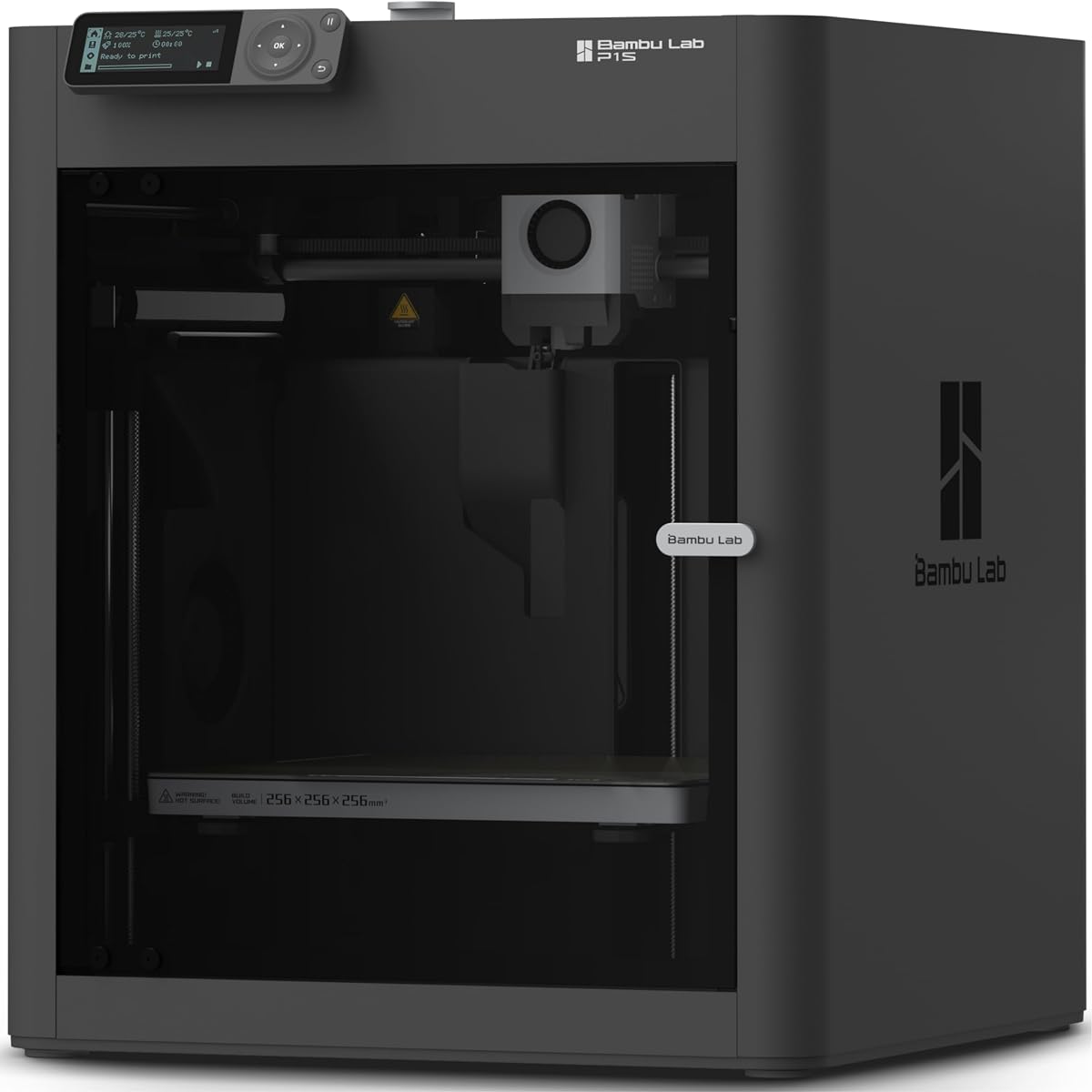
The Bambu Lab P1S is a ready-to-use printer that offers enclosed design and high-speed printing. With a 4.5 rating, it provides a reliable and professional-grade experience for classrooms requiring advanced material support.
We may earn a commission when you buy through this link, at no additional cost to you.
Its fully enclosed body improves performance for advanced filaments like ABS and ASA. Auto bed leveling ensures successful prints, allowing students to focus on design rather than troubleshooting technical issues.
With up to 500mm/s speed and 20000 mm/s² acceleration, it delivers lightning-fast results. The set-up in 15 minutes ensures quick start-to-production time for educators.
This printer is ideal for schools looking for a balance of speed and quality. Its enclosed design and calibration support make it a robust tool for teaching engineering and prototyping.
A fully enclosed body improves print performance for advanced filaments like ABS and ASA, offering more material flexibility.
Spend more time printing and less time setting up with a user-friendly design ensuring a hassle-free assembly experience for all skill levels.
We may earn a commission when you buy through this link, at no additional cost to you.
The FLASHFORGE AD5M combines advanced technology with ease of use for both beginners and experts. Its 4.3 rating reflects strong performance in leveling and maintenance features tailored for educational settings.
We may earn a commission when you buy through this link, at no additional cost to you.
The fully automatic one-click leveling system ensures a flawless first layer every time, reducing frustration. The patented quick-release nozzle can be swapped in 3 seconds, simplifying maintenance for novices.
Resume functionality after outages saves projects from power cuts, improving success rates. The Orca-flashforge slicer enables efficient file transmission and network monitoring for classroom management.
This printer is perfect for educators who value reliability and low maintenance. Its combination of speed, smart leveling, and power recovery ensures a consistent learning experience.
The fully automatic one-click leveling system precisely measures the nozzle-to-build plate distance to set accurate offsets without manual tools.
If the electricity shuts down, it saves the ongoing layer and resumes from that point when power is restored, preventing material waste.
We may earn a commission when you buy through this link, at no additional cost to you.
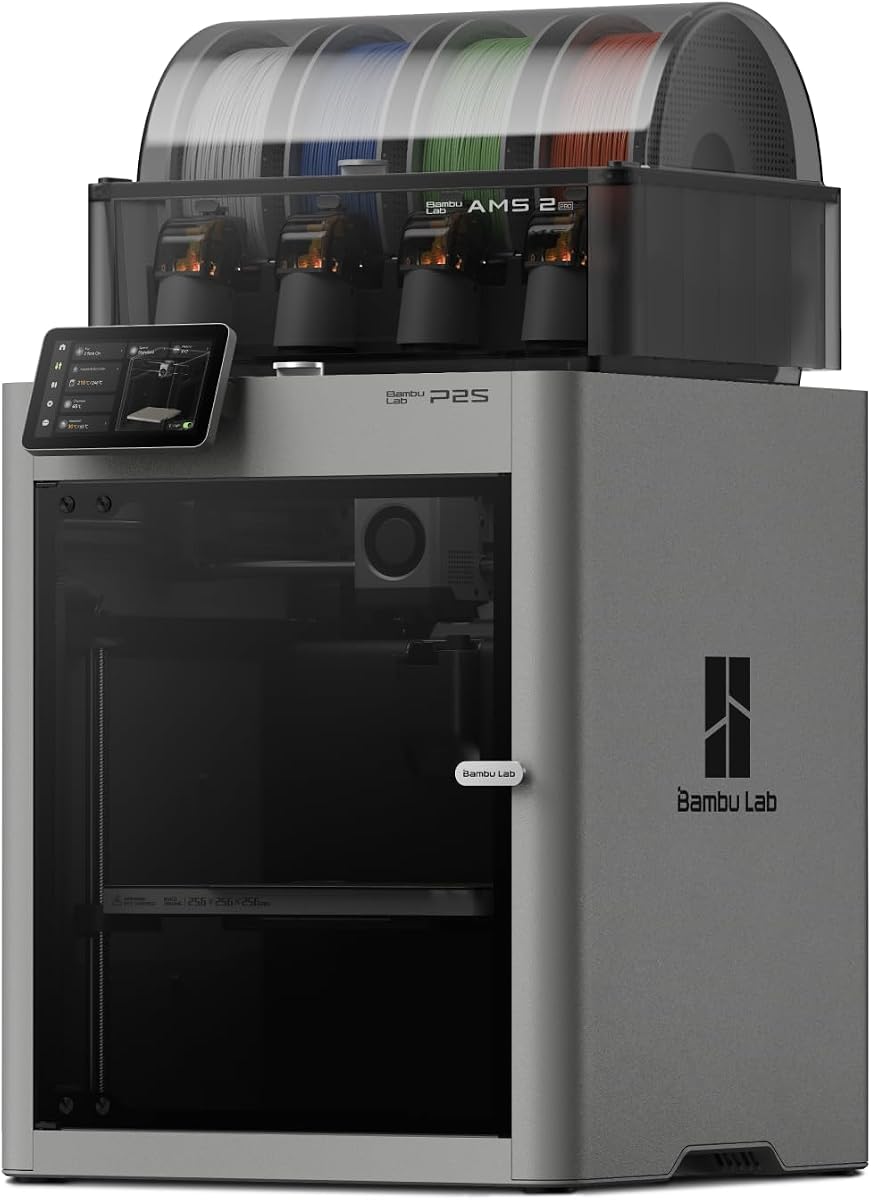
The Bambu Lab P2S Combo brings multi-color printing to classrooms with seamless multi-material support. Its 4.7 rating highlights exceptional speed and precision suitable for advanced engineering projects.
We may earn a commission when you buy through this link, at no additional cost to you.
The AMS 2 Pro enables vibrant multi-color printing and includes built-in filament drying. This ensures high-quality prints by maintaining optimal filament condition throughout the printing process.
Adaptive Airflow System balances cooling and heat retention for various materials. AI failure detection keeps projects on track, making it ideal for environments where teacher attention is limited.
This printer is perfect for advanced students needing professional results. It combines speed with color versatility, offering a comprehensive tool for exploring design and engineering concepts.
Built-in filament drying at up to 65°C keeps every spool ready for flawless prints by maintaining optimal filament condition.
AI failure detection and quick-swap nozzles make professional-grade 3D printing effortless, even when issues arise during a print.
We may earn a commission when you buy through this link, at no additional cost to you.
This Flashforge Adventurer 5M variant emphasizes high-speed performance with a CoreXY structure capable of 600mm/s. With a 4.3 rating, it delivers consistent quality and speed suitable for rapid prototyping in schools.
We may earn a commission when you buy through this link, at no additional cost to you.
Full-auto one-click leveling ensures accurate surfaces, and vibration compensation eliminates ghosting. The dual-sided PEI coating plate supports various materials, enhancing versatility for different student projects.
Features like filament run-out sensors and power loss recovery prevent print failures. This reliability reduces downtime and material waste, crucial for budget-conscious educational environments.
This printer is ideal for schools needing fast turnaround times. It combines high speed with essential fail-safes, ensuring a smooth and educational experience for students.
CoreXY up to 20000 mm/s² acceleration allows high speeds while vibration compensation eliminates ghosting for quality prints.
Filament run-out sensors and power loss recovery ensure worry-free operation, allowing prints to resume after interruptions.
We may earn a commission when you buy through this link, at no additional cost to you.
The Snapmaker U1 features a unique 4-toolhead system allowing true multi-material printing without manual swaps. With a 4.5 rating, it offers advanced capabilities for specialized educational needs and prototyping.
We may earn a commission when you buy through this link, at no additional cost to you.
Tool changes take just 5 seconds, reducing waste by up to 5x compared to traditional systems. This efficiency makes it ideal for complex projects requiring different materials like rigid and flexible filaments.
Smart calibration ensures smooth and accurate prints with minimal manual adjustment. The custom open-source slicing software simplifies setup, making professional features accessible to hobbyists and schools.
This printer is best for advanced makers needing multi-material capabilities. Its speed and efficiency provide a powerful tool for creating functional prototypes and detailed models in educational settings.
Combines rigid and flexible materials and water-soluble supports in a single print with automatic toolhead switching.
Minimizes wasted material during changes by swapping toolheads instead of loading unloading filaments, reducing waste by up to 5x.
We may earn a commission when you buy through this link, at no additional cost to you.
The Bambu Lab A1 Mini Combo offers compact size and multi-color capabilities with AMS lite. Its 4.2 rating highlights excellent speed and precision suitable for limited spaces and specific educational tasks.
We may earn a commission when you buy through this link, at no additional cost to you.
Full-Auto Calibration ensures optimal performance without manual hassles. The active flow rate compensation maintains accuracy, allowing students to achieve detailed prints consistently.
With setup taking just 20 minutes and quiet motor noise cancellation, it fits well in classrooms. The 1-Clip quick swap nozzle allows convenient maintenance for teachers.
This printer is perfect for schools needing a smaller footprint. It balances speed with multi-color features, providing a versatile tool for creative and technical projects.
Pre-assembled design ensures setup for the first print takes just 20 minutes, saving valuable teacher time.
Active flow rate compensation actively adjusts flow according to readings to extrude with accuracy, ensuring flawless prints.
We may earn a commission when you buy through this link, at no additional cost to you.
Choosing the right 3D Printer for Educational Use involves evaluating key factors like safety, speed, and ease of use. This guide helps you navigate the market to find the best fit for your learning environment.
Safety is the top priority for classrooms. Look for enclosed designs with HEPA filters to reduce fumes and particles. Ensure the printer has cool-touch exteriors and anti-pinch features to prevent injuries during student interaction.
Prioritize printers with certifications like UL GREENGUARD to ensure safe air quality for students and teachers.
Educational printers should minimize setup time. Auto-leveling and full-auto calibration are essential to ensure first-layer success without teacher intervention. Quick-swap nozzles simplify maintenance so that technical issues don't disrupt lessons.
Choose models with auto-leveling to reduce troubleshooting and keep students focused on learning concepts.
High-speed capabilities allow more projects to be completed within class time. Reliability features like power-loss recovery and filament run-out sensors prevent material waste and frustration. Look for CoreXY structures for stable motion at high speeds.
Select printers with speed and fail-safe features to maximize productive learning hours in the classroom.
The build volume should match the scale of projects students plan to create. Ensure the printer supports materials like PLA for beginners and potentially ABS or PETG for advanced engineering studies. A versatile machine adapts to curriculum changes.
Verify that the build volume and material compatibility meet the specific requirements of your educational programs.
User-friendly interfaces and cloud connectivity streamline workflow. Look for integrated slicing software and app control for remote monitoring. A rich library of models helps teachers start lessons quickly without designing from scratch.
Choose printers with intuitive software and cloud features to simplify the learning curve for students.
Quiet operation is crucial for classroom environments. High decibel levels can distract students and disrupt the learning process. Look for printers with noise-canceling technology or quiet motor designs to maintain a focused atmosphere.
Prioritize models with active noise canceling to ensure a quiet and distraction-free learning environment.
Multi-color printing adds complexity and engagement. AMS systems allow vibrant prints without manual intervention. However, consider if the added cost and complexity are necessary for your curriculum goals versus single-color functionality.
Evaluate if multi-color features are needed for your projects before investing in complex multi-filament systems.
Consider the total cost of ownership including filaments and replacement parts. Reliable customer support and warranty terms ensure long-term usability. Schools should look for brands with strong community resources and educational discounts.
Check warranty terms and support availability to ensure the printer remains functional throughout the academic year.
Start by reading the user manual and installing necessary software. Level the bed using the automatic tools provided and ensure the build plate is clean to prevent adhesion issues.
Monitor prints via the app or touchscreen. If an issue arises, pause the print and adjust settings immediately. Regular maintenance like cleaning the nozzle and checking belts keeps the machine running smoothly.
Turn off the printer after use and store filaments in a dry place. Periodic calibration ensures consistent quality and helps students learn proper maintenance practices essential for engineering skills.
The Ugee Funbox is a top choice due to its UL GREENGUARD certification and HEPA filtration system. Enclosed designs with cool-touch exteriors are also essential for preventing accidents and ensuring safe air quality in schools.
Yes, many models like the Entina Tina2C and Bambu Lab A1 offer auto-calibration and intuitive interfaces designed for beginners. However, teacher supervision is still recommended during initial setup and complex printing tasks.
Mini printers like the Entina Tina2C require minimal desk space making them ideal for small classrooms. Larger models like the Snapmaker U1 need more room so measure your area before purchasing.
PLA is the safest and easiest filament for students because it emits minimal fumes. Avoid materials like ABS unless proper ventilation is available as they release stronger odors and particles.
Auto-leveling eliminates the need for manual calibration which reduces frustration and failed prints. This feature allows students to focus on design and creativity rather than mechanical adjustments.
Yes, models like the Bambu Lab A1 Combo allow vibrant multi-color prints that enhance project appeal. However, ensure your budget and workflow can support the extra complexity and filament requirements.
Print times vary by speed and model size. Fast models like the Bambu Lab A1 can print simple toys in minutes while larger or complex projects may take hours depending on resolution settings.
Regularly clean the build plate and check the nozzle for clogs. Keep the printer in a dust-free environment and update firmware to ensure reliable performance and safety for students.
We highlighted ten top models including the Bambu Lab A1 for its automation and the Entina Tina2C for budget-friendly entry. Each option offers unique strengths for different educational needs and classroom sizes.
Prioritize safety features, ease of use, and reliable performance when selecting a printer. The best device is one that minimizes technical barriers and maximizes student engagement and creativity.
Always check current prices and availability before purchasing to ensure you get the best value. Educational tools evolve quickly so staying updated on new releases helps your program stay at the forefront of innovation.