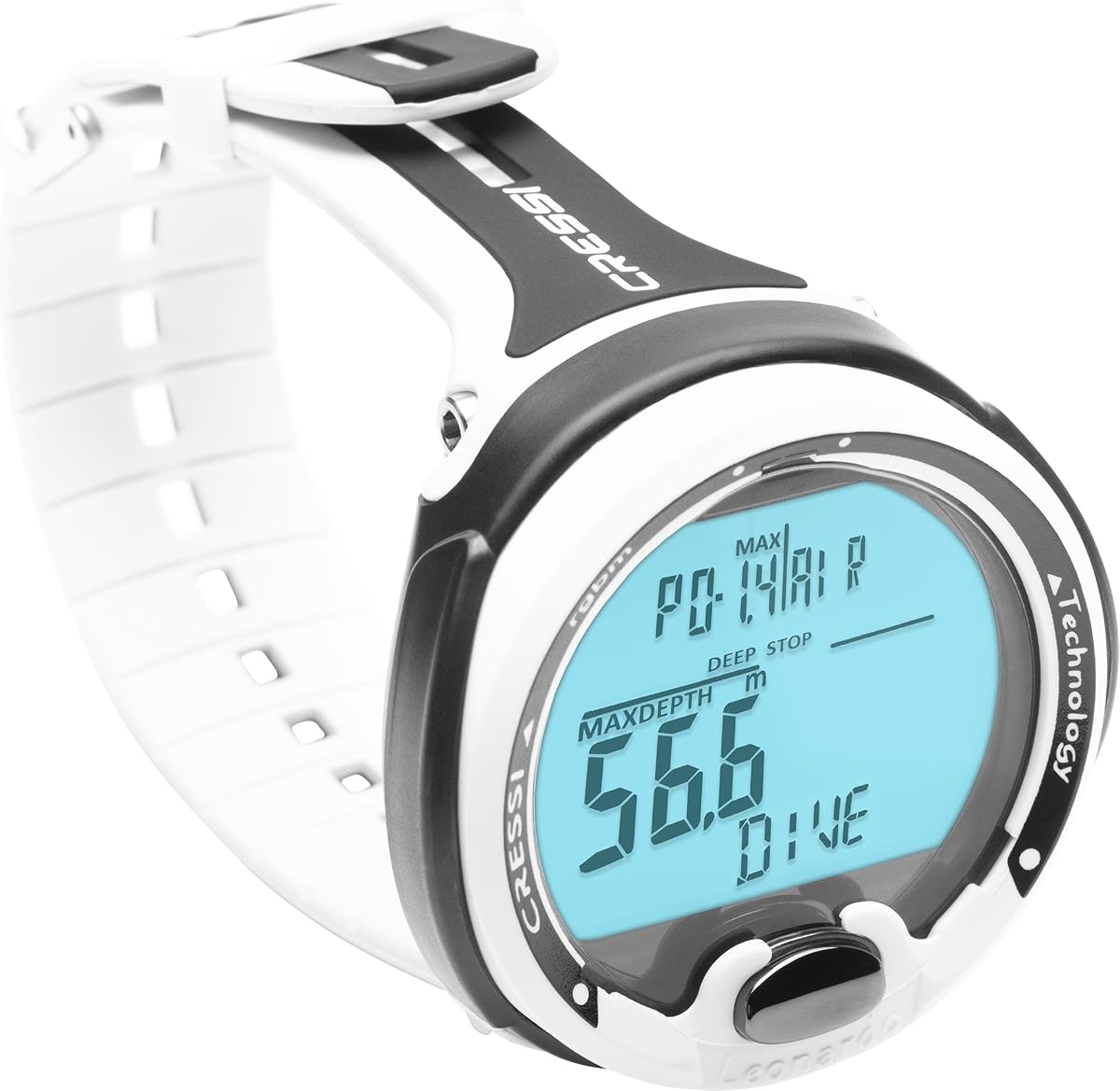
CRESSI Leonardo 2.0 G2 Dive Watch
4.2Editor score
Single button interface for easy control
Supports Air and Nitrox diving modes
Connects to iOS and Android devices
Discover the best dive computers for beginners in our expert guide comparing top models for safety, ease of use, and value on your first underwater adventures.
Starting your scuba diving journey requires reliable gear to ensure safety and confidence underwater. A good dive computer tracks depth, time, and decompression limits to help you navigate the ocean safely. Choosing the right model depends on your budget, diving style, and desired features for future growth.
We evaluated ten top-rated dive computers based on user feedback, technical specifications, and ease of navigation. Our comparison focuses on devices that offer clear displays, intuitive controls, and essential safety alarms suitable for new divers. Each product was selected for its ability to support learning while providing room to advance.
Each pick in this list highlights key strengths, potential trade-offs, and ideal user scenarios to help you decide. While we highlight performance and features, keep in mind that retail prices fluctuate based on season and availability. Always verify current listings and warranties before making your final purchase decision for peace of mind.
4.2Editor score

4.7Editor score

4.7Editor score
This side-by-side comparison outlines the core capabilities and distinguishing features of each model to help you identify the best fit for your needs.

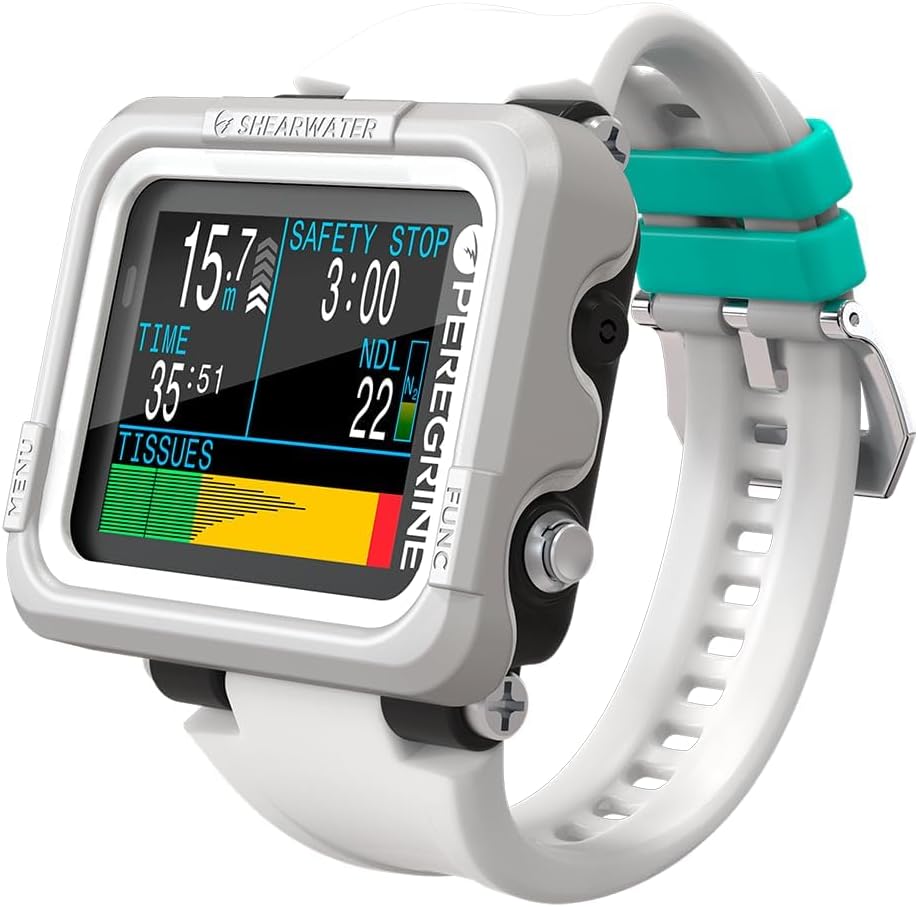


The Shearwater Research Peregrine is a top-rated dive computer that balances usability with reliable performance for new divers. With a 4.7 rating, it is praised for its clear interface and straightforward navigation during underwater exploration.
We may earn a commission when you buy through this link, at no additional cost to you.
Its two-button interface and state-aware menu structure make it easy to access critical data without confusion. The included USB wireless charging station ensures you can recharge the device efficiently, while the battery lasts up to 30 hours on medium brightness.
While the price is higher than entry-level options, the build quality and charging convenience justify the investment for those serious about diving. The stainless steel buttons add durability, making it suitable for rougher environments and long-term use.
If you want a computer that grows with you and offers hassle-free maintenance, the Peregrine is an excellent choice. It is ideal for divers who value simplicity and reliability over complex technical features.
The wireless charging station removes the need for physical ports, reducing potential points of failure.
Menus change based on context, ensuring you only see relevant options at any given moment.
We may earn a commission when you buy through this link, at no additional cost to you.
The CRESSI Leonardo 2.0 G2 offers an accessible entry into dive computing with essential features for beginners. Rated 4.2 by users, it is known for its simplicity and support for various diving setups like Air and Nitrox.
We may earn a commission when you buy through this link, at no additional cost to you.
Its single-button interface simplifies underwater navigation, making it easy to adjust settings or check data quickly. The device pairs with both iOS and Android for seamless tracking, while visual and audible alarms keep you informed of critical data.
While it lacks some advanced features of higher-end models, it provides excellent value for new divers learning the ropes. The infrared data transfer allows you to analyze dive logs, though USB may be preferred by some users for speed.
If you are looking for a reliable, cost-effective tool to start your journey, this watch is a strong contender. It covers the basics well without overwhelming you with unnecessary complexity.
Switch between Air, Nitrox, and Gauge modes easily to match your tank configuration.
Pair with your phone for comprehensive dive tracking and analysis after your sessions.
We may earn a commission when you buy through this link, at no additional cost to you.
The Garmin Descent X30 is a rugged dive computer packed with advanced features for serious divers seeking top performance. With a 4.7 rating, it is lauded for its surface GPS capability and vibrant color display that shows detailed dive profiles.
We may earn a commission when you buy through this link, at no additional cost to you.
You can navigate to dive sites and mark entry points with the GPS, while the large screen lets you customize data fields to your preference. The housing is made from recycled ocean-bound plastics, offering durability and environmental responsibility in one device.
While the feature set might be overwhelming for absolute beginners, it provides room to grow into more technical diving. The NDL Aware depth metrics help you understand how depth changes impact your safety limits in real time.
If you want the latest technology and planning tools for your underwater adventures, the X30 is a premium investment. It is best suited for those who prioritize navigation and data customization in their gear.
Surface GPS allows you to mark and return to specific dive sites easily.
Choose up to three data fields per page to tailor the screen to your needs.
We may earn a commission when you buy through this link, at no additional cost to you.
The Shearwater Research Peregrine Adventures Edition offers a robust feature set including multiple diving modes and no lockout for deviations. Rated 4.7, it is designed for those who want a powerful tool that can handle Air, Nitrox, and Gauge scenarios.
We may earn a commission when you buy through this link, at no additional cost to you.
The 2.2 inch LED LCD provides enhanced color saturation, making it easy to read data underwater. It uses Buhlmann ZHL-16C with gradient factors, giving you flexibility in planning without restricting your ability to deviate from a plan.
For beginners, this model might be more than you need, but it is excellent if you plan to advance quickly. The stainless steel buttons and wireless charging ensure durability and convenience throughout your dives.
If you want a computer that grows with your skills and offers premium data control, this edition is a smart buy. It balances high-end tech with user-friendly navigation effectively.
Shearwater dive computers never lockout for dive plan deviations ensuring flexibility.
Customize your decompression limits using gradient factors for personalized safety.
We may earn a commission when you buy through this link, at no additional cost to you.
The Cressi Raffaello stands out with a built-in digital compass that eliminates the need for a separate tool during dives. Rated 4.4, it is praised for its RGBM-based mixed-gas planning system and versatile operating modes like apnea and gauge.
We may earn a commission when you buy through this link, at no additional cost to you.
Data transfer is seamless via Bluetooth and USB, allowing you to review and store your dive history easily. The user-replaceable battery offers an expected life of 4 years, which reduces maintenance downtime for frequent divers.
While it costs more than basic models, the integration of navigation and planning tools provides great value. It is suitable for divers who want a compass without adding extra weight to their setup.
If you prioritize navigation convenience and detailed planning in a single device, the Raffaello is a strong choice. It supports both freediving and traditional scuba activities well.
The built-in compass helps you navigate underwater effortlessly without extra gear.
Supports apnea, gauge, and scuba modes making it suitable for various activities.
We may earn a commission when you buy through this link, at no additional cost to you.
The Garmin Descent G2 combines dive computing with advanced health and smartwatch features in a rugged watch-style design. Rated 4.6, it offers dive readiness insights based on your sleep, stress, and recent exercise to optimize your sessions.
We may earn a commission when you buy through this link, at no additional cost to you.
With an AMOLED display and sapphire lens, it ensures readability and protection against scratches. Multi-GNSS support allows divers to mark entry and exit points, while smart notifications keep you connected during surface intervals.
This model is expensive for those just starting, but it offers an all-in-one solution for active divers. The health tracking features provide insights into how your body adapts to training, which is unique in dive computers.
If you want a daily wear device that doubles as a reliable dive computer, the G2 is ideal. It supports recreational, technical, and freediving with comprehensive data tracking.
Insights into how prepared you are based on sleep, stress, and exercise.
Track heart rate, Body Battery, and sleep score during daily activities.
We may earn a commission when you buy through this link, at no additional cost to you.
The CRESSI Giotto is designed for divers needing multi-mix nitrox capabilities with customizable oxygen settings. Rated 4.2, it simplifies complex profiles and tracks dives down to 393 feet, ensuring safety at greater depths.
We may earn a commission when you buy through this link, at no additional cost to you.
It supports altitude diving, making it versatile for mountain lakes, and stores up to 70 hours of dive data. The customizable oxygen mix from 21 to 99 percent allows precision for varying conditions during your dives.
While the interface is intuitive, the multi-mix focus might be unnecessary for basic air dives. However, it is a great tool for those planning to progress into more advanced gas management techniques.
If you need a computer that handles technical gas mixes and altitude, the Giotto is a solid choice. It keeps detailed logs accessible for PC download and review.
Manage up to three nitrox gas mixes during a single dive easily.
Engineered for high elevation to ensure performance in mountain lakes.
We may earn a commission when you buy through this link, at no additional cost to you.
The Mares Puck Lite utilizes the Bühlmann ZH-L16C algorithm with a crystal-clear segment display and single-button navigation. Rated 4.4, it is designed for divers who want reliable data access without complex menus.
We may earn a commission when you buy through this link, at no additional cost to you.
Nitrox compatibility ranges from 21 to 50 percent, offering flexibility in gas planning. The logbook tracks up to 100 dives with graphs, and you can sync data via Bluetooth to analyze performance.
While the interface is simple, it ensures visibility in various underwater conditions. The user-replaceable power source ensures reliability, though you may need to plan for battery changes over time.
If you want a straightforward, functional computer for recreational and technical scenarios, the Puck Lite is a great pick. It balances simplicity with essential features effectively.
Crystal-clear segments ensure data is readable in various underwater conditions.
Simple operations allow quick access to functions even while wearing gloves.
We may earn a commission when you buy through this link, at no additional cost to you.
The Descent G1 is a rugged dive computer featuring a monochrome display and sapphire lens for clear reading. Rated 4.6, it supports GPS/GLONASS/Galileo to mark entry and exit points while offering robust battery life.
We may earn a commission when you buy through this link, at no additional cost to you.
You can store up to 200 dives on the wrist, with smart features like smart notifications and payments via paired smartphones. It also tracks over 30 built-in sports apps, making it versatile beyond just diving.
While the monochrome display is less flashy than color options, it offers excellent contrast and reliability. It is a durable choice for those who want GPS tracking without color complexity.
If you want a reliable device that tracks surface entry points and offers sports features, the G1 is ideal. It is well-suited for adventurers who dive and explore regularly.
Mark surface entry and exit points to see where you started and ended.
Enjoy up to 26 hours of GPS mode for extended surface navigation.
We may earn a commission when you buy through this link, at no additional cost to you.
The SUUNTO D5 offers a color display in a compact design with wireless tank pressure monitoring. Rated 4.0, it includes vibration alarms and a digital compass to help you stay oriented underwater.
We may earn a commission when you buy through this link, at no additional cost to you.
Its wireless connection allows you to track tank pressure without cables, which simplifies setup. The mobile connection enables you to share data and settings, keeping your dive info accessible.
While it has fewer advanced features than some competitors, it is a solid option for beginners who want color visibility. The vibration alarms ensure you notice alerts even in noisy conditions.
If you want a compact computer with essential safety features and a color screen, the D5 is worth considering. It is suitable for standard recreational diving needs.
Track tank pressure without cables using wireless connection technology.
Receive alerts via vibration to stay informed in loud environments.
We may earn a commission when you buy through this link, at no additional cost to you.
Choosing the right dive computer involves evaluating features that match your learning goals and budget.
A clear display is vital for reading depth and time underwater. Look for color or high-contrast screens that are easy to see in low light.
Prioritize displays that remain readable in various underwater conditions for safety.
Beginners benefit from intuitive interfaces with simple button layouts. Single or two-button designs reduce confusion while diving.
Choose a model with straightforward navigation to focus on enjoying the dive.
Ensure the computer supports your intended diving types such as Air, Nitrox, or Gauge. More modes offer flexibility as your skills advance.
Select a unit that matches your current needs but allows for future growth.
Long battery life ensures you can dive without frequent charging or replacements. Some models offer rechargeable batteries while others use replaceable cells.
Look for devices with enough power for your diving frequency to avoid downtime.
The device should withstand water pressure and rough handling. Materials like stainless steel or recycled plastics add to longevity.
Opt for robust construction to protect your investment in challenging environments.
Bluetooth or USB allows you to transfer data and sync with apps. This helps in analyzing your dive history and tracking progress.
Ensure the computer connects to your devices for easy data management.
Visual and audible alarms alert you to critical changes in depth or time. Vibration alarms add another layer of safety in noisy water.
Choose models with reliable alarms to maintain safety during dives.
Prices vary widely, so set a realistic budget for your first computer. Higher cost does not always mean better for beginners.
Balance features with price to find the best value for your needs.
Before diving, ensure your computer is charged or has a fresh battery. Check that all settings match your current dive plan and oxygen mix.
After each dive, rinse the device with fresh water to remove salt and sand. Allow it to dry completely before storing it in a cool place.
Regularly update firmware via USB or Bluetooth to keep safety algorithms current. Review your dive logs to track your progress and maintain safety.
Yes, a dive computer is essential for tracking depth and time to avoid decompression sickness. It provides real-time safety alerts that are crucial for new divers learning limits.
Most dive computers can track snorkeling data but are optimized for scuba. Some models offer a gauge mode that works well for surface activities.
Rechargeable models should be charged after every dive to ensure readiness. Always check the battery level before heading to the water.
Color displays offer better readability and data distinction but may use more power. For beginners, high-contrast monochrome screens are often sufficient and clearer.
Many modern computers support Bluetooth pairing for data transfer and firmware updates. This makes reviewing dive logs easier for beginners tracking progress.
A lockout indicates you exceeded safety limits. You must follow surface intervals and wait for the device to reset before diving again.
Yes, dive computers are designed for underwater use with specific depth ratings. Always check the maximum depth before diving to ensure safety.
The Shearwater Peregrine, CRESSI Leonardo 2.0 G2, and Garmin Descent X30 stand out for their blend of features and usability.
Prioritize models with clear displays and simple controls to focus on learning safe diving habits without distraction.
Prices can change due to promotions and inventory, so verify the latest listings before making your final purchase.