
THUSTAR 8MP Document Camera & Webcam 4K
4.4Editor score
Foldable design for portability
3-Level LED light adjustment
Built-in dual microphones
This guide compares the top ten document cameras for teachers and presenters, focusing on image quality, connectivity, and features for remote learning.
Document cameras have become essential tools for educators and presenters who need to share physical materials with clarity. These devices allow you to project books, documents, and objects onto a screen in real time. Choosing the right model depends on your specific needs, such as resolution, connectivity options, and portability.
We have evaluated ten top-rated document cameras based on their performance, features, and user feedback. Each product was assessed for image quality, ease of use, and compatibility with various operating systems. Our goal is to help you find a device that enhances your teaching or presentation experience without unnecessary complexity.
Each pick in this guide highlights key strengths and potential limitations to assist your decision-making process. You will find detailed reviews, comparison tables, and buying advice tailored to different use cases. Please note that product availability and pricing may change, so always check current listings before purchasing.
4.4Editor score
4.5Editor score

4.6Editor score
This table provides a side-by-side overview of the top ten document cameras, highlighting their key specifications and unique features to help you compare options quickly.


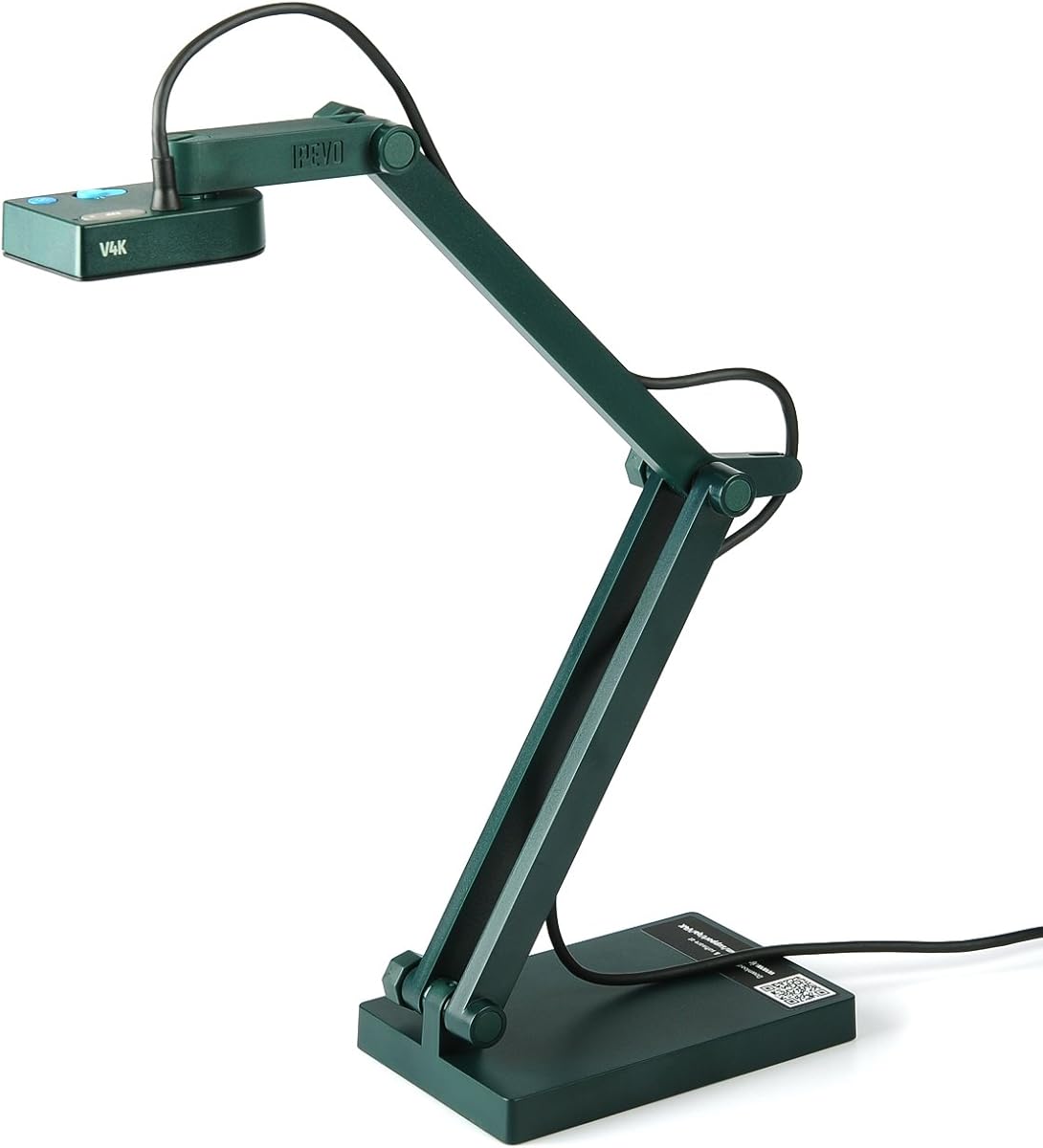
The IPEVO V4K stands out as a top choice for educators seeking reliable high-definition imaging. With its 8 Megapixel camera, it captures detailed images suitable for both live streaming and recording. Its strong rating reflects consistent performance in various teaching environments.
We may earn a commission when you buy through this link, at no additional cost to you.
Key strengths include the Sony CMOS Image Sensor, which ensures exceptional color reproduction and noise reduction. This is particularly useful in dimly lit classrooms. The fast focusing speed minimizes interruptions, allowing smooth transitions between materials during lessons.
While the stand is robust, heavy daily use can cause joints to loosen over time. However, the design allows for simple fixes. Additionally, it lacks built-in wireless capabilities, which may limit flexibility for mobile presenters.
This camera is ideal for teachers who prioritize image quality and stability. It works seamlessly with Mac, Windows, and Chromebook systems. For those needing a dependable tool for remote teaching, the IPEVO V4K is a highly recommended option.
The 8MP sensor delivers Ultra High Definition images up to 3264 x 2448 pixels, ensuring clarity for detailed documents.
It supports a wide range of software and applications across different operating systems, enhancing its utility in diverse settings.
We may earn a commission when you buy through this link, at no additional cost to you.
The INSWAN INS-1 offers a compelling mix of hardware and software features at an accessible price point. Its 8MP camera delivers high-quality images, and the included Documate software adds significant value with annotation and recording tools. Users appreciate its ease of setup and use.
We may earn a commission when you buy through this link, at no additional cost to you.
Features like the built-in LED light and anti-glare sheet help manage exposure in varying lighting conditions. The 7-segment brightness control allows precise adjustments. The multi-joint design provides a generous viewing size while remaining compact for desktop use.
However, the camera is limited to USB connectivity, which may not suit all setups. The macro capability captures objects as close as 3.9 inches, which is adequate but not exceptional for very small details. These trade-offs are acceptable given the overall performance.
This model is well-suited for educators and professionals needing a reliable, feature-rich camera without complex installation. Its compatibility with various webinar software makes it a versatile choice for online conferencing and teaching.
The built-in LED and anti-glare sheet ensure clear images even in challenging lighting environments.
The bundled Documate software offers digital zoom, annotation, and recording features directly.
We may earn a commission when you buy through this link, at no additional cost to you.
The THUSTAR 8MP delivers strong performance for budget-conscious buyers. It offers 8MP resolution and a foldable design that makes it easy to transport. The inclusion of dual microphones enhances audio quality during video calls. Users appreciate its straightforward setup and compatibility with major platforms.
We may earn a commission when you buy through this link, at no additional cost to you.
Key features include adjustable image reversal and brightness controls, allowing customization for different presentation needs. The 3-Level LED lights help eliminate shooting problems in dark or bright environments. The camera can capture A3-size materials, providing flexibility for various document types.
While the build quality is generally good, some users report variability in durability. Advanced features like AI tracking are absent compared to higher-end models. However, for basic classroom and remote teaching needs, these limitations are often acceptable given the price.
This camera is an excellent choice for teachers and presenters looking for a cost-effective solution. Its compatibility with Windows, macOS, and Chrome OS ensures it fits into most existing tech setups without issues.
The foldable design occupies minimal space, making it easy to carry between classrooms or locations.
Built-in microphones and LED lights ensure both sound and image quality are maintained during sessions.
We may earn a commission when you buy through this link, at no additional cost to you.
The Kitchbai Visualiser is recognized for its unique manual image reversal feature, allowing precise control over output. It shares many similarities with other budget models but distinguishes itself with this specific capability. The dual microphones and LED lights enhance overall presentation quality.
We may earn a commission when you buy through this link, at no additional cost to you.
Features include a multi-joint stand that captures 2D and 3D objects effectively. The brightness adjustment ensures clear images under different lighting conditions. The camera is designed to be portable and easy to carry, fitting well into mobile teaching scenarios.
The manual nature of some controls may require practice to use efficiently. Software support is less comprehensive than some competitors. However, for users who prioritize direct control over image orientation and brightness, this model offers distinct advantages.
It is a solid option for educators needing a versatile camera with specific customization needs. Its compatibility with various platforms ensures it can be integrated into existing workflows with minimal hassle.
The manual image reversal button allows users to adjust output orientation directly without software.
The foldable embedded design saves space and facilitates easy transport between locations.
We may earn a commission when you buy through this link, at no additional cost to you.
The PAKOTOO Document Camera offers essential features for basic teaching tasks. Its image reversal function is easily accessible via a button, providing convenience. The camera supports A3 and A4 sizes, making it versatile for various document types. Users find it functional for standard classroom needs.
We may earn a commission when you buy through this link, at no additional cost to you.
Features like 3-level brightness adjustment and built-in microphones contribute to a clear presentation experience. The foldable design allows for compact storage. However, it requires manual selection of USB Camera in the system settings, which may be a minor hurdle for some users.
The lack of plug-and-play functionality means users need to configure their system manually. Software compatibility is limited compared to more advanced models. Despite this, it remains a viable option for those prioritizing affordability and basic functionality.
This camera is suitable for educators needing a straightforward tool for document sharing. Its compatibility with Windows, Mac, and Chrome OS ensures it can be used in most environments with some setup.
The camera focuses on core features like image reversal and brightness control without extra complexity.
Users need to select USB Camera in their system settings for proper recognition and use.
We may earn a commission when you buy through this link, at no additional cost to you.
The OKIOCAM S-4K distinguishes itself with AI tracking capabilities through the OKIOPoint feature. This allows for interactive presentations by zooming in on specific areas. The camera offers Ultra HD resolution and enhanced low-light performance, ensuring clear images in various conditions.
We may earn a commission when you buy through this link, at no additional cost to you.
Its durable design includes hinges tested for over 10,000 rotations, providing long-term reliability. The plug-and-play functionality simplifies setup for users. The included software supports live annotation, video recording, and other tools that enhance engagement.
While the camera is portable, it does not include a battery, relying on USB power. The viewing orientation is optimized for landscape, which may limit portrait use. These factors are minor trade-offs for the advanced features offered.
This model is ideal for teachers seeking interactive tools for presentations. Its compatibility with multiple operating systems makes it a versatile addition to any classroom or remote setup.
The OKIOPoint AI tracking enables dynamic zooming and focus on specific content during lessons.
Hinges are rigorously tested to withstand extensive use, ensuring longevity in classroom environments.
We may earn a commission when you buy through this link, at no additional cost to you.
The IPEVO VZ-X is a premium option offering unmatched flexibility with Wi-Fi, HDMI, and USB connectivity. Its wireless range allows presenters to move freely around the room. The battery life supports full class sessions without interruption. Users value its ability to connect with various devices wirelessly.
We may earn a commission when you buy through this link, at no additional cost to you.
Features include a large viewing area and built-in LED illumination. The multi-jointed stand provides flexibility in capturing objects from different angles. The swiveling head and body buttons enable quick adjustments without a computer.
The higher price may be a barrier for some users. Additionally, it requires regular charging to maintain wireless functionality. However, for professional presenters needing mobility, these features justify the investment.
This camera is perfect for dynamic teaching environments and corporate presentations. Its compatibility with iOS, Android, and Apple TV expands its utility beyond standard computer setups.
Wireless connectivity with up to 33 feet of range enables movement across the classroom.
Support for iOS, Android, and Apple TV makes it versatile for diverse tech ecosystems.
We may earn a commission when you buy through this link, at no additional cost to you.
The OKIOCAM S2 Pro offers high-resolution imaging with a 13MP sensor capable of 4K output. This ensures exceptional clarity for detailed documents. The built-in light and microphone enhance the overall presentation quality. Users appreciate the sharpness and color accuracy in low-light conditions.
We may earn a commission when you buy through this link, at no additional cost to you.
Features like the OKIOPoint AI tracking add interactivity to presentations. The glass-fiber reinforced arm and metal base provide stability. The camera supports popular software platforms like Zoom and Teams, facilitating easy integration into workflows.
The weight and size may make it less portable than foldable options. Some features require additional software downloads. However, for stationary setups requiring high fidelity, these trade-offs are minimal.
This model suits professionals and educators needing high-quality visuals. Its compatibility with major platforms ensures seamless use in various teaching and conference scenarios.
The 13MP sensor captures true 4K images, providing superior detail for complex materials.
The metal weighted base ensures the camera remains steady during extensive use.
We may earn a commission when you buy through this link, at no additional cost to you.
The OKIOLABS T-4K stands out for its ability to capture Ledger-size materials fully. This makes it ideal for maps and large documents. The 8MP sensor delivers high-definition images with vibrant color. Users value its compact design combined with large viewing capabilities.
We may earn a commission when you buy through this link, at no additional cost to you.
Features include AI tracking for engaging presentations and lag-free streaming. The plug-and-play setup simplifies use. The camera works well with various operating systems, ensuring broad compatibility. Its portability allows for easy transport between locations.
The reliance on USB power limits mobility. Software features are available but not mandatory. For users needing large coverage without bulk, this camera offers a balanced solution.
This model is excellent for educators dealing with large-format materials. Its performance and compatibility make it a reliable tool for diverse educational needs.
Captures full Ledger-size materials, making it suitable for maps and large books.
Includes OKIOPoint for interactive presentations that engage students effectively.
We may earn a commission when you buy through this link, at no additional cost to you.
The OKIOCAM S2-4K excels in low-light conditions thanks to its back-illuminated sensor. This allows for clear images without supplemental lights. The camera captures near-Ledger size materials and supports iPad via USB-C. Users appreciate its durability and interactive features.
We may earn a commission when you buy through this link, at no additional cost to you.
Features like OKIOPoint AI-tracking enhance presentation engagement. The adjustable controls for focus and zoom provide flexibility. The camera is designed with high-quality manufacturing, ensuring reliable performance. It works seamlessly with popular conferencing platforms.
The lack of supplemental lights means users rely on the sensor alone. Software setup may be needed for full functionality. However, the clarity and performance in challenging environments are outstanding.
This model is ideal for settings with variable lighting. Its compatibility with mobile devices expands its utility for modern classrooms and presentations.
The back-illuminated sensor doubles light sensitivity, ensuring clarity without extra lights.
Support for USB-C iPad allows seamless integration with mobile teaching setups.
We may earn a commission when you buy through this link, at no additional cost to you.
Selecting the right document camera requires understanding your specific needs and the environment in which it will be used. This guide outlines key factors to consider for making an informed decision.
High resolution ensures that text and details are clear on the projected screen. Look for cameras with at least 8MP to capture fine details effectively. Good image sensors also improve performance in low-light environments.
Prioritize models with high megapixel counts and quality sensors for best visual results.
Choose a camera that offers compatible connections for your setup. USB is standard, but wireless options like Wi-Fi offer more mobility. HDMI connectivity allows direct connection to projectors without a computer.
Consider both wired and wireless options based on your classroom or presentation needs.
Foldable or compact designs are ideal for those who move between rooms. Durability is key for heavy daily use. The stand should offer flexibility in capturing objects from various angles.
Opt for lightweight and robust designs if portability is a priority.
Built-in LED lights help in capturing clear images under different lighting conditions. Adjustable brightness settings allow for better control over exposure. Some models offer specialized lighting to reduce glare.
Ensure the camera has adequate lighting options for your typical environment.
Comprehensive software adds value with features like annotation and recording. Some cameras come bundled with tools that enhance presentations. Compatibility with popular conferencing apps is also crucial.
Select models with software that matches your workflow and teaching style.
Verify that the camera works with your operating system and devices. Support for Mac, Windows, and Chrome OS is common. Mobile compatibility can be beneficial for flexible teaching.
Check compatibility details to ensure smooth integration with existing technology.
Built-in microphones improve audio quality during video calls. Dual microphones reduce noise effectively. If audio is important, choose cameras with good sound features.
Prioritize cameras with quality microphones for clear communication.
Price ranges vary significantly based on features. Determine which features are essential versus nice to have. Higher-end models often offer more advanced tools but may not be necessary for basic use.
Balance your budget with the features you genuinely need.
Start by connecting the camera to your computer via USB or Wi-Fi depending on the model. Install any required software to access full features. Ensure the camera is positioned directly above the material you want to project.
Adjust the focus and lighting settings to get a clear image. Use the provided buttons or software controls to fine-tune brightness. Regularly clean the lens with a soft cloth to maintain image quality.
Store the camera in a safe place to prevent damage to joints and lenses. If it is foldable, collapse it properly to save space. Periodically check for firmware updates to ensure optimal performance.
Most document cameras require a computer to display images on a screen. However, some models support HDMI connections to projectors directly. Wireless models may also connect to mobile devices without a computer.
Yes, document cameras are ideal for remote teaching as they allow sharing of physical materials. They integrate with video conferencing software like Zoom and Teams. This makes them versatile for distance learning environments.
USB cameras connect via a cable to a computer for power and data. Wireless cameras use Wi-Fi for connectivity, offering more mobility. USB cameras are typically more stable, while wireless ones allow movement.
Most modern document cameras are compatible with Mac operating systems. They use standard drivers or software that supports macOS. Always check compatibility details before purchasing to ensure smooth operation.
Use a soft, lint-free cloth to gently wipe the lens surface. Avoid using harsh chemicals or abrasive materials that could damage it. Regular cleaning ensures clear image quality during presentations.
Many cameras are designed to be plug and play, working immediately after connection. Some may require driver installation for full features. Check product specifications to confirm ease of setup.
We have reviewed ten top document cameras ranging from budget-friendly options to premium models. Each offers unique strengths tailored to different teaching and presentation needs. Consider your priorities such as mobility or resolution when choosing.
Focus on features that directly impact your workflow and audience engagement. Reliability and ease of use should guide your decision process. The right camera can significantly enhance your ability to share information effectively.
Always check current listings for availability and pricing before making a purchase. Technologies and models evolve, so stay informed about the latest options. Investing in the right tool ensures long-term satisfaction and utility.