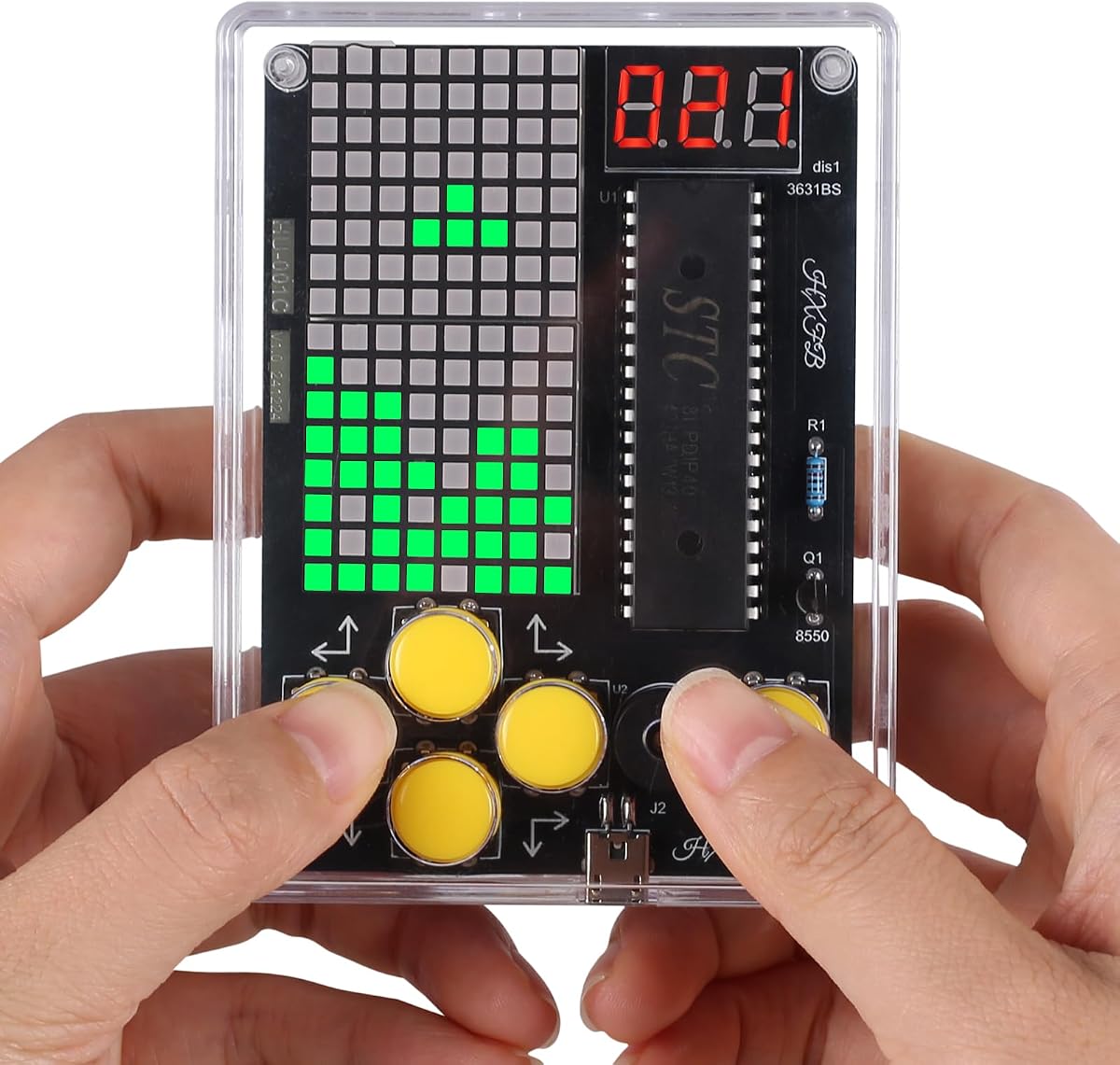
PEMENOL 7-in-1 DIY Game Soldering Kit
4.1Editor score
Interactive seven functions included
Three difficulty levels
Hands-on soldering practice
This guide compares the top electronics kits for teens including Arduino projects, soldering sets, and STEM robotics to help you choose the perfect learning
Electronics kits for teens offer a hands-on way to explore coding, engineering, and physics through real-world projects. These kits provide the components and instructions needed to build functional devices from simple circuits to complex robots.
We compared ten highly rated products based on component quality, tutorial clarity, and project variety. Our selection includes soldering-free options for beginners and advanced boards for those ready to write code and design custom systems.
Each pick shows what makes a kit stand out for young learners and hobbyists. Prices and availability change frequently so check current listings before purchasing to ensure you get the best deal for your educational needs.
4.1Editor score

4.7Editor score
4.8Editor score
Here is a side-by-side comparison of all ten products to help you find the right fit for your interests and skill level.


The ELEGOO Mega 2560 R3 stands out as the most comprehensive starter kit for teens ready to dive deep into electronics. With a rating of 4.7 it offers robust hardware capable of handling large projects that other kits cannot support.
We may earn a commission when you buy through this link, at no additional cost to you.
This kit includes over 200 components including advanced sensors like RFID and real-time clocks. The Mega board provides 54 digital I/O pins and 256KB flash memory allowing for complex builds like interactive displays and motor control systems.
While the sheer number of components is overwhelming at first the organized storage case keeps everything accessible. The guided lessons start simple and gradually increase in complexity ensuring steady progress without frustration.
Ideal for serious hobbyists and STEM students this kit bridges the gap between basic kits and professional development. It encourages modifying code and circuits to create original projects fostering real engineering skills.
The inclusion of 200+ parts means you can build multiple projects without buying extra supplies.
Guided lessons let you progress from blinking LEDs to controlling servos and reading sensors seamlessly.
We may earn a commission when you buy through this link, at no additional cost to you.
The ELEGOO UNO R3 Most Complete Starter Kit is a classic choice for teens entering the world of Arduino. Rated 4.7 it balances affordability with a rich set of components to ensure meaningful learning experiences.
We may earn a commission when you buy through this link, at no additional cost to you.
Users get 200+ components across 63 types including LCDs, RFID readers, and motors. The pre-soldered modules and breadboard make setup easy while the PDF tutorial guides you through 30+ projects effectively.
The main trade-off is the UNO board's smaller memory compared to the Mega which limits extremely large projects. However for most learning goals this limitation is negligible and the lower price point makes it accessible.
This kit is perfect for school clubs or home learning where budget matters. It teaches fundamental wiring and coding concepts without requiring soldering skills right away.
Includes a 9V power supply and battery clip so you can power projects without constant USB connection.
From sensors to motors everything needed for 30+ projects is included to minimize extra purchases.
We may earn a commission when you buy through this link, at no additional cost to you.
Building a robot car is often a dream for young engineers and this kit delivers with an ESP32-based camera for FPV streaming. Rated 4.5 it combines mechanical assembly with coding for a dynamic project.
We may earn a commission when you buy through this link, at no additional cost to you.
The robot features line tracking and obstacle avoidance using ultrasonic sensors. You can control it via IR remote or app and see live video feed which adds a modern touch to the experience.
Assembly requires following keyed connectors to avoid mistakes but the process is straightforward. The rechargeable lithium-ion battery ensures longer play sessions without worrying about disposable batteries.
Best for teens who want to see their code move physical objects this kit teaches practical robotics skills. It encourages tweaking code to improve navigation and sensor sensitivity.
The onboard camera lets you see what the robot sees making remote control more engaging and accurate.
Sensors are easy to swap or reconfigure so you can experiment with different driving behaviors.
We may earn a commission when you buy through this link, at no additional cost to you.
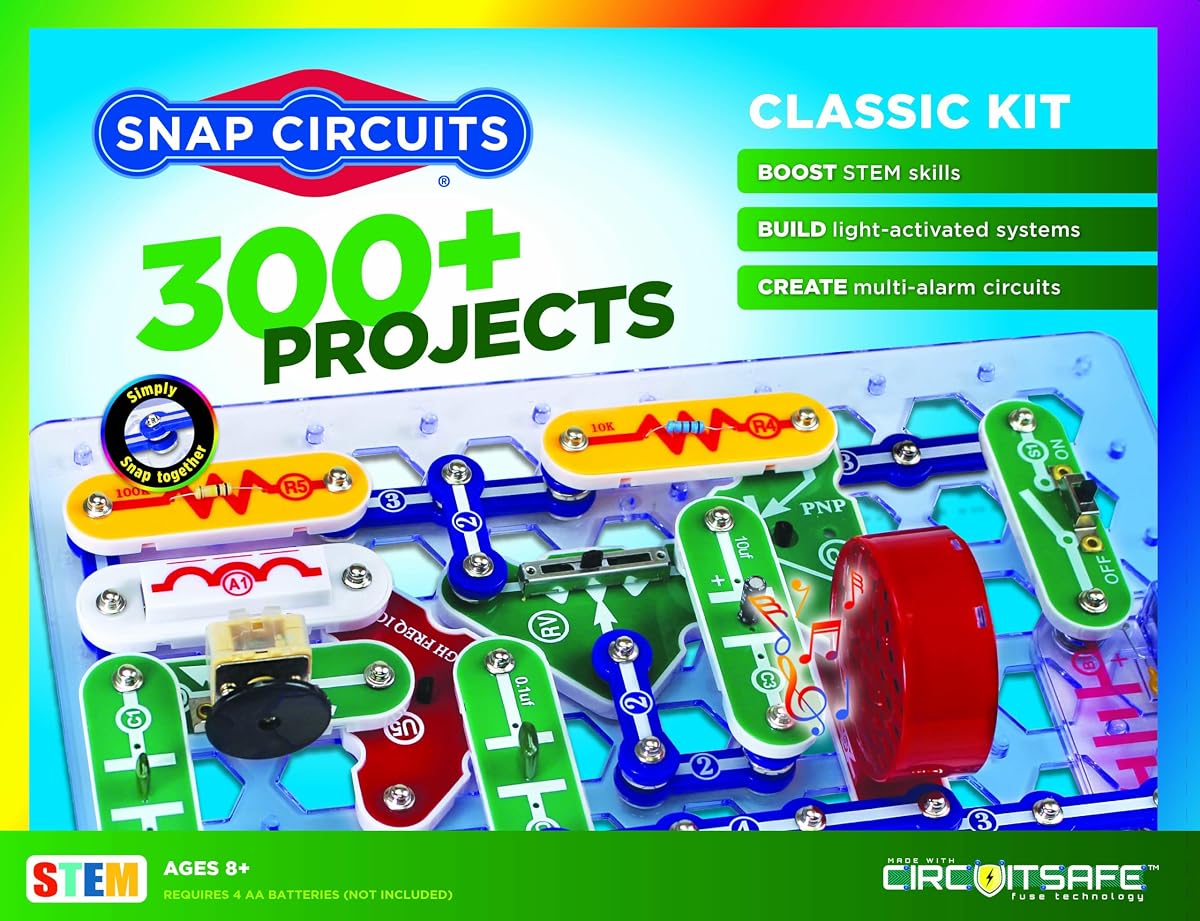
The SNAP CIRCUITS Classic SC-300 is a premium option that focuses purely on circuit building without code. With a 4.8 rating it is perfect for teens who want to understand electricity safely and quickly.
We may earn a commission when you buy through this link, at no additional cost to you.
You can build over 300 projects ranging from alarms to radios using snap-on parts. The color-coded pieces and grid layout make it easy to follow instructions and visualize how current flows.
The lack of programming might limit advanced coders but the physics lessons are valuable. The kit is durable and designed for repeated use so teens can revisit projects anytime.
Ideal for those who want immediate gratification from building working gadgets this kit removes the barrier of coding. It lays a strong foundation in electrical theory through tactile experimentation.
Projects like doorbells and alarms work immediately upon assembly providing instant feedback and satisfaction.
No sharp tools or soldering irons are needed so the kit is safe for unsupervised use.
We may earn a commission when you buy through this link, at no additional cost to you.
This kit challenges teens to build a working Bluetooth speaker which is a rewarding project for intermediate learners. While rated 3.9 it offers a great opportunity to practice soldering on a useful device.
We may earn a commission when you buy through this link, at no additional cost to you.
The amplifier board is pre-soldered to reduce complexity but you still solder LEDs and connections. The result is a portable speaker that plays music via Bluetooth USB or TF card.
The acrylic enclosure protects the electronics and looks modern. Instructions are detailed to help you through each soldering step ensuring a professional finish if you take your time.
Best for teens with some experience or those wanting to improve their hands-on skills this kit teaches assembly and circuit theory. It bridges the gap between theory and real-world application.
Unlike abstract kits this builds a speaker you can actually use daily which increases motivation.
Focuses on soldering techniques which are essential for advanced electronics and repair work.
We may earn a commission when you buy through this link, at no additional cost to you.
The Super Starter Kit offers a focused entry into Arduino with 22+ guided lessons. Rated 4.7 it provides excellent value for teens who want to learn coding without spending extra on advanced boards.
We may earn a commission when you buy through this link, at no additional cost to you.
Components include an LCD, ultrasonic sensors, and motors to cover key concepts. The pre-soldered LCD means you avoid soldering headaches while focusing on wiring and code logic.
It is a leaner kit compared to the Mega which means fewer expansion options later. However for a first kit it covers the basics thoroughly and encourages moving to bigger projects quickly.
Ideal for students starting in coding clubs this kit balances cost and learning. The included tutorial ensures you can start building immediately without needing external resources.
Covers inputs outputs motors and displays giving a complete introduction to embedded systems.
Starts with simple blink projects and grows into complex motor control smoothly.
We may earn a commission when you buy through this link, at no additional cost to you.
This speaker kit adds a fun twist with a dynamic LED light show that pulses with music. Rated 4.7 it combines audio engineering with visual effects for a visually stimulating project.
We may earn a commission when you buy through this link, at no additional cost to you.
The manual is high-resolution with clear photos to guide soldering steps. This attention to detail helps reduce errors and builds confidence in using a soldering iron effectively.
The dual 2-inch speakers provide decent sound quality for a DIY project. The acrylic case protects the components and highlights the light show effect effectively.
Best for teens who want a cool looking final product this kit teaches practical soldering in a fun context. The visualizer adds a creative element that makes the electronics come alive.
The LEDs react to music frequencies providing immediate visual feedback on circuit performance.
Practical soldering skills are learned by building a real device rather than just abstract circuits.
We may earn a commission when you buy through this link, at no additional cost to you.
The MicroKits Theremin is a unique kit that teaches physics by building a touchless musical instrument. Rated 4.5 it allows teens to create sound by waving hands near electric fields which is fascinating.
We may earn a commission when you buy through this link, at no additional cost to you.
Breadboard connections mean no soldering is needed making setup fast and reversible. The 22-page booklet explains the science of capacitance in an easy to understand way.
While it doesn't produce a traditional sound source it demonstrates concepts used in touchscreens and sensors. The kit is small and portable so it can be carried to science fairs easily.
Ideal for teens interested in physics and innovation this kit offers a different perspective on electronics. It encourages experimentation with space and touch which is rare in standard kits.
Explains how electric fields interact with the human body to create musical tones.
Demonstrates how touchscreens and proximity sensors work using basic circuits.
We may earn a commission when you buy through this link, at no additional cost to you.
This kit acts as a modular expansion pack adding 37 different sensors to existing Arduino projects. Rated 4.7 it gives you access to motion light and touch sensors all in one box.
We may earn a commission when you buy through this link, at no additional cost to you.
Since the controller isn't included it is best used alongside a Mega or UNO kit you already own. The modules are pre-soldered so you just plug them into a breadboard to start testing.
The variety is unmatched in this price range allowing you to build environmental monitors or alarms easily. It encourages mixing and matching sensors to create custom logic and control systems.
Perfect for teens who already own a starter kit this adds a huge layer of complexity and possibility. It teaches sensor integration and data processing efficiently.
Includes modules for flame light tilt and sound to cover almost every physical variable.
Modules are designed to plug directly into breadboards for fast and easy prototyping.
We may earn a commission when you buy through this link, at no additional cost to you.
The PEMENOL kit is designed as an entry point into soldering with a fun game theme. Rated 4.1 it includes seven interactive functions that keep teens engaged during assembly.
We may earn a commission when you buy through this link, at no additional cost to you.
Video guidance and step-by-step manuals help users understand where to place each component. The project is compact but provides enough complexity to practice soldering techniques without overwhelm.
It is designed for ages 15+ so adult supervision is recommended for the first build. The kit helps build confidence for more complex projects later by mastering the basics first.
Best for teens who want a manageable first soldering experience this kit balances learning with play. It provides a clear path from assembly to testing and using the device.
Video guidance ensures visual learners can follow along easily with the written manual.
Three difficulty levels allow you to adjust the project complexity based on your skill.
We may earn a commission when you buy through this link, at no additional cost to you.
Choosing the right electronics kit depends on skill level interests and learning goals. Here are key factors to consider before purchasing.
Beginners often prefer solderless kits like SNAP CIRCUITS or Arduino starters that use breadboards. Advanced teens may want soldering kits or complex robotics to challenge their engineering skills.
Match the kit to the teen's experience to prevent frustration or boredom.
Kits with 30 or more projects offer more learning value than single purpose kits. Variety keeps interest high and ensures the teen learns different concepts over time.
Look for kits that include sensors motors and displays for a broad curriculum.
High quality boards and sensors ensure reliable connections and consistent results. Cheap components can lead to frustrating failures that discourage learning.
Prioritize kits with good reviews on durability and part longevity.
Clear instructions tutorials and code examples are vital for independent learning. Kits with video guides or step-by-step PDFs reduce the need for constant adult help.
Check if documentation is available online before buying to ensure support.
Kits compatible with standard Arduino boards allow teens to add more parts later. An expandable kit grows with the teen's skills preventing the need to buy a new set soon.
Look for kits that are part of a larger ecosystem of compatible parts.
If the kit requires soldering ensure the iron is safe and tools are suitable for teens. Battery compartments should be secure to prevent leakage or choking hazards.
Always supervise soldering tasks and ensure proper ventilation during use.
Kits that teach coding physics or engineering principles offer more value than toys alone. Check if the kit aligns with school curriculums or STEM goals.
Choose kits that challenge the teen to think and solve problems actively.
Prices range from affordable starter kits to premium robotics sets. Set a budget that balances cost with the features and longevity needed for long term use.
Consider buying starter kits separately and adding expansion kits later to save money.
Start by reading the instructions carefully and organizing components before building. Use the storage box to keep small parts safe and prevent loss during projects.
When soldering use a stand and clean iron tip to ensure good connections. Always let components cool before touching them to avoid burns or damage to the circuit.
Store batteries separately when not in use to prevent leakage. Keep kits in a dry place to protect electronics from moisture and heat damage.
Most kits are safe but those with soldering irons require supervision. Ensure teens wear eye protection and work in a ventilated area when using tools.
Yes coding kits require a computer to upload code to the board. Make sure your system is compatible with the Arduino IDE before purchasing.
SNAP CIRCUITS or the ELEGOO UNO R3 Super Starter Kit are great starts. They do not require soldering and offer clear step-by-step guidance for learning.
Yes most components like sensors and resistors can be reused in other projects. Keep them organized in labeled containers for future use.
Durable kits can last years with proper care. Components may wear out if mishandled but most are designed for repeated projects.
Coding kits require basic programming but tutorials teach the basics. Soldering kits may not need any coding at all.
Yes many kits are designed for classrooms or coding clubs. The components are easy to share among teens for collaborative projects.
Contact the seller immediately for replacements. Most companies have support teams to resolve missing part issues quickly.
These ten kits offer a wide range of options for every skill level and interest. From robotics to soldering each product provides a unique way to learn STEM concepts.
Prioritize kits that match the teen's current abilities to ensure a positive learning experience. Look for clear instructions and robust components to maximize project success.
Check current prices and availability before buying since deals change frequently. Investing in the right kit now can spark a lifelong interest in engineering and technology.