
SUNLU Filament Dryer S2
4.3Editor score
Simple touch screen interface
Compatible with multiple filament sizes
Built-in spindle for even drying
This guide compares the top filament dryers for 3D printing to help you choose the best model for drying PLA, PETG, and ABS materials effectively.
Moisture can ruin your 3D prints by causing stringing and poor adhesion. A reliable filament dryer prevents these issues by keeping your spools dry during storage and printing. Choosing the right dryer ensures consistent results and extends the life of your filament investment.
We evaluated ten top-rated models based on heating speed, capacity, and user feedback. Each product offers unique features like digital displays or multiple spool support. Our analysis helps you find the perfect match for your specific 3D printing needs and environment.
Every pick highlights key specifications and real-world performance data. You will see how each model handles different materials and sizes. Please note that prices and availability can change frequently so check the latest listings before purchasing.
4.3Editor score

4.6Editor score

4.5Editor score
This side-by-side comparison helps you see the key differences between each model at a glance.


The Creality Space Pi X4 stands out as a top performer with its ability to hold four standard 1kg spools. It features a high user rating and robust heating capabilities that handle tough materials effectively.
We may earn a commission when you buy through this link, at no additional cost to you.
Its dual independent heating chambers allow for faster moisture removal compared to single chamber units. The ability to reach 85 degrees Celsius makes it suitable for advanced filaments like ABS and Nylon that require higher heat.
While it is larger and more expensive than basic models the performance gain is significant for high volume users. The sealed storage mode ensures your filament stays dry even when not actively drying.
This model is ideal for workshops or makers who print frequently and use varied materials. Its reliable performance and capacity make it a solid investment for serious 3D printing enthusiasts.
The dual chambers remove moisture 30 percent faster than standard single chamber dryers.
Higher temperature settings unlock the ability to dry difficult materials like PC and PAHT.
We may earn a commission when you buy through this link, at no additional cost to you.
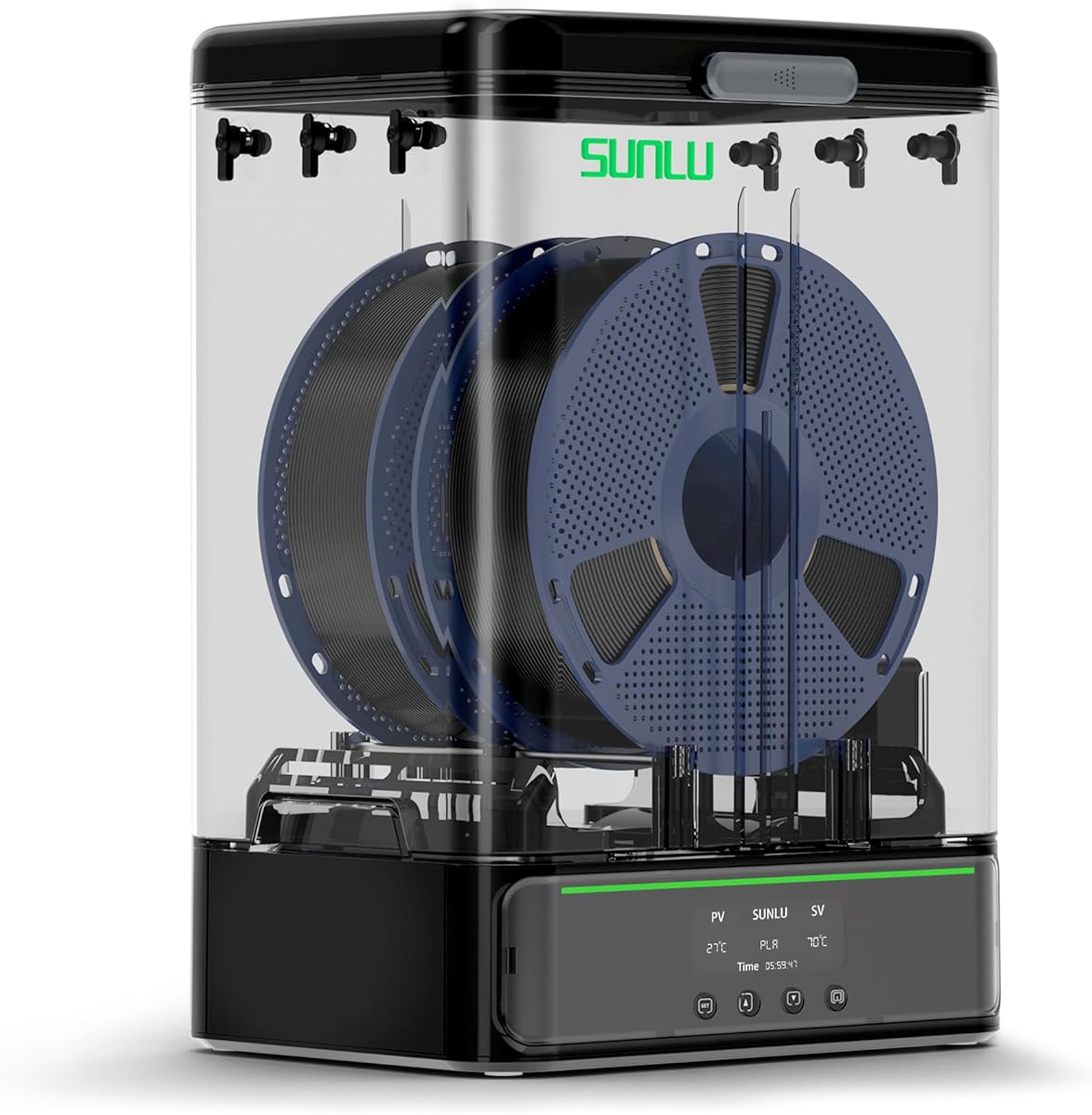
The SUNLU S2 offers an accessible entry point into filament drying with its straightforward design. It is well rated for its ability to revive damp filament and improve print quality without a complex interface.
We may earn a commission when you buy through this link, at no additional cost to you.
Its built-in spindle ensures the filament spins continuously for even heat distribution. This simple mechanism helps prevent hot spots that could damage sensitive materials like TPU or PLA.
Users find the large touch screen intuitive for setting time and temperature. While it lacks advanced features like dual chambers it covers the basics well for standard printing needs.
This dryer is perfect for hobbyists or those on a tight budget. It provides the essential protection needed to avoid moisture related printing errors at a very reasonable cost.
The user-friendly interface allows for quick temperature and time customization with just a tap.
It supports a wide range of diameters and materials making it a versatile tool for any setup.
We may earn a commission when you buy through this link, at no additional cost to you.
The SUNLU S4 is a robust solution for users needing high capacity and power. It earns a high rating for its ability to dry multiple spools efficiently while maintaining consistent temperatures throughout the chamber.
We may earn a commission when you buy through this link, at no additional cost to you.
Its powerful 350 watt PTC heater heats up quickly and maintains heat better than lower wattage models. The three circulation fans ensure that every part of the spool gets the same exposure to dry air.
The eight filament exit holes offer unique flexibility for multi printer setups. You can run filament to different printers simultaneously without needing multiple devices.
This model is best suited for professionals or serious makers with large filament collections. Its premium features justify the higher price point for those who need reliability and capacity.
The 350 watt heater offers 50 percent higher efficiency compared to previous generation models.
Eight exit holes allow for diverse loading angles and support for multiple printers at once.
We may earn a commission when you buy through this link, at no additional cost to you.
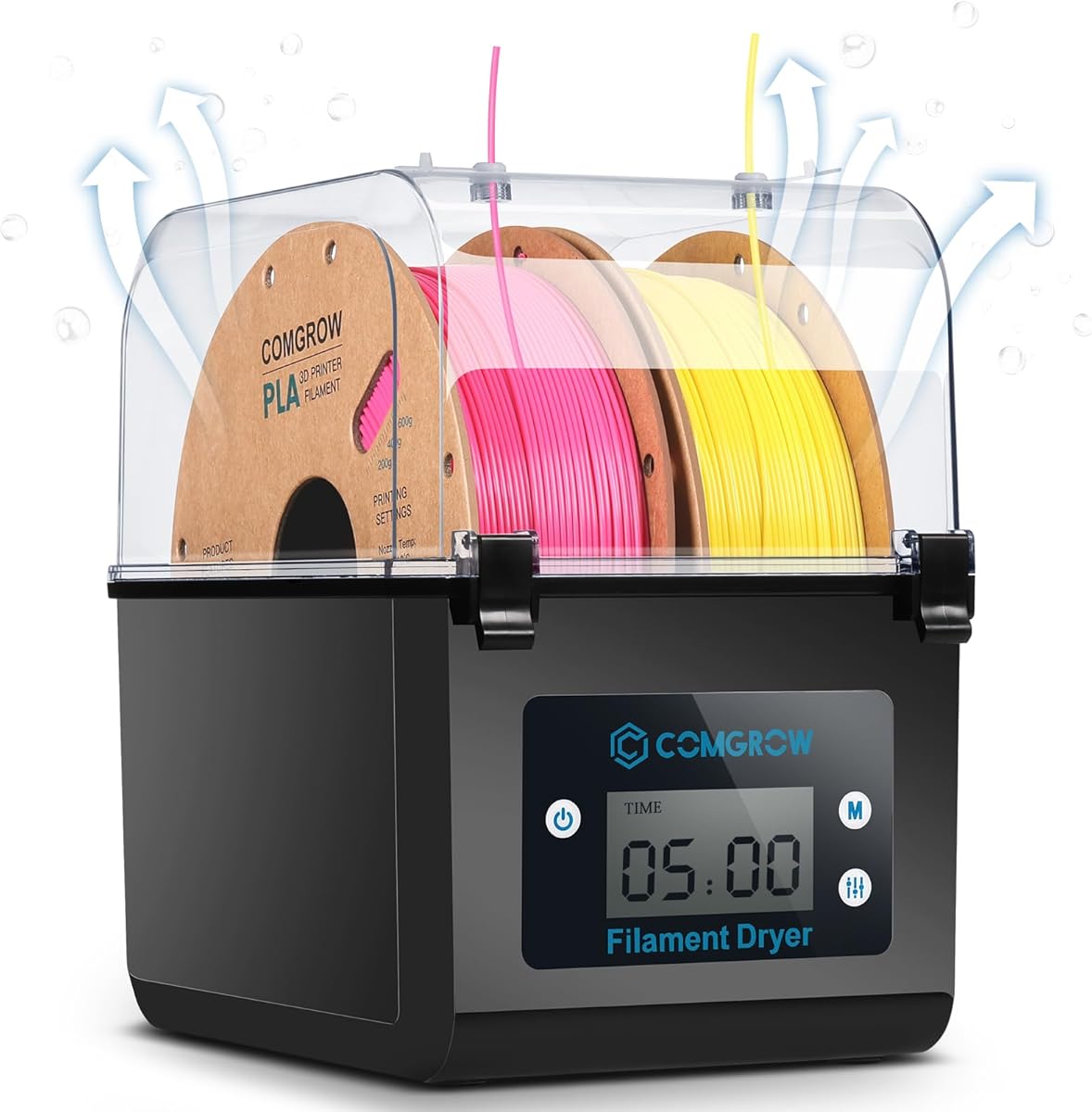
The Comgrow Dryer Box provides a practical solution for keeping filament dry with a simple design. It is rated well for its ability to prevent entanglement and clogging during standard printing jobs.
We may earn a commission when you buy through this link, at no additional cost to you.
Its sealed outlet structure uses a silicone sheath to minimize moisture re entry. The 2-inch LCD screen gives clear visibility of temperature and humidity levels in real time.
The machine includes a safety feature that shuts down if not activated within minutes. This might require attention but ensures safety and energy efficiency when not in use.
This unit is a solid choice for beginners who need basic drying without high end specs. It handles standard PLA and PETG well enough for most casual printing needs.
Internal heating provides a dry storage environment to avoid poor adhesion and layer migration.
The clear display makes it easy to track settings without guessing if the machine is working.
We may earn a commission when you buy through this link, at no additional cost to you.
The SUNLU S1 Plus enhances basic drying with an added fan to speed up moisture removal. This upgrade helps solve stringing issues common with wet filament in humid environments.
We may earn a commission when you buy through this link, at no additional cost to you.
Users appreciate the ability to adjust temperature and time easily to suit different environments. The visual display keeps you informed about conditions inside the box without opening it.
While it shares similar dimensions to other compact models the fan adds a layer of efficiency. It is a good option for those who print in varying weather conditions.
This dryer is suitable for home makers looking for an affordable step up from passive storage. Its performance helps maintain smoother prints and better layer adhesion consistently.
The upgraded fan design speeds up the discharge of excess water from your filaments.
Adjustable temperature range allows you to adapt to different filament types effectively.
We may earn a commission when you buy through this link, at no additional cost to you.
The SUNLU SP2 stands out by accommodating larger 3kg spools which is rare for this category. It offers a balance of heating performance and storage security for serious users.
We may earn a commission when you buy through this link, at no additional cost to you.
Its 250W heater reaches 70 degrees in just fifteen minutes ensuring you do not wait long. The detachable base allows you to store filament safely after the drying cycle is complete.
The humidity monitor and desiccant containers help maintain dry conditions between prints. This attention to detail makes it a strong contender for those managing a large inventory.
This unit is excellent for workshops that buy filament in bulk. Its capacity and sealing features reduce waste and keep your spools ready to use anytime.
The rollers and bar holder support different sized spools up to large 3kg rolls.
Two sliding latches and gaskets ensure a great seal to protect filaments from moisture.
We may earn a commission when you buy through this link, at no additional cost to you.
This version of the SUNLU S4 is highly rated for its ability to handle four 1kg spools efficiently. It shares the same high performance features as the standard S4 model.
We may earn a commission when you buy through this link, at no additional cost to you.
The 350W heater and three fans ensure consistent drying across all spools. This makes it ideal for those who need to prep multiple colors for a single large project.
Its robust construction suggests it will last for years of regular use. The eight exit holes provide flexibility for running filament to multiple machines simultaneously.
This model is best for professionals who need to keep multiple printers fed. Its capacity and reliability make it a powerful tool in a production environment.
Three high quality fans circulate air inside ensuring consistent temperature across the entire area.
Eight filament exit holes allow for smoother loading and various printing angles easily.
We may earn a commission when you buy through this link, at no additional cost to you.
The SUNLU Space PI Plus offers advanced controls with a large 3.7 inch touch screen. It is designed to make drying simple through one touch settings for common materials.
We may earn a commission when you buy through this link, at no additional cost to you.
Its 360 degree hot air circulation ensures even heating without the need to manually rotate spools. This technology helps prevent uneven drying spots that could lead to print issues.
Users can set drying times up to 48 hours allowing for thorough moisture removal. The presets for composite materials like PLA CF save time on manual configuration.
This dryer is great for users who want modern features without buying the largest unit. It balances capacity with advanced controls to suit a modern 3D printing setup.
One key temperature settings for 12 filament types including common and high-performance composites.
The unique PTC heater ensures uniform drying unlike heating pads that can be uneven.
We may earn a commission when you buy through this link, at no additional cost to you.
The Polymaker Polydryer focuses on seamless integration between drying and storage. It is well rated for its ability to lock in dry conditions between prints effectively.
We may earn a commission when you buy through this link, at no additional cost to you.
Its built-in hygrometer helps you track filament status with less guesswork. The connected design means you can feed filament directly without exposing it to ambient air.
While it supports fewer spools the sealing quality is excellent for sensitive materials like PA and Nylon. The desiccant support adds an extra layer of protection for long term storage.
This unit is best for users who value material protection above all else. It ensures your filament stays dry and ready for use whenever you need it.
The built-in hygrometer helps you judge filament status with less guesswork and supports better management.
Moves from drying to sealed storage and direct filament feeding with less exposure to ambient moisture.
We may earn a commission when you buy through this link, at no additional cost to you.
The SUNLU Space PI SE is a compact option that heats up quickly within 15 minutes. It features a simple control layout with a display screen and knob for easy operation.
We may earn a commission when you buy through this link, at no additional cost to you.
Thermal insulation cotton on the inner wall keeps heat efficient and prevents accidental burns. The 360 degree air circulation ensures that even a single spool dries uniformly.
Users appreciate the countdown timer which helps track drying progress accurately. It fits well in smaller spaces where larger units would not fit comfortably.
This model is a solid choice for casual users who need occasional drying. It provides enough features to improve print quality without taking up too much desk space.
It can be heated to 65 degrees within 15 minutes thanks to the upgraded PTC solution.
It effectively solves problems of drawing and clogging during printing to improve print quality.
We may earn a commission when you buy through this link, at no additional cost to you.
Choosing the right filament dryer involves understanding your printing needs and material types.
The heating capacity determines how quickly your dryer can reach the desired temperature. Look for units with higher wattage like 250W or 350W if you want faster results.
A higher wattage heater ensures you do not wait long for your filament to be ready for printing.
Check how many spools the dryer can hold at once. Basic models hold one or two spools while advanced units can hold four or more.
Select a capacity that matches your typical print volume to avoid drying bottlenecks.
Different materials require different drying temperatures. PLA needs lower heat while materials like ABS or Nylon require higher temperatures up to 85 degrees.
Ensure the dryer supports the max temp required for your hardest printing materials.
Internal fans help circulate hot air evenly around the spool. This prevents hot spots and ensures uniform moisture removal throughout the filament.
Look for models with multiple fans or 360 degree heating for the best even drying.
Interfaces range from knobs to touch screens. Touch screens often offer more precise control and preset options for different materials.
Choose an interface that feels intuitive to you for easy operation daily.
A good seal keeps moisture out after the drying cycle is complete. Some units double as storage boxes to keep your filament dry between jobs.
Prioritize models with silicone seals or locking lids to maintain dryness effectively.
Most dryers support standard 1.75mm and 2.85mm diameters. Check if the model supports 3.00mm if you use wider filament.
Verify the compatibility with your specific printer requirements before buying.
Large units with four spools take up significant desk space. Measure your workspace to ensure the dryer fits comfortably.
Consider the physical dimensions relative to your 3D printer setup.
Start by placing your spool on the holder inside the chamber. Ensure the filament exits through a designated hole without tangling around the edges.
Set the temperature and time based on the material type. For example, PLA usually needs 45 degrees while Nylon may need 70 degrees.
After drying, seal the unit or store the spool in a dry bag. This keeps the filament dry until you are ready to use it.
Filaments absorb moisture from the air which causes issues like stringing and bubbling. A dryer removes this moisture to improve print quality and adhesion significantly.
PLA usually needs about 4 to 6 hours at 45 degrees Celsius. Always check the manufacturer guidelines for specific recommendations on your spool.
Yes, many dryers are designed to revive damp filament. If the moisture is not too high, the dryer can restore the material for usable prints.
Most units require the seal to be closed to trap heat. However, some have vents that allow moisture to escape without losing all internal heat.
Nylon typically requires a higher temperature around 70 to 80 degrees. Check your specific brand guidelines to avoid overheating the material.
Yes but use lower temperatures like 45 degrees to prevent deformation. TPU is flexible so it is easier to damage with high heat.
Many modern dryers support 3.00mm but not all. Always verify the capacity and dimensions in the product specs before purchasing.
Unplug the unit and let it cool completely. Wipe the inside with a dry cloth to remove dust or residue from previous drying cycles.
The top picks offer a range of options for every type of user. The Creality X4 is great for capacity while the SUNLU S2 is ideal for budget users.
When choosing prioritize the features that matter most like temperature range or spool capacity. Your specific material needs should drive your final decision.
Remember that prices can change frequently so check the latest offers. Selecting the right dryer will help you achieve consistent and high quality prints.