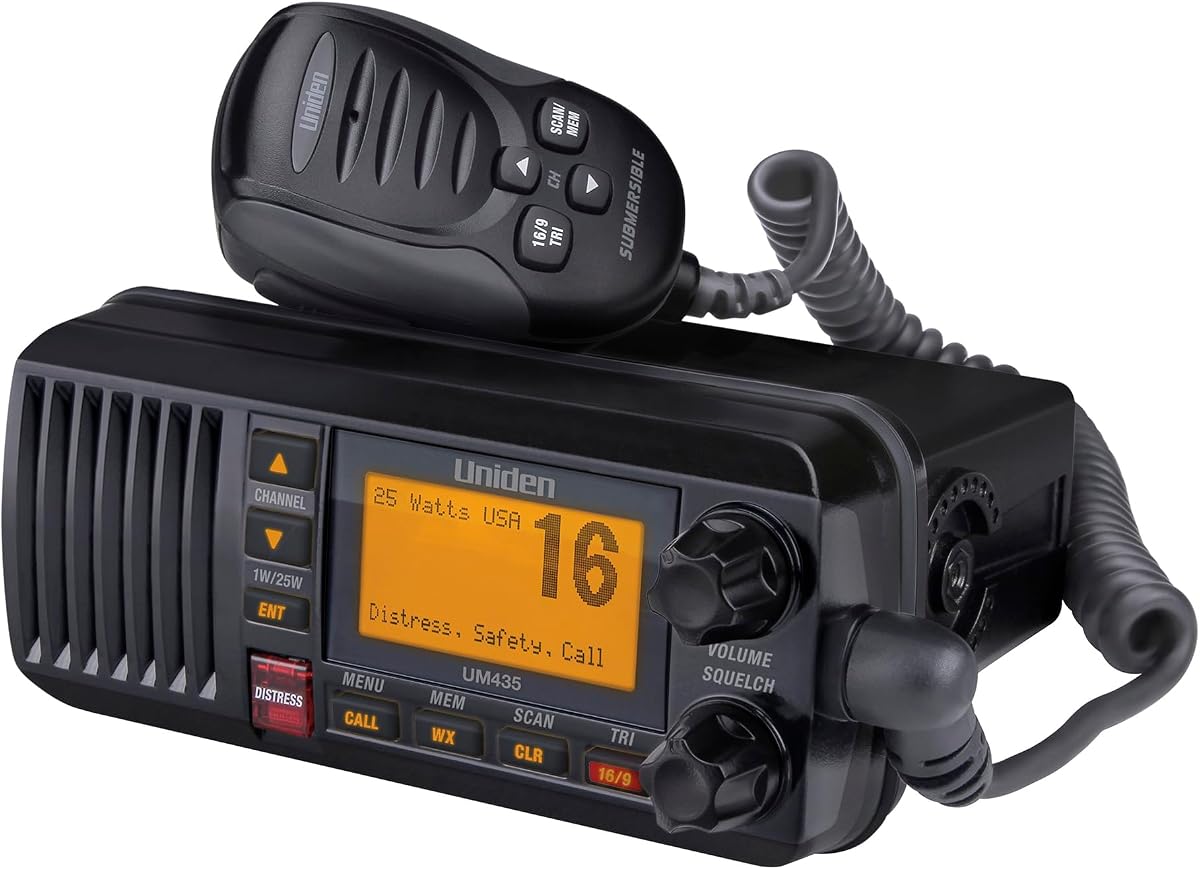
Uniden UM435BK Advanced Fixed Mount VHF Marine Radio
4.6Editor score
Submersible IPX8 Design
All Marine Channels Included
Triple Watch Functionality
This guide compares the top 10 flush mount VHF radio models for marine safety, communication, and navigation features available in the current market.
Finding the right flush mount VHF radio is essential for any vessel seeking reliable communication and safety on the water. These units integrate seamlessly into your console for a clean look and robust performance during critical moments at sea.
We compared ten leading models based on build quality, feature sets, audio clarity, and user feedback. Our analysis highlights key differences in durability, GPS integration, and digital selective calling capabilities to help you make an informed decision.
Each pick showcases unique strengths tailored to different boating needs and budgets. Please note that market conditions change frequently so always verify current availability and pricing before finalizing your purchase decision.
4.6Editor score

4.5Editor score

4.3Editor score
The following table provides a side-by-side overview of each model to help you quickly identify the specifications that matter most to your specific maritime communication requirements.




The Uniden UM435BK stands out as an affordable yet capable option for boaters seeking essential safety features. With a rating reflecting strong user satisfaction, it delivers reliable communication in varied conditions without unnecessary complexity.
We may earn a commission when you buy through this link, at no additional cost to you.
Its submersible IPX8 design ensures it survives accidental submersion while rugged construction handles the harsh marine environment. The inclusion of all US international and Canadian channels plus new 4-digit options guarantees full access to necessary communication frequencies.
While it lacks internal GPS or advanced audio processing its triple watch feature and 25 watt transmit power provide effective reach. The digital selective calling capability allows you to send position requests efficiently during emergencies.
This model is ideal for recreational boaters needing dependable communication without premium pricing. If you prioritize core functionality and water resistance over extra navigation integration this radio offers exceptional value for safety on the water.
The fully submersible design means you do not need to worry about splash or accidental drops into the water ruining your equipment.
Having access to international and Canadian channels ensures you can communicate with any vessel in your vicinity regardless of border location.
We may earn a commission when you buy through this link, at no additional cost to you.
The Uniden UM385BK brings essential weather monitoring to the helm in a compact footprint. Users appreciate its ability to provide storm warnings early keeping you informed of brewing conditions on the water.
We may earn a commission when you buy through this link, at no additional cost to you.
Its S.A.M.E. weather alert system lets you program specific geographic zones for relevant alerts ensuring you do not get overwhelmed by irrelevant weather reports. The rugged handheld mic allows easy transmission while maintaining focus on navigation.
While the IPX4 rating protects against rain and splashes it is not fully submersible like higher rated models. However for most fixed installations in protected areas this level of protection is sufficient for daily use.
This radio works well for small to medium vessels needing weather awareness without advanced navigation features. It bridges the gap between basic models and feature-rich units with reliable performance and straightforward operation.
The NOAA weather alert feature ensures you are notified immediately when storms approach allowing time to seek shelter or alter your course safely.
Frequently used functions are easily accessible via soft keys reducing distraction and keeping your attention on the waters ahead during critical moments.
We may earn a commission when you buy through this link, at no additional cost to you.
The ICOM M424G distinguishes itself with an internal GPS receiver which is crucial for accurate position reporting via Digital Selective Calling. This feature simplifies installation by eliminating the need for external GPS hardware in many setups.
We may earn a commission when you buy through this link, at no additional cost to you.
Its Aqua Quake draining function ensures water does not accumulate inside the unit after exposure to heavy splashes or rain. The IPX7 submersible protection adds a layer of security for vessels prone to unexpected submersion events.
While slightly larger than some competitors the rugged build quality justifies the physical footprint. Compatibility with AIS transponders enhances situational awareness by allowing you to see nearby vessels on connected displays.
For boaters requiring precise location data without complex wiring this unit offers a balanced solution. It is an excellent choice for coastal cruising where navigation safety and reliable communication are equally important priorities.
Having GPS built directly into the radio allows for automatic position sends during distress calls which is critical for rapid rescue coordination in emergencies.
The ability to connect to an AIS transponder provides enhanced safety by showing traffic density and vessel movements in your immediate vicinity.
We may earn a commission when you buy through this link, at no additional cost to you.
The Icom IC-M330 is designed specifically for small consoles and tight helm spaces where every inch counts. Its palm-sized chassis allows flexible installation without compromising on essential communication performance.
We may earn a commission when you buy through this link, at no additional cost to you.
Despite its size it delivers loud and clear audio with a new speaker design that handles noisy environments well. The built-in Class D DSC safety features ensure you have immediate access to distress protocols.
With over 70 dB selectivity and IMD it filters out interference effectively in RF-busy areas like marinas. The directional keypad and soft keys provide smooth operation even with wet or gloved hands.
If space is at a premium this radio offers a robust solution without sacrificing core safety standards. It is perfect for smaller boats where a traditional large marine radio would be impractical or difficult to mount.
The small footprint allows installation in cabins or tight panels without obstructing visibility or access to other essential navigation instruments and controls.
High selectivity ensures you hear clear signals even in crowded frequency areas common in busy harbors or near large fleets of vessels.
We may earn a commission when you buy through this link, at no additional cost to you.
The Icom IC-M605 represents the pinnacle of fixed mount radio technology with advanced features for professional or serious recreational boaters. Its active noise cancelling ensures crystal clear communication even in loud engine or sea noise.
We may earn a commission when you buy through this link, at no additional cost to you.
Features like last call recording allow you to review important messages instantly ensuring nothing is missed during critical operations. The optional voice scrambler provides privacy for discussions regarding sensitive vessel matters or crew coordination.
NMEA 2000 connectivity allows seamless integration with GPS and AIS systems creating a fully networked navigation environment. The ability to connect to a hailer and foghorn adds utility beyond standard two-way communication.
While expensive this unit is justified for vessels requiring high-end functionality and privacy. It suits large commercial boats or yachts where communication clarity and secure messaging are paramount for safety and operations.
Active noise cancelling removes background sounds during transmission ensuring your voice is heard clearly even when the engine is running loudly nearby.
The optional voice scrambler allows private conversations between vessels or crew members without the risk of eavesdropping on open channels.
We may earn a commission when you buy through this link, at no additional cost to you.
The Garmin VHF 215 is tailored for those already invested in the Garmin navigation ecosystem. It offers seamless integration with Garmin multifunction displays allowing for unified control and monitoring from a single interface.
We may earn a commission when you buy through this link, at no additional cost to you.
With a high user rating it is recognized for reliability and ease of use. The DSC support ensures you have the safety features required for modern maritime communication protocols without extra hardware.
Setup is straightforward particularly if you are using other Garmin products on your boat. This reduces wiring complexity and provides a cohesive look and function across your navigation panel.
Ideal for Garmin users this radio provides a streamlined experience that enhances safety without adding clutter. Its strong reputation for quality makes it a trustworthy choice for coastal and offshore adventures.
Integration with existing Garmin displays means you can access radio functions directly from your chartplotter for better situational awareness and control.
The intuitive interface reduces the learning curve allowing crew members to operate the radio effectively even with minimal training or experience.
We may earn a commission when you buy through this link, at no additional cost to you.
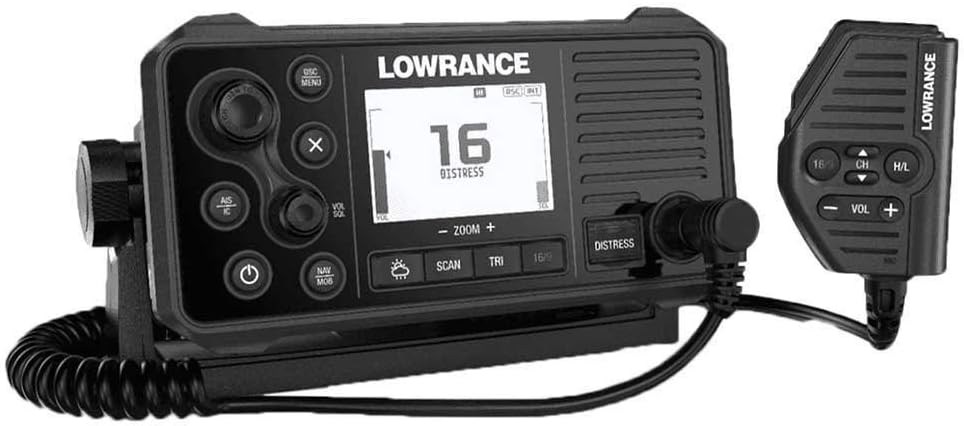
This specialized unit combines DSC with AIS-RX capabilities making it particularly useful for anglers needing traffic visibility. The ability to receive AIS signals allows you to see nearby vessels on your display which is crucial in fishing grounds.
We may earn a commission when you buy through this link, at no additional cost to you.
Its Link-9 support extends connectivity options allowing integration with other compatible marine electronics. The large clear white dot matrix LCD ensures visibility even in bright sunlight conditions common on open water.
While it may lack the high-end audio features of premium models it delivers core safety functions reliably. The compact design allows it to fit into smaller dashboards or consoles without taking up valuable workspace.
For fishermen who need AIS functionality without a full separate AIS unit this radio is a practical solution. It simplifies the helm while maintaining essential communication and safety protocols.
The built-in AIS receiver allows you to monitor vessel traffic in real time which is vital for safety when fishing in busy or restricted waters.
The large dot matrix LCD is designed to remain readable even in direct sunlight ensuring you can check channels and messages without squinting.
We may earn a commission when you buy through this link, at no additional cost to you.
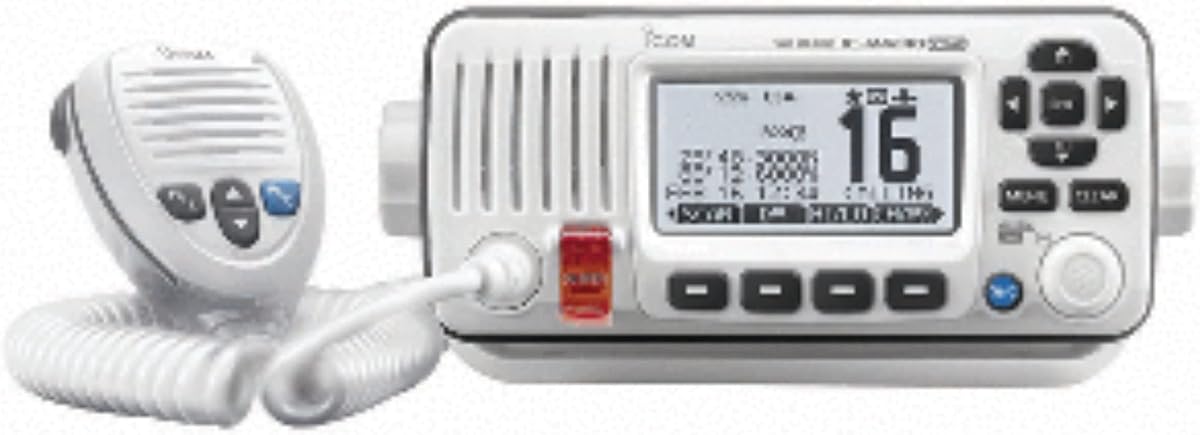
This variant of the popular M424 series offers the same trusted performance in a white finish to match modern boat consoles. The built-in GPS ensures accurate position reporting essential for Digital Selective Calling safety protocols.
We may earn a commission when you buy through this link, at no additional cost to you.
With a high user rating it is known for consistent performance in varied marine conditions. The inclusion of weather alerts keeps you informed of changing conditions which is vital for day trips and longer voyages.
The full range of marine channels and DSC features ensures compliance with international communication standards. Its reliable operation gives peace of mind when navigating unfamiliar waters or dealing with unexpected weather.
If you prefer a lighter console aesthetic this model provides the same functionality as its black counterparts. It is a solid choice for boats where visual integration with existing equipment matters.
The white finish helps the radio blend seamlessly with white or light colored instrument panels reducing visual clutter on the console.
Built-in GPS means accurate position data is always available for distress calls which speeds up rescue response times significantly.
We may earn a commission when you buy through this link, at no additional cost to you.
The Icom M510BB is designed for custom installations where the radio unit is hidden away while control heads are distributed around the vessel. This black box approach provides maximum flexibility for large boats or yachts with multiple stations.
We may earn a commission when you buy through this link, at no additional cost to you.
With three command mic ports you can control communication from different stations such as the wheel or flybridge. The anchor monitoring function adds utility for anchoring by providing alerts if the vessel moves.
This model is ideal for professional installations requiring distributed control and robust features. It allows for a clean helm look while maintaining full control access from strategic locations on board.
For serious boat owners needing multi-station control this unit offers a tailored solution. It combines high performance with specialized features that enhance safety and operational efficiency.
Multiple mic ports allow you to communicate from different areas of the boat such as the cabin or deck without needing to move to the main helm.
The anchor monitoring function alerts you if the boat drifts beyond a set distance which helps prevent accidental dragging during long stays.
We may earn a commission when you buy through this link, at no additional cost to you.
The ICOM MBF5 Flush Mount Kit provides the necessary hardware to integrate compatible VHF radios into a flush console cutout. It transforms a bulky unit into a sleek integrated component of the helm station.
We may earn a commission when you buy through this link, at no additional cost to you.
Designed for specific models this kit ensures a secure fit that protects the unit from vibration and environmental factors. The compact packaging makes it easy to store and install even in tight workspaces.
Using this kit enhances the professional look of your installation and reduces snag hazards on deck or inside the cabin. It is an essential accessory for those wanting a clean and organized dashboard layout.
For DIY installations this kit simplifies the process of mounting radios securely. It ensures that your expensive communication equipment is protected and integrated properly for long term reliability.
Flush mounting gives your console a professional look and protects the radio edges from accidental impacts or wear during normal use.
The kit ensures the radio is held firmly in place preventing rattles or shifts that could damage connectors or cause connection issues.
We may earn a commission when you buy through this link, at no additional cost to you.
Selecting the right marine radio requires evaluating several technical and practical factors to ensure reliability in emergency situations.
Digital Selective Calling (DSC) allows you to send distress alerts with position data to the Coast Guard or nearby vessels. It is a mandatory safety feature for most marine radio setups and greatly speeds up rescue efforts during emergencies. Ensure any model you choose supports Class D DSC at a minimum.
Prioritize a radio with robust DSC features and reliable integration with external GPS systems for accurate location sending.
Marine environments are harsh and splashes or accidental drops are common. Look for radios with IPX7 or IPX8 ratings which indicate the unit can be submerged temporarily without damage. This protects your investment and ensures functionality after accidents.
A higher waterproof rating provides greater peace of mind and reduces the risk of equipment failure due to water exposure.
A radio with a built-in GPS receiver automatically provides accurate position data for DSC distress calls. This simplifies installation by removing the need for external GPS wiring and ensures your location is always ready to be transmitted.
Choose a model with internal GPS if you want seamless position reporting without additional hardware requirements.
Your radio must support all necessary marine channels including US international and Canadian frequencies. Some models also include specific new 4-digit channels or B channels for Canadian waters. Verify channel lists before purchase to ensure full legal compliance.
Confirm that the device supports all required regions you intend to navigate to avoid communication gaps.
Clear audio is essential when conditions are noisy or when you need to hear urgent messages. Look for radios with strong speakers and noise cancelling features that minimize static or interference from engine noise.
Prioritize units with active noise cancellation and high selectivity to ensure messages are heard clearly.
Automatic Identification System (AIS) allows you to receive information about nearby vessels which is critical in busy waters. Some radios include AIS receiver functions which simplify setup by combining communication and traffic monitoring in one box.
Consider a radio with AIS-RX if you frequently navigate in high traffic areas or need enhanced situational awareness.
The physical dimensions of the radio should match the cutout available in your console. Compact models are available for smaller boats while larger units offer more controls. Verify the width and depth before purchasing to avoid fitting issues.
Measure your dashboard cutout carefully and choose a model that fits securely without obstructing other instruments.
Fixed mount units typically come with brackets but some require specific flush mount kits for a clean look. Ensure the mounting hardware is robust and protects the radio from vibration during rough seas.
Check if your chosen model comes with the necessary mounting hardware or if an accessory kit is required.
Always program your Maritime Mobile Service Identity number into the radio immediately after installation. This unique ID is required for DSC features to function correctly during emergencies and ensures you are identifiable.
Regularly test the radio on channel 9 or 13 to ensure it is transmitting and receiving properly. Avoid prolonged testing on channel 16 as it is reserved for distress and calling traffic only.
Keep the antenna and connections dry and secure to maintain signal quality. Inspect cables periodically for wear or corrosion especially in saltwater environments to prevent interference or signal loss.
Yes, a station license is required for most vessels operating VHF radios in US waters. Individuals also need a license to use the radio unless operating under a commercial captain license. Apply through the FCC to ensure compliance and avoid fines.
A fixed mount VHF radio typically ranges from 5 to 25 miles depending on antenna height and sea conditions. Higher antennas increase range significantly by extending the line of sight. Weather and interference can also affect effective range.
Yes many fixed units allow handheld microphones to be connected or paired wirelessly depending on the model. This offers flexibility for communication when away from the helm or for secondary stations on deck. Check the specific unit for compatibility.
DSC allows you to send distress alerts with one button press which includes your vessel ID and position. This speeds up rescue coordination significantly and is a standard safety feature for modern maritime communication systems. It is essential for serious boaters.
You should test your radio at least once a week to ensure it is functioning correctly. Avoid testing on channel 16 to prevent congestion on the distress frequency. Using channel 9 or 13 is safer for routine checks.
Yes external GPS units can be connected via NMEA inputs or specific connectors on compatible radios. This allows DSC position sending without buying a radio with built-in GPS. Verify your models port availability before purchase.
Fixed mount radios offer more power and integrated navigation features while handhelds are portable. Fixed units typically have 25 watts power versus 6 watts for handsets. Choose based on your boat size and communication needs.
Yes a marine grade antenna is required for optimal performance and signal clarity. Ensure the antenna matches the impedance of your radio usually 50 ohms. Proper installation height significantly impacts your communication range.
The Uniden UM435BK ICOM M424G and Icom IC-M605 represent the top choices for budget integrated navigation and premium communication respectively.
Prioritize DSC capability and waterproof ratings above all else to ensure your safety equipment performs when it matters most on the water.
Always verify current pricing and availability before purchasing as market conditions and stock levels change frequently.