
SABRENT 74 in 1 3.5 Inch Internal Flash Media Card Reader/Writer with USB Port (CR-USNT)
4.0Editor score
Supports 74 card types
Includes USB 2.0 port
Internal power connector included
Internal SATA card readers provide a reliable way to access memory cards directly from your desktop computer without external clutter. They connect via internal SATA and USB headers, offering stable power and faster data transfer rates compared to many external alternatives.
We evaluated ten models based on their connectivity options, supported card formats, build quality, and user feedback. Each product was assessed for ease of installation, speed performance, and overall value to ensure they meet the needs of various users.
Our list highlights key features and potential drawbacks to help you make an informed decision for your setup. Remember that availability and specific pricing can change over time, so verify details before purchasing to ensure compatibility with your system.
4.0Editor score
4.5Editor score

4.6Editor score
As an Amazon Associate we earn from qualifying purchases.
The following table presents a side-by-side comparison of the top models analyzed in this guide. We compare key specifications such as supported ports, connection types, and unique features to help you quickly identify the model that fits your specific desktop configuration.


The SABRENT 74 in 1 Internal Flash Media Card Reader/Writer is a highly accessible option for users who need extensive format support without spending much. With a rating of 4.0 stars, it stands out for its ability to handle 74 different types of memory cards, making it versatile for older and newer formats alike.
We may earn a commission when you buy through this link, at no additional cost to you.
Its standout qualities include the comprehensive slot configuration which covers M2, XD, SD, SDHC, SDXC, MMC, and many others. It also provides an additional USB 2.0 port, which can be handy for low-speed peripherals. The internal power connector ensures that the hub has sufficient power for external USB devices connected through it.
One trade-off is the reliance on USB 2.0 technology, which means slower transfer speeds compared to modern USB 3.0 alternatives. However, for users who prioritize format compatibility and budget over raw speed, this is an acceptable compromise. The OS support includes various Windows versions as well as Linux and Mac OS X.
This reader is best suited for hobbyists or IT support technicians who need to access a wide variety of legacy and modern card types. If you need basic connectivity and wide compatibility at a low price point, this model is a strong recommendation.
Supports over 70 memory card types ensuring broad compatibility with legacy and modern storage media.
Includes an internal power connector and an extra USB 2.0 port for enhanced utility.
We may earn a commission when you buy through this link, at no additional cost to you.
The Kingwin Powered USB Hub 3.0 is a robust solution for users needing high-speed connectivity and a wide range of ports in their PC case. With a 4.0-star rating, it is praised for its lightning-speed data transfer capabilities of up to 5Gbps, making it suitable for large file transfers.
We may earn a commission when you buy through this link, at no additional cost to you.
It features a modern USB-C port alongside traditional USB 3.0 Type-A ports and an eSATA port, offering versatility for various peripherals and storage devices. The six dedicated card reader slots cover a wide variety of memory cards including SD, CF, MS, XD, and more. This all-in-one design eliminates the need for multiple expansion cards.
A potential trade-off is the size requirement; it fits a 5.25 inch front bay which may not be available in smaller cases. Additionally, the price is higher than basic models. However, the performance and connectivity options justify the cost for users with larger cases who need top-tier transfer speeds.
This hub is ideal for content creators and PC enthusiasts who require fast data transfer and extensive connectivity. If you have the bay space and need high performance, this model delivers excellent value.
Features USB-C and eSATA ports alongside USB 3.0 for versatile high-speed connections.
Supports speeds up to 5Gbps ensuring efficient handling of large media files.
We may earn a commission when you buy through this link, at no additional cost to you.
The ACAGALA Multi-Function USB 3.0 Hub is a comprehensive dashboard panel that adds extensive connectivity options to a desktop computer. It supports most available cards including SD, CF, TF, and M2, making it a strong choice for multi-media users.
We may earn a commission when you buy through this link, at no additional cost to you.
It stands out with front microphone and speaker ports, avoiding the inconvenience of plugging devices behind the chassis. It also features dual USB 3.0 ports and six USB 2.0 ports for high-speed transfer and charging. The eSATA port offers up to 3Gbps transmission for external storage.
One trade-off is the complexity of installation due to the number of cables required. Additionally, no specific rating data is currently available to confirm user satisfaction. However, the feature set is robust for those needing front-panel audio and data access.
This panel is well-suited for PC builders who want a complete front panel solution including audio, USB, and card reader options. If you prioritize connectivity options over simplicity, this hub is a worthy consideration.
Includes microphone and speaker ports on the front panel for easy access.
Provides multiple USB 3.0 ports and an eSATA port for fast data transfers.
We may earn a commission when you buy through this link, at no additional cost to you.
The Rosewill RDCR-12001 offers a unique combination of a 2.5-inch SATA HDD or SSD dock and a multi-in-one card reader. It is designed for users who need quick access to both drives and memory cards from the front of their case.
We may earn a commission when you buy through this link, at no additional cost to you.
It features a hot-swappable design for quick docking of drives and supports all capacity HDDs as well as SDXC cards. The fascia color can be chosen to match your case aesthetic. The 4-slot memory card reader covers common formats.
A trade-off is the limited number of card slots and the older USB 2.0 connection for the card reading function. For modern high-speed needs, this might feel slow. However, the HDD docking capability adds significant utility for data transfer and backup tasks.
This device is a good fit for users who frequently swap drives and also need to read SD cards. If you value convenience and speed in a single panel, this is a solid option.
Combines a 2.5-inch HDD dock with a memory card reader for dual utility.
Allows for quick and easy docking and undocking of SATA drives.
We may earn a commission when you buy through this link, at no additional cost to you.
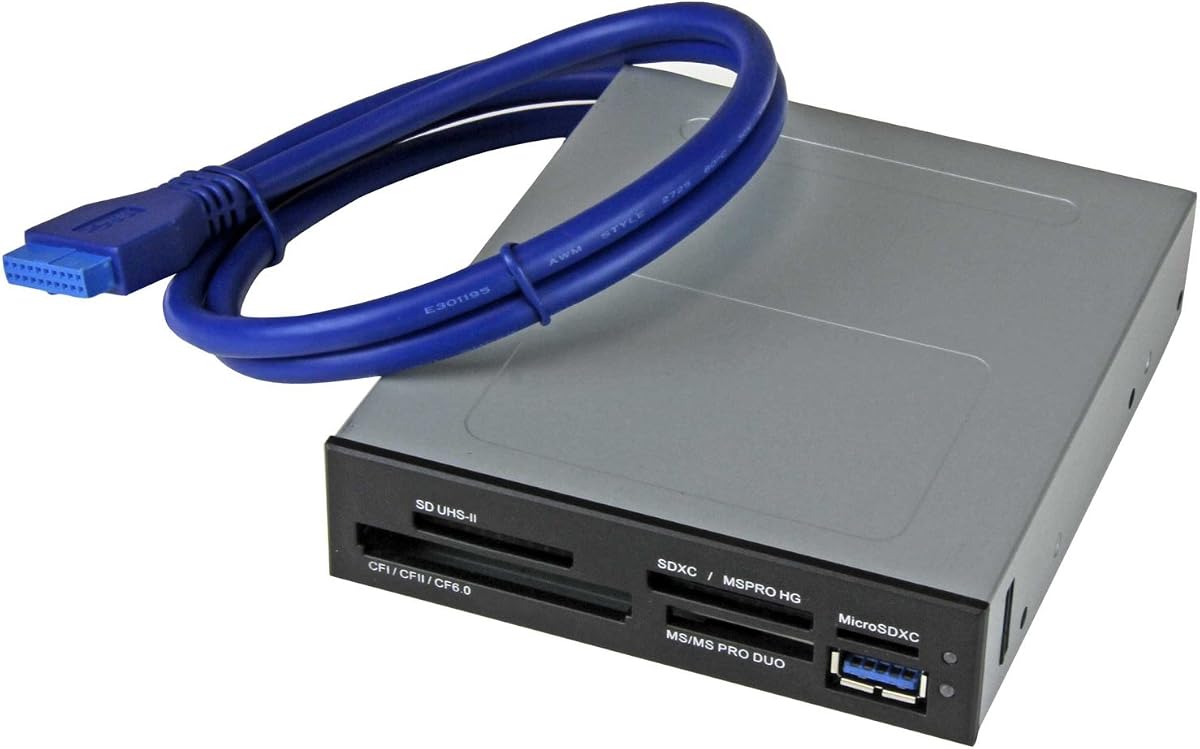
The StarTech Internal Card Reader USB 3.0 UHS-II is an excellent choice for professionals who need reliable and fast card reading capabilities. With a rating of 4.5 stars, it is recognized for its ability to support simultaneous slot access and high-speed transfers.
We may earn a commission when you buy through this link, at no additional cost to you.
It supports a wide range of card formats including CompactFlash, SD, MMC, and Memory Stick. The USB 3.0 interface ensures fast data transfer speeds. A key feature is the ability to access four different card slots simultaneously, which is ideal for copy tasks between cards.
One trade-off is the higher price point compared to consumer models. Additionally, it fits only 3.5-inch bays. However, the TAA compliance and two-year warranty provide peace of mind for IT environments. It is OS independent and works with Windows, macOS, and Linux.
This reader is best for videographers, photographers, and IT pros who need consistent performance. If you need a reliable and fast solution backed by a strong warranty, this is the top pick.
Allows access to four different card slots simultaneously for efficient file transfers.
TAA compliant with a two-year warranty and lifetime multi-lingual assistance.
We may earn a commission when you buy through this link, at no additional cost to you.
The TCC-QL5E 5.25 Inch PC Multifunction Dashboard is a comprehensive front panel solution for those who need extensive connectivity. It combines audio, USB, SATA, and card reader capabilities into one unit suitable for larger PC cases.
We may earn a commission when you buy through this link, at no additional cost to you.
It features USB 3.0 transfer speeds up to 5Gbps and USB 2.0 up to 480Mbps. The front audio and microphone ports solve the inconvenience of rear connections. An eSATA port and SATA ports are included for high-speed storage connections.
A trade-off is the installation complexity due to the number of cables required. The card reader supports M2, TF, SD, MMC, MS, and CF but might not cover as many legacy formats. However, the overall connectivity is robust for general use.
This panel is ideal for builders who need front-panel access to audio and storage. If you have a 5.25 inch bay and want a full-featured front interface, this model is a strong candidate.
Includes front speakers and microphone ports for easy audio access.
Combines USB 3.0, USB 2.0, and SATA ports in one panel.
We may earn a commission when you buy through this link, at no additional cost to you.
The Internal Card Reader 5.25inches is a multifunction dashboard that offers high-speed USB 3.1 and 3.0 ports along with six card slots. With a rating of 4.1 stars, it is appreciated for its durable construction and fast data transfer capabilities.
We may earn a commission when you buy through this link, at no additional cost to you.
It features three USB 3.0 ports and one USB 3.1 port for efficient file transfers. The 6 card slots support M2, MS, XD, and other common formats. The LED indicator allows you to monitor the working status at any time.
One trade-off is the potential language barrier in product documentation. Additionally, the installation requires multiple cables for power and data. However, the high-quality materials ensure durability. It fits standard 5.25-inch drive bays.
This panel is suitable for PC enthusiasts who need fast USB ports and card reading. If you want a durable front panel with modern USB speeds, this model is a good choice.
Features USB 3.1 and multiple USB 3.0 ports for rapid data transfer.
Uses high-quality materials to ensure long-term durability.
We may earn a commission when you buy through this link, at no additional cost to you.
The 5.25inch Media Dashboard is a versatile panel combining a USB 3.0 hub with a multi-format card reader and audio jacks. It is designed for PC builders and tech enthusiasts who need front access to common ports.
We may earn a commission when you buy through this link, at no additional cost to you.
It supports transfer speeds up to 5Gbps and includes eSATA for fast storage. The card reader covers M2, TF, SD, MMC, MS, and CF. Built-in LED indicators show power and drive activity status clearly.
A trade-off is the average rating of 3.8 stars which might indicate variable quality. The card reader supports up to 64GB memory cards which may be limited for very large SDXC needs. However, the design is practical for standard builds.
This panel is good for builders wanting front-panel access to USB and SD cards. If you need a basic hub with audio, this is a solid choice.
Combines USB 3.0 hub with audio and card reader in a single panel.
LED indicators provide clear visibility of power and drive activity.
We may earn a commission when you buy through this link, at no additional cost to you.
The PCIe SATA Card 6 Ports allows you to add six 6 Gbps SATA 3.0 devices to your computer. With a rating of 4.2 stars, it is a robust solution for expanding storage capacity directly via the PCIe bus.
We may earn a commission when you buy through this link, at no additional cost to you.
It features the ASM1166 chip to improve stability and compatibility. The card supports hot swap functionality and includes six SATA cables to simplify connections. It works with various Windows and Linux systems.
A trade-off is that this is a SATA expansion card rather than a memory card reader. It requires a PCIe slot which may not be available in all motherboards. However, for mass storage expansion, it is highly effective.
This card is ideal for servers or workstations needing multiple drive connections. If you need to expand your SATA capacity significantly, this is a reliable choice.
Supports up to six SATA 3.0 devices simultaneously for massive storage.
Built with the ASM1166 chip to ensure stable data transfers.
We may earn a commission when you buy through this link, at no additional cost to you.
The Upgrade Your Old PC Case Front Panel Hub is a modern solution that adds USB-C and USB 3.0 ports along with an SD/microSD reader. With a high rating of 4.6 stars, it is praised for its build quality and ease of use.
We may earn a commission when you buy through this link, at no additional cost to you.
It features two USB-A and one USB-C port for versatile connections. The sturdy SPCC metal housing ensures durability. The front panel allows for quick access to large files and peripherals.
One trade-off is the requirement for a spare 19-pin USB 3.0 motherboard header. Also, it fits a 3.5-inch bay directly, which might require an extra bracket for 5.25-inch bays. However, the installation is generally straightforward.
This hub is perfect for upgrading older cases with modern connectivity. If you need USB-C and card reading in a sturdy package, this is a top recommendation.
Includes a USB-C port for connecting latest devices efficiently.
Constructed with SPCC metal housing for durability.
We may earn a commission when you buy through this link, at no additional cost to you.
Selecting the right internal SATA card reader involves considering your case size, required speeds, and connectivity needs. We break down the key factors to help you choose the best model for your desktop setup.
Most internal readers come in either 3.5-inch or 5.25-inch form factors. Check your PC case front panel to ensure you have the correct slot available. 5.25-inch slots are typically larger and may include optical drive bays.
Always measure your available bay space before purchasing to avoid installation issues.
USB 3.0 and newer versions offer significantly faster data transfer speeds compared to USB 2.0. For large media files or frequent transfers, prioritize models with USB 3.0 or higher standards.
Look for clear specifications indicating 5Gbps speeds to ensure efficient performance.
Memory cards come in many formats such as SD, SDXC, MicroSD, CF, and MS. Ensure the reader supports all the card types you use regularly. Some models support over 70 types while others focus on common modern formats.
Verify the supported list to avoid compatibility issues with your existing hardware.
Many readers offer extra ports like USB hubs, eSATA, or audio jacks. These can add value by reducing the need for separate expansion cards. Consider if you need front-panel audio or extra USB ports for peripherals.
Prioritize models with integrated hubs if you need multiple connections from one slot.
Internal components are subjected to heat and vibration. Metal housings or sturdy ABS plastic ensure durability and better heat dissipation. Premium models often include LEDs for status monitoring.
Choose durable materials to ensure the reader survives long-term use inside a case.
Internal readers require connecting to SATA power, USB headers, and sometimes audio cables. Ensure your motherboard has free 19-pin USB 3.0 headers or 20-pin headers. Check if conversion brackets are needed for your case.
Verify cable availability and compatibility before buying to simplify the installation process.
Professional models often come with warranties and technical support. Look for products backed by manufacturers that offer multi-lingual assistance or extended periods. This adds security for business or critical use.
Check warranty terms and support availability to ensure protection for your investment.
Prices vary based on features and build quality. Budget models may lack speed or modern ports. Premium models offer faster speeds and better construction. Balance your budget with your performance requirements.
Invest in higher speeds and better materials if you handle large files regularly.
Installation involves connecting the unit to your motherboard headers and SATA power source. Ensure you unplug your PC before touching internal components and follow the included cable diagrams carefully.
Regularly check connection ports for dust and debris to maintain reliable performance. Use compressed air to clean slots and avoid inserting damaged memory cards that could harm the internal mechanism.
Monitor your system for any software driver updates provided by the manufacturer. Keeping firmware current ensures compatibility with new operating systems and memory standards.
Most modern internal readers work with Windows plug-and-play without extra drivers. However, older card formats might require specific drivers for full compatibility. Check the product details for any OS-specific software requirements.
Yes but you usually need a conversion bracket to fill the space. These brackets are often sold separately. Ensure you have a 3.5 inch bay before buying a 3.5 inch reader.
USB 3.0 readers offer significantly faster transfer speeds up to 5Gbps compared to 480Mbps on USB 2.0. They are also backward compatible with older ports but require a header for full speed.
Internal readers typically connect to a SATA power connector from your power supply. Some also require a USB header from the motherboard for data. Ensure both cables are securely plugged in.
Many modern readers support SDXC cards which can be larger than 32GB. Always check the product specs for maximum capacity limits to ensure they work with your specific card size.
Yes most models are designed for DIY installation with standard tools. Ensure you have access to your PC case front panel and motherboard headers. Follow included manuals for correct cable routing.
We have highlighted top models ranging from budget-friendly options to premium professional-grade hubs. Each offers distinct advantages whether you need maximum speed or a wide range of card formats.
Prioritize USB 3.0 or higher speeds if you frequently transfer large media files. Ensure the form factor matches your case bay size to avoid installation issues.
Always verify the current availability and details before making a purchase. Prices and stock levels may change so double check product compatibility with your specific hardware setup.