
Lenovo Chromebook 14 Touchscreen Slim Laptop
4.4Editor score
High definition IPS display
Long battery life support
Secure Chrome OS environment
Finding the right technology for children on the spectrum requires careful consideration of sensory needs and learning styles. A suitable laptop can provide structured interaction and creative outlets without overwhelming stimuli. We have analyzed various options to identify devices that balance functionality with accessibility.
Our selection process involved reviewing specifications, user feedback, and educational content across multiple price points. We prioritized devices with customizable interfaces, predictable navigation, and robust parental controls. This list covers tablets, entry-level laptops, and educational toy computers designed for young users.
Each pick highlights specific strengths such as tactile feedback, screen clarity, and app availability. Readers will find detailed breakdowns of features that matter most for neurodivergent learners. Please note that availability and pricing may fluctuate depending on retailer inventory and seasonal promotions.
4.4Editor score

4.5Editor score

4.7Editor score
As an Amazon Associate we earn from qualifying purchases.
This side-by-side comparison highlights key differences in screen size, operating system, and educational focus across all ten products. It helps caregivers identify which device aligns best with a child’s developmental stage and sensory preferences.




This device stands out as a secure option for introducing screen time without internet exposure. Its pre-loaded activities allow children to engage with educational content immediately. The interface is designed to mimic real computers while remaining simple enough for young users.
We may earn a commission when you buy through this link, at no additional cost to you.
The full-size QWERTY keyboard helps build typing skills essential for future academic tasks. Bilingual support offers flexibility for families teaching Spanish or English. Activities include logic games and music players that encourage structured play and cognitive development.
While it lacks modern connectivity, this limitation reduces distractions and potential anxiety triggers. The device runs on standard batteries which are easy to replace. It is ideal for home use where parental supervision is consistent and internet access is restricted.
Caregivers seeking a safe, distraction-free tool will find this laptop highly suitable. It balances play and learning effectively. We recommend it for early learners who need a predictable environment to build confidence in technology use.
By removing internet dependencies, parents can eliminate risks of inappropriate content or unexpected notifications.
The keyboard and mouse controller practice support fine motor skills and coordination development.
We may earn a commission when you buy through this link, at no additional cost to you.
This laptop bridges the gap between educational toys and full computers. It offers significant storage and processing power for diverse apps. The HD touchscreen is responsive and clear, which aids visual processing.
We may earn a commission when you buy through this link, at no additional cost to you.
Customizable profiles allow parents to tailor the interface to a child’s specific needs. Parental controls are robust, ensuring safe browsing habits. The inclusion of a translator app supports language learning and communication skills.
While the learning curve might be steeper than toy laptops, the benefits for growing learners are substantial. It supports video calls and interactive apps that engage attention spans. The sleek design makes it a practical tool for school work too.
Families needing a versatile device for both play and study will appreciate its capabilities. It is a strong candidate for children ready to transition from simple toy interfaces to real computing environments.
Profiles allow distinct settings for different users or developmental stages within the same device.
Google Play access opens up thousands of creative and educational applications for varied interests.
We may earn a commission when you buy through this link, at no additional cost to you.
This Chromebook provides a professional-grade experience in a lightweight form factor. The 14-inch screen offers ample space for multitasking. Chrome OS is known for speed and security, making it a safe choice for students.
We may earn a commission when you buy through this link, at no additional cost to you.
The privacy shutter on the webcam adds a layer of control over visual data. This can be reassuring for families concerned about online privacy. The battery life supports extended use without frequent charging interruptions.
While it requires internet for full functionality, the cloud-based nature simplifies management. Parents can monitor usage and block inappropriate sites easily. The trackpad and keyboard are high quality, supporting accurate input.
For children transitioning to school laptops or needing a reliable study tool, this is an excellent choice. It balances performance with durability and offers a familiar interface used in many educational settings.
Physical shutters provide tangible control over when the camera is active, reducing anxiety.
Files saved in the cloud are protected from local hardware failures or loss.
We may earn a commission when you buy through this link, at no additional cost to you.
This educational laptop focuses on core learning concepts like math and letters. It is designed for straightforward use with minimal setup required. The color screen provides visual feedback that helps maintain engagement.
We may earn a commission when you buy through this link, at no additional cost to you.
With 48 modes, it covers a broad range of topics from logic to music. This variety keeps content fresh for children who may prefer consistency but need new challenges. The keyboard and mouse mimic real tools to build familiarity.
It is a practical option for those seeking a low-cost introduction to computing. While it lacks advanced features, its simplicity reduces cognitive load. It works well as a supplementary learning aid at home.
Caregivers looking for a no-fuss device to support basic literacy and numeracy will find value here. It is durable enough for daily use and easy to handle for young hands.
Activities are tailored to reinforce fundamental concepts needed for early school years.
The lower price makes it accessible for families needing multiple devices or replacements.
We may earn a commission when you buy through this link, at no additional cost to you.
The 15.6-inch screen provides generous viewing space for tasks. This is beneficial for children who need larger text or detailed visuals. The display quality is high, supporting multimedia consumption and learning.
We may earn a commission when you buy through this link, at no additional cost to you.
Chrome OS keeps the system fast and secure without complex updates. It is ready for use out of the box with minimal configuration. The battery life supports a full day of school or play activities.
The lightweight design makes it easy to carry between rooms. However, the larger footprint might require a dedicated desk space. For children who prefer expansive screens, this model offers excellent comfort.
Families prioritizing screen size and battery endurance will find this Chromebook reliable. It is a solid choice for school work or home entertainment without compromising on performance or portability.
Larger screens reduce eye strain and allow comfortable navigation for users with visual sensitivities.
High resolution video and audio playback make it great for educational videos and movies.
We may earn a commission when you buy through this link, at no additional cost to you.
This toy laptop is tailored for the preschool age group. It flips to transform from a keyboard to a tablet. This dual mode allows children to switch between typing and touch input effortlessly.
We may earn a commission when you buy through this link, at no additional cost to you.
The content focuses on ABCs and numbers which are foundational for development. Role-playing activities help children imitate adult behaviors and build social skills. The design is sturdy and can withstand rough handling.
It is an ideal gift for younger children who are not yet ready for full computers. The lack of complex settings makes it stress-free for parents. The bright colors and sounds engage attention quickly.
Families with toddlers or preschoolers will appreciate its simplicity. It serves as a gentle introduction to technology concepts while supporting play-based learning goals.
The ability to flip the screen allows for different interaction styles based on the child's mood.
Activities like sending email messages encourage imaginative play and communication skills.
We may earn a commission when you buy through this link, at no additional cost to you.
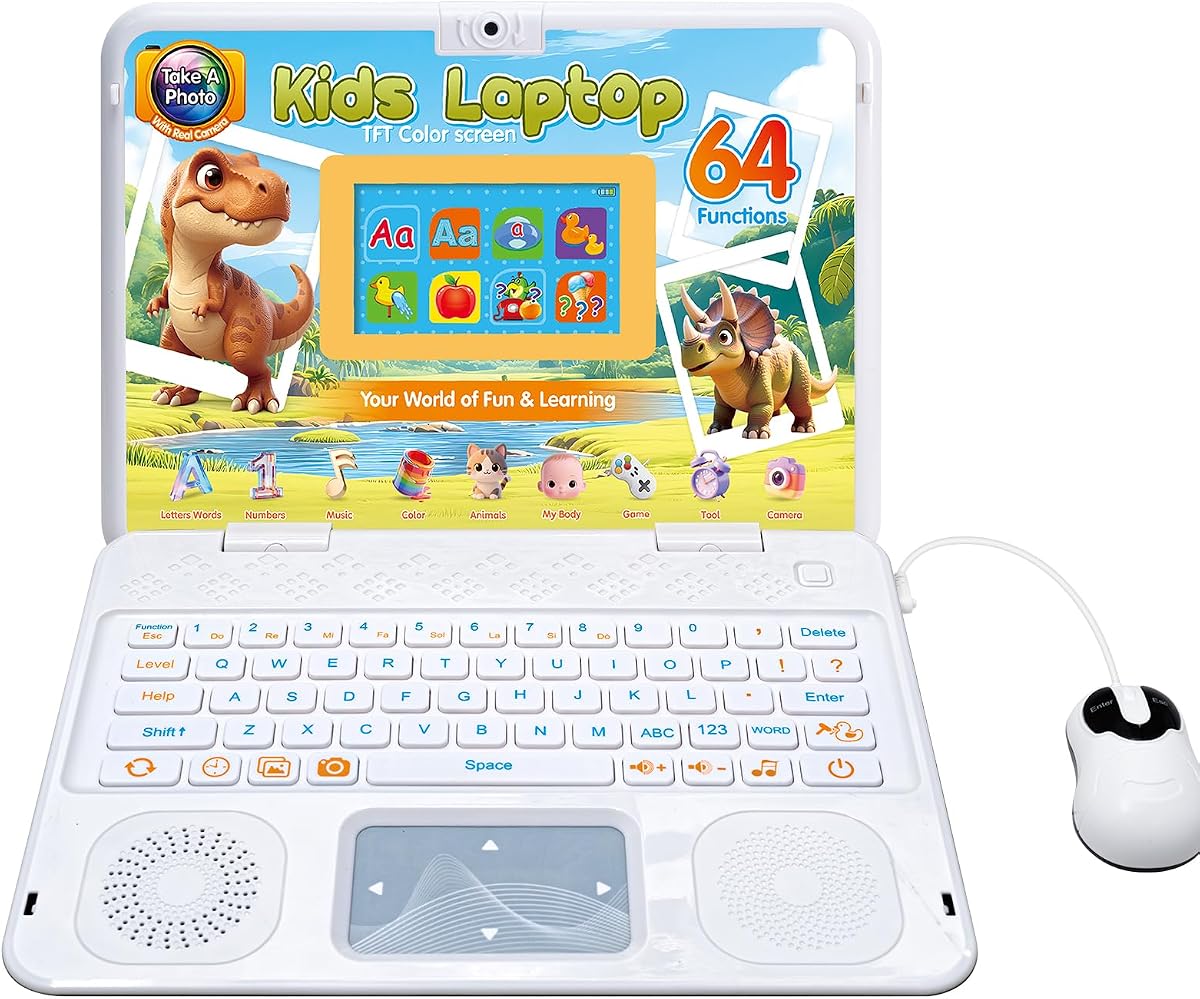
Adding a camera to a toy laptop creates a fun tool for self-expression. Children can take photos and use filters which encourages creativity. It combines educational tasks with entertainment to keep engagement high.
We may earn a commission when you buy through this link, at no additional cost to you.
The 64 modes cover math, logic, and general knowledge. This ensures there is always something new to explore. The keyboard is designed to mimic real laptops to foster typing confidence.
While the camera is not for professional use, it adds a fun element to play. It is a great way to teach children about using technology to record memories. The build quality is solid for daily play.
Parents looking for a device that balances education with fun will find this balanced. It is suitable for children who enjoy creative activities alongside standard learning tasks.
Camera filters and photo frames allow children to experiment with visuals safely.
A wide range of subjects ensures holistic development across multiple domains.
We may earn a commission when you buy through this link, at no additional cost to you.
This netbook provides direct access to Android apps which is useful for specialized tools. It is lightweight and easy to carry around the house. The processor handles basic tasks well for children.
We may earn a commission when you buy through this link, at no additional cost to you.
Storage can be expanded using a TF card which helps save media and documents. The keyboard and trackpad are standard, offering a genuine laptop feel. It supports Wi-Fi and Bluetooth for connectivity.
While it may not match premium laptops in speed, it is sufficient for web browsing and apps. The lower price point makes it accessible. However, setup may require some parental effort.
For families wanting a true mini laptop at a budget price, this is a viable option. It serves well for casual use and educational app access without high cost.
Android OS allows access to thousands of free or low-cost educational applications.
Adding memory cards lets you store more games and videos without cloud reliance.
We may earn a commission when you buy through this link, at no additional cost to you.
This device runs a newer version of Android which improves compatibility with apps. The Type-C charging simplifies power management. The screen size is suitable for close-up interaction.
We may earn a commission when you buy through this link, at no additional cost to you.
It comes with a mouse and bag which adds to the value. The keyboard is standard and allows for typing practice. It supports Wi-Fi for internet tasks like browsing or streaming.
Battery life is moderate so it is best for short sessions. For a compact tool that can run modern apps, it offers good utility. It is a practical choice for travel or home use.
Families seeking a budget-friendly laptop with current software features will find this useful. It is a good step up from toy computers without a high price tag.
Android 12 ensures access to the latest apps and security updates.
Included accessories mean it is ready to use immediately upon arrival.
We may earn a commission when you buy through this link, at no additional cost to you.
This laptop focuses on educational activities like math and logic. The music features allow children to compose melodies which supports creativity. It uses a realistic keyboard layout for skill building.
We may earn a commission when you buy through this link, at no additional cost to you.
It supports bilingual options which can help with language development. The design is durable enough for daily use. It is designed to be portable and easy for kids to carry.
While it does not connect to the internet, it is self-contained and safe. The games test memory and speed which helps cognitive agility. It is a fun way to reinforce learning at home.
For children interested in music or logical challenges, this model is a strong fit. It provides a focused learning experience that avoids digital distractions.
Melody composition tools engage auditory processing and creative thinking.
Logic and memory tasks help sharpen mental agility in a playful way.
We may earn a commission when you buy through this link, at no additional cost to you.
Selecting the right laptop involves assessing sensory needs, learning goals, and device durability. This guide outlines key factors to help narrow down the options effectively.
Children with visual sensitivities may benefit from High Definition IPS screens that reduce glare and improve contrast. A larger screen can help with reading and navigation but ensure the device remains lightweight enough for handling.
Look for displays with adjustable brightness to prevent eye strain.
Some children prefer tactile feedback from physical keyboards while others respond better to touchscreens. Evaluate whether the device offers both or one specific mode that suits the child’s comfort level.
A realistic keyboard helps build typing skills necessary for schoolwork.
Chrome OS and toy operating systems often provide simpler interfaces with fewer distractions. Android offers more app variety but requires parental controls to limit exposure. Choose a system that matches the child’s maturity.
Secure environments prevent accidental navigation to unwanted content.
Long battery life ensures the device can be used for extended sessions without interruption. Frequent charging can disrupt routines and cause frustration during play or learning time.
Prioritize models with at least 6 to 10 hours of use.
Lightweight laptops are easier for children to carry and position comfortably. If the device is too heavy, it may discourage use or cause physical discomfort during long sessions.
Consider the weight and dimensions relative to the child’s size.
Offline capabilities can reduce anxiety from internet connectivity issues or unexpected notifications. If online access is needed, ensure there are parental controls to manage what content is reachable.
Bluetooth and USB ports allow for external accessories like mice or headphones.
Apps and activities should align with the child’s interests and developmental needs. A device with customizable learning modes offers flexibility as the child grows and learns.
Look for tools that support math, logic, and creative skills.
Children may handle devices roughly so a sturdy build is essential. Protective cases or rugged designs can extend the lifespan of the laptop.
Investing in a durable device saves money and frustration over time.
Begin by setting up the device in a quiet environment to reduce sensory overload. Install necessary parental controls to ensure safe browsing habits. Customize the interface to match the child’s preferred layout and theme.
Teach the child how to charge and store the device properly. Establish a routine for using the laptop at consistent times each day to build familiarity and comfort.
Regularly check the screen and keyboard for dirt or debris. Clean gently with a soft cloth and avoid harsh chemicals that might damage the finish.
Toy laptops are excellent for younger children or those who need limited sensory input. They offer safe offline play and are durable. However, real laptops provide access to more diverse educational apps.
Not necessarily. Many educational toys function offline. However, if you want access to cloud-based tools or Google Classroom, a Chromebook or Android laptop with internet is recommended.
High resolution IPS displays reduce glare and improve clarity. Models with adjustable brightness or matte screens can also help prevent eye strain and visual overload.
Yes. Devices like the LEXiBOOK and Chromebooks offer robust parental controls. You can restrict access to specific apps and manage internet usage effectively.
For toy laptops storage is fixed and sufficient. For Android or Chromebooks at least 64GB is recommended to store offline apps and media. Expandable storage is a bonus.
Most Chromebooks and Android laptops support external Bluetooth keyboards. This allows you to swap the built-in keyboard for one that suits the child's preferences.
We have reviewed ten options ranging from toy laptops to Chromebooks. The VTech Genio stands out as the top choice for safety and structured learning. The Lenovo Chromebook is the best premium option for academic independence.
When deciding prioritize the child’s current skill level and sensory needs. A device that balances fun with education is key to long-term engagement. Ensure parental controls are set up before giving the device.
Prices and availability may change so verify current stock before purchasing. We recommend checking user reviews for the latest feedback on battery and build quality. Finding the right fit makes technology a powerful tool for growth.