
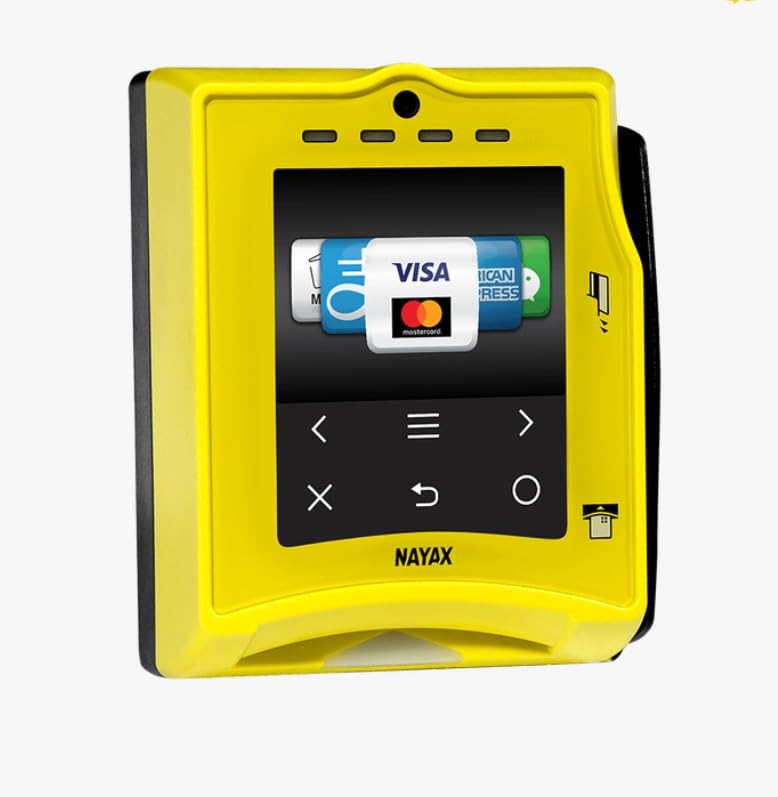
Nayax VPOS Touch
Customizable touchscreen display
Dragontrail glass durability
Multi-language support
Discover the top card readers for vending machines in October 2026. We compare features, security, and connectivity to help you choose the right cashless
Choosing the right card reader for your vending machine is crucial for modernizing your business. A good reader accepts multiple payment types like contactless and chip cards while ensuring secure transactions for your customers.
We evaluated ten top-rated models based on connectivity, compatibility, and ease of installation. Our comparison covers essential features like real-time telemetry and payment security to help you find the best fit for your specific needs.
Each pick highlights key strengths and potential trade-offs to guide your decision. Remember that prices and availability can change frequently, so verify the current details before making your final purchase decision.
3.8Editor score

3.5Editor score
This side-by-side comparison highlights the key specifications and capabilities of the ten leading card readers available for vending machines today.


The VPOS Touch stands out as a comprehensive cashless solution for vending machines. It has a solid rating and offers essential features like EMV chip and NFC acceptance.
We may earn a commission when you buy through this link, at no additional cost to you.
Its standout quality is the built-in connectivity which eliminates the need for separate Wi-Fi setup. The real-time telemetry allows operators to monitor inventory and sales remotely with ease.
However, users should note that activation processes can take up to ten business days. This initial delay is a trade-off for the robust security and management capabilities it provides.
This reader is ideal for operators seeking a modern upgrade with reliable remote management. It balances ease of use with advanced features effectively.
The high-gain antenna ensures stable connections without extra hardware.
Full PCI DSS compliance protects both operators and customers securely.
We may earn a commission when you buy through this link, at no additional cost to you.
This model offers premium features like a customizable touchscreen and robust anti-vandal protection. It is designed for high-traffic environments where durability and customer experience matter most.
We may earn a commission when you buy through this link, at no additional cost to you.
Key strengths include the ability to run loyalty programs and discounts directly on the interface. The IP55 rating ensures it withstands harsh conditions better than standard models.
The main trade-off is the cost and the need for a new merchant account in some cases. This investment is justified for operators looking to maximize sales through advanced marketing tools.
Choose this if you want a modern interface that engages customers and provides detailed sales insights. It is a top-tier choice for professional vending operations.
Interactive screens allow for personalized offers and better user experience.
Dragontrail glass and shock detection ensure longevity in public spaces.
We may earn a commission when you buy through this link, at no additional cost to you.
This generic option provides a straightforward path to accepting card payments. It is a basic choice for operators who need a standard solution without complex features.
We may earn a commission when you buy through this link, at no additional cost to you.
The main focus is on the activation process which is detailed in the included instruction sheet. You must follow these steps carefully to begin using the device properly.
The delay of up to ten business days for activation is a significant consideration. It may not suit operators who need an immediate solution for their machines.
Consider this if you are looking for a basic reader and can plan ahead. It serves as a functional entry point into cashless vending.
Follow the yellow sheet steps to start your device activation.
We may earn a commission when you buy through this link, at no additional cost to you.
This reader supports a variety of card types including magnetic and chip cards. It is often used for membership systems and check-in processes rather than high security vending.
We may earn a commission when you buy through this link, at no additional cost to you.
Its strength lies in the flexibility to read different card formats through USB. The keyboard emulator mode allows for easy integration with existing software systems.
Note that it is read-only and does not support writing data to cards. This limitation makes it less suitable for applications that require card encoding or tracking.
Choose this for basic data collection or membership scanning needs. It is a functional tool for non-financial transaction environments.
Works well with custom software for passive reading modes.
We may earn a commission when you buy through this link, at no additional cost to you.
The VX520 is a well-known terminal that supports EMV and contactless payments. It offers a robust option for those who need dial or Ethernet connectivity.
We may earn a commission when you buy through this link, at no additional cost to you.
Key strengths include its long-standing reputation for reliability and secure transactions. It accepts smart cards and contactless payments which keeps it relevant.
However, it may require more setup compared to modern plug-and-play readers. The interface is functional but less modern than newer touch-based models.
Ideal for established businesses needing a stable and secure terminal. It is a solid choice if compatibility with older systems is a priority.
Supports both dial and Ethernet for flexible installation.
We may earn a commission when you buy through this link, at no additional cost to you.
This device supports both reading and writing for specific card types like PSAM. It is suitable for systems that require data to be written to cards.
We may earn a commission when you buy through this link, at no additional cost to you.
The package includes SDK tools and software which helps developers integrate it into custom systems. This makes it useful for specialized kiosks or membership applications.
One limitation is that magnetic card reading is read-only despite other writing capabilities. Users must consult the guide carefully to configure the device correctly.
Use this for applications where card encoding or data writing is required. It offers flexibility for developers and system integrators.
Included SDKs allow for deep integration into custom apps.
We may earn a commission when you buy through this link, at no additional cost to you.
This reader is designed specifically for government ID cards and barcode scanning. It is a high-rated device for verification tasks rather than financial transactions.
We may earn a commission when you buy through this link, at no additional cost to you.
The standout quality is its ability to read both magstripe and 2D barcodes on one device. This is ideal for applications requiring strict identity verification.
It is not designed for credit card payments so it may not suit general vending needs. Its specialized nature limits its use to ID authentication contexts.
Choose this if you need to verify identities at kiosks. It is a strong tool for security and access control applications.
Perfect for law enforcement and POS identity checks.
We may earn a commission when you buy through this link, at no additional cost to you.
This reader offers a compact design suitable for mobile and portable setups. It supports contactless payments and meets PCI security standards for safe transactions.
We may earn a commission when you buy through this link, at no additional cost to you.
The requirement for a new merchant account before shipment is a key step to note. This ensures that the device is ready to process payments upon arrival.
While secure it may lack the ruggedness needed for outdoor vending environments. It is better suited for controlled or indoor usage scenarios.
Select this if you need a portable solution with strong security compliance. It fits well for temporary or mobile business needs.
Designed for small spaces and mobile processing needs.
We may earn a commission when you buy through this link, at no additional cost to you.
This reader supports multi-factor authentication using card and PIN options. It offers an open architecture that allows for flexible integration into various systems.
We may earn a commission when you buy through this link, at no additional cost to you.
Key strengths include networked real-time data access which improves monitoring and control. It also supports mobile NFC for modern payment methods.
The complexity of setup and configuration may be a hurdle for some users. It is best for businesses that require higher security measures.
Use this for applications where card plus PIN verification is necessary. It is a robust choice for secure access or payment systems.
Flexible design allows for custom integration paths.
We may earn a commission when you buy through this link, at no additional cost to you.
This device is a wireless card encoder and reader for mobile use. It reads and writes tracks on cards and works with iOS and Android apps.
We may earn a commission when you buy through this link, at no additional cost to you.
The Bluetooth connection allows for flexibility away from a fixed desktop setup. Free software is provided for various operating systems to aid usability.
It is not designed for vending machines as it lacks necessary durability and connectivity. It is better for personal or small business card tasks.
Choose this for mobile card encoding tasks. It is a versatile tool for tech users needing card management on the go.
Bluetooth connectivity enables use with mobile devices easily.
We may earn a commission when you buy through this link, at no additional cost to you.
Selecting the right card reader involves understanding your machine's requirements and your business goals. This guide covers key factors to help you make an informed decision.
Ensure the reader accepts the payment methods your customers prefer. Look for support for EMV chip cards, contactless payments like Apple Pay, and magnetic stripes to maximize your sales potential.
A reader with broad payment acceptance reduces barriers for customers and increases convenience.
Choose a reader that fits your location's infrastructure. Options include Ethernet, dial, and cellular connectivity like 4G LTE. Select a model that offers the connection type your site supports.
Reliable connectivity ensures that transactions process smoothly and data is transmitted accurately.
Security is paramount for protecting financial data. Verify that the device meets PCI DSS compliance and has EMV certifications. Secure readers help prevent fraud and build customer trust.
Prioritize models with up-to-date security certifications to safeguard your business and customers.
A reader that is easy to install saves time and resources. Look for plug-and-play options that do not require complex wiring or separate Wi-Fi setup. Documentation should be clear and accessible.
Simple installation reduces downtime and gets your machine accepting card payments faster.
Vending machines are often placed in public areas where they face wear and tear. Choose readers with durable materials like anti-vandal glass and high IP ratings to withstand harsh conditions.
A robust build ensures longevity and reduces maintenance costs over time.
Remote management capabilities allow you to monitor sales and inventory from anywhere. Look for readers that offer real-time telemetry and mobile alerts to help you manage your business efficiently.
Access to data helps you make better decisions about stocking and machine placement.
Consider the activation process and support available. Some readers require account setup or activation steps before use. Check that the manufacturer provides reliable technical support for any issues.
Good support ensures that you can resolve problems quickly and keep your machines running.
Start by reviewing the manufacturer's guide to ensure proper installation. Connect the necessary cables and activate the device as instructed to enable payment processing.
Keep the reader clean and free of debris to prevent issues. Regularly check the connectivity and status lights to ensure it is functioning correctly.
Update the software and firmware when available to maintain security. Monitor transaction data through the provided tools to track performance and address any problems quickly.
Most modern readers accept EMV chip cards, contactless payments like Apple Pay, and magnetic stripe cards. Check the specific product details to confirm which formats are supported by the model you choose.
Yes, most card readers require a merchant account to process payments. Some devices may need a new account to be set up before they ship. Verify this requirement with the seller or provider.
Readers often use Ethernet, dial, or cellular connections to communicate. Plug-and-play models might include a cellular antenna for easy setup without extra networking.
Secure readers meet PCI DSS standards and EMV certifications to protect data. Look for these compliance labels to ensure the device offers the necessary security for your business.
Many models are compatible with various machines like kiosks and arcade games. Check the product description to confirm it supports the protocols like MDB or Pulse for your needs.
Activation can take from a few hours to ten business days depending on the model. Some devices require an account setup step before they are ready to process payments.
Use readers with real-time telemetry and management suites. These tools allow you to monitor sales and inventory remotely and send alerts for low stock or errors.
We have reviewed ten top options ranging from versatile touch models to compact terminals. The VPOS Touch leads with its balance of connectivity and features while other models offer specific strengths for different needs.
Prioritize security and connectivity when making your choice to ensure reliable performance. Consider your installation environment and how you plan to manage your machines to find the right fit.
Always verify current prices and availability before purchasing to get the best value. Use this guide to confidently select a reader that modernizes your vending business.