
Wireless Digital Microscope
4.2Editor score
WiFi and USB connectivity
Lightweight portable design
Adjustable LED lighting system
Exploring the hidden world of insects requires the right tools to reveal intricate details like compound eyes and wing veins. A digital microscope transforms these observations into clear, shareable images for education and hobbyist research.
We evaluated ten leading models based on optical performance, ease of use, and compatibility with modern devices. Our analysis focuses on features that matter most for biological observation and field work.
Each pick highlights unique strengths such as wireless connectivity, high-resolution screens, or specialized lenses. Note that availability and specific model features may vary, so verify details before purchasing.
4.2Editor score

4.5Editor score

4.3Editor score
As an Amazon Associate we earn from qualifying purchases.
This side-by-side comparison highlights key specifications across all ten models to help you identify the best fit for your specific insect study needs.



This model stands out for its versatility and high-definition output. It offers three distinct lenses tailored for different observation tasks, making it ideal for detailed insect anatomy studies.
We may earn a commission when you buy through this link, at no additional cost to you.
The 2160P video recording capability ensures that you capture fine details like wing patterns or body hairs. The HDMI output allows you to view specimens on a larger screen which reduces eye strain.
While the price is higher than handheld options the build quality justifies the investment. The metal stand provides necessary stability for high magnification work where hand shake can ruin the image.
It is best suited for serious hobbyists or educators who need reliable performance. If you value clarity and flexibility over portability this is the top choice.
The included lenses cover a wide range of use cases from biological slides to coin inspection.
UHD recording ensures that your observations are preserved with maximum detail for later analysis.
We may earn a commission when you buy through this link, at no additional cost to you.
This device offers an accessible entry point into digital microscopy without breaking the bank. It connects via WiFi to smartphones making it easy for students to explore nature.
We may earn a commission when you buy through this link, at no additional cost to you.
The 8 LED lights help illuminate specimens in low light which is useful when observing outdoor insects. You can capture photos and videos directly to your phone for instant sharing.
The main trade-off is the fixed focus range which limits how close you can get to small subjects. Additionally software connectivity can sometimes require updates for stable performance.
It is perfect for beginners or field work where budget and portability are priorities. If you need a quick and easy tool this fits the bill.
Connect directly to your mobile device without cables allowing for flexible observation angles.
Lightweight enough to carry in a backpack for outdoor nature walks and field trips.
We may earn a commission when you buy through this link, at no additional cost to you.
This model is a powerhouse for detailed biological research with its five lens options and high magnification. It is designed for users who need precision and advanced features.
We may earn a commission when you buy through this link, at no additional cost to you.
The 5000X zoom allows you to see cellular details in insect samples when paired with the right lens. The metal stand ensures stability which is critical at such high magnification levels.
The setup is more involved than handheld units requiring assembly and calibration. This is not a device for quick casual use but rather for dedicated study sessions.
It is the best choice for serious students or researchers needing lab-quality results at home. If you require the highest detail possible this model delivers.
Five lenses provide options for everything from whole insects to microscopic tissue structures.
The included software allows you to measure specimens and track changes over time accurately.
We may earn a commission when you buy through this link, at no additional cost to you.
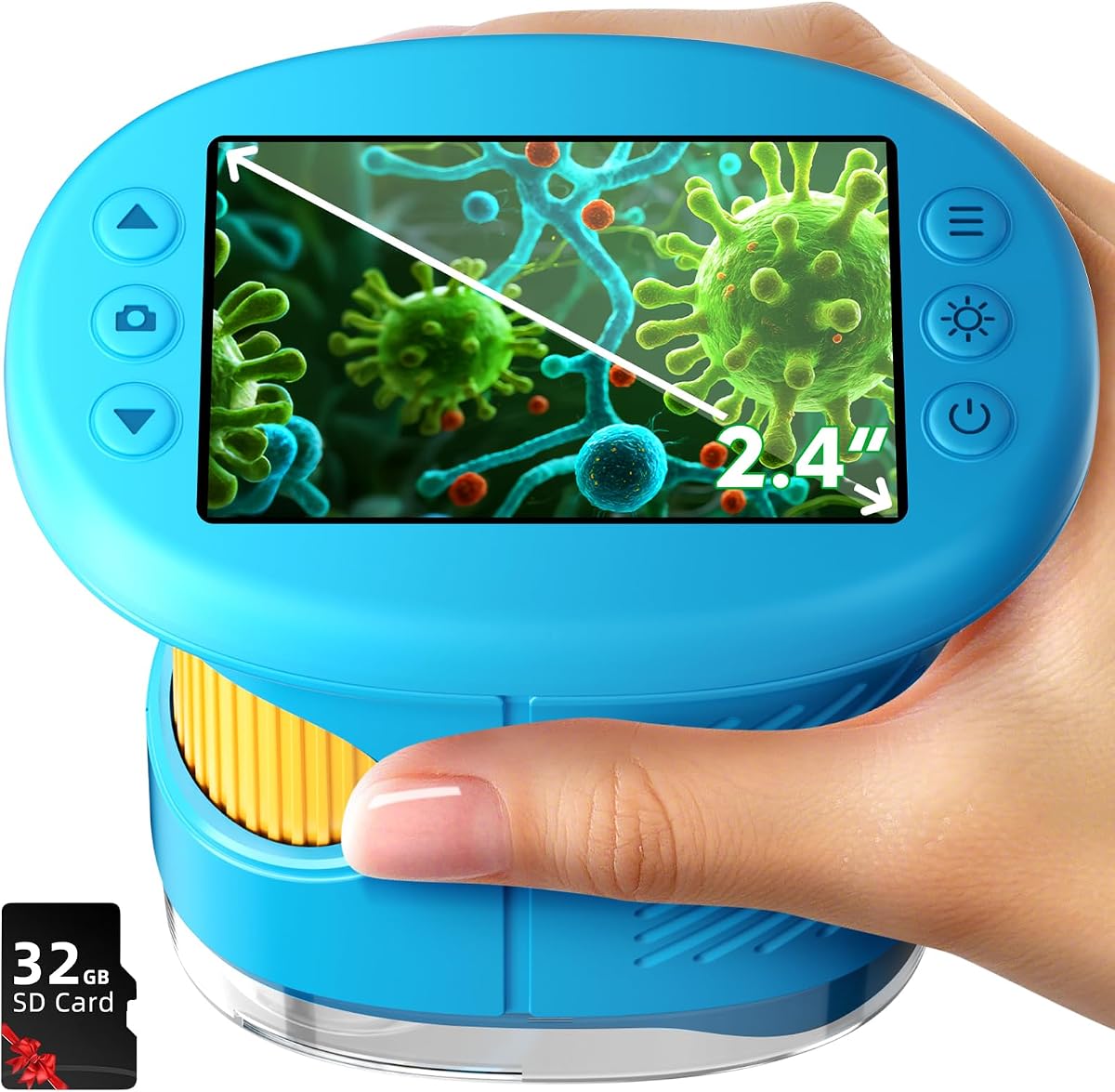
This device is specifically designed to inspire young explorers with a built-in screen that avoids the need for external connections. It comes with everything needed to start learning immediately.
We may earn a commission when you buy through this link, at no additional cost to you.
The 4K camera ensures that images captured are sharp enough to show details like insect legs or leaf veins clearly. Kids can view photos directly on the small screen without needing a computer.
While it is robust for children the features are simplified compared to professional models. It lacks advanced connectivity but excels at making science accessible and fun.
It is the ideal gift for kids interested in biology. Parents will appreciate the durability and the educational value it brings to nature study.
Includes slides and accessories so children can start exploring right out of the box.
Simple buttons and a clear screen make operation easy for younger users.
We may earn a commission when you buy through this link, at no additional cost to you.
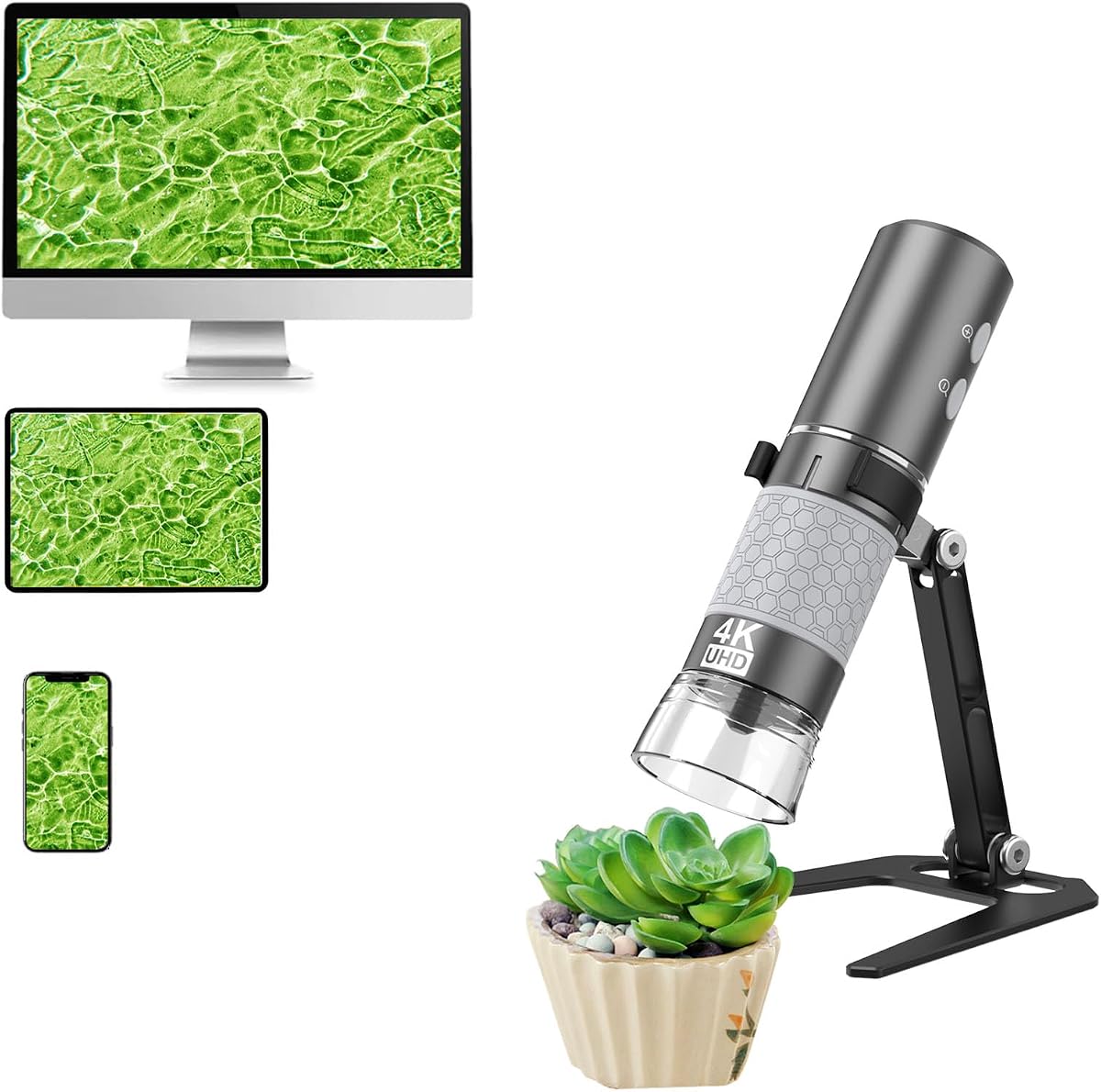
This model bridges the gap between handheld convenience and high-resolution imaging. Its ability to transmit 4K images wirelessly makes it great for presentations or detailed analysis.
We may earn a commission when you buy through this link, at no additional cost to you.
The 4-hour battery life ensures you can spend a full day in the field without needing a charger. This is essential for extended insect collection trips or outdoor study.
While many phones cannot display true 4K the sensor captures high-quality data for later review. The bracket allows for steady shots which is helpful when photographing moving subjects.
It is a versatile choice for students who need high-quality images for projects. If connectivity and battery life matter this is a strong contender.
Extended battery life allows for uninterrupted exploration throughout the day.
4K imaging ensures that fine details are recorded for educational purposes.
We may earn a commission when you buy through this link, at no additional cost to you.
Designed for portability this microscope fits easily in a pocket for field trips. It is built with safety in mind ensuring it is durable enough for young hands.
We may earn a commission when you buy through this link, at no additional cost to you.
The anti-shake design helps maintain a clear image even when the user is moving. This is crucial when observing insects that might be active on leaves or soil.
While the screen is small it is bright enough to see details clearly in most lighting conditions. The USB export feature allows for easy transfer to a computer for reports.
It is best for casual exploration where convenience is key. If you need a device to carry everywhere this is a reliable option.
Safety certified materials ensure the device withstands typical classroom or outdoor use.
Design features help reduce blur making it easier to focus on small insects.
We may earn a commission when you buy through this link, at no additional cost to you.
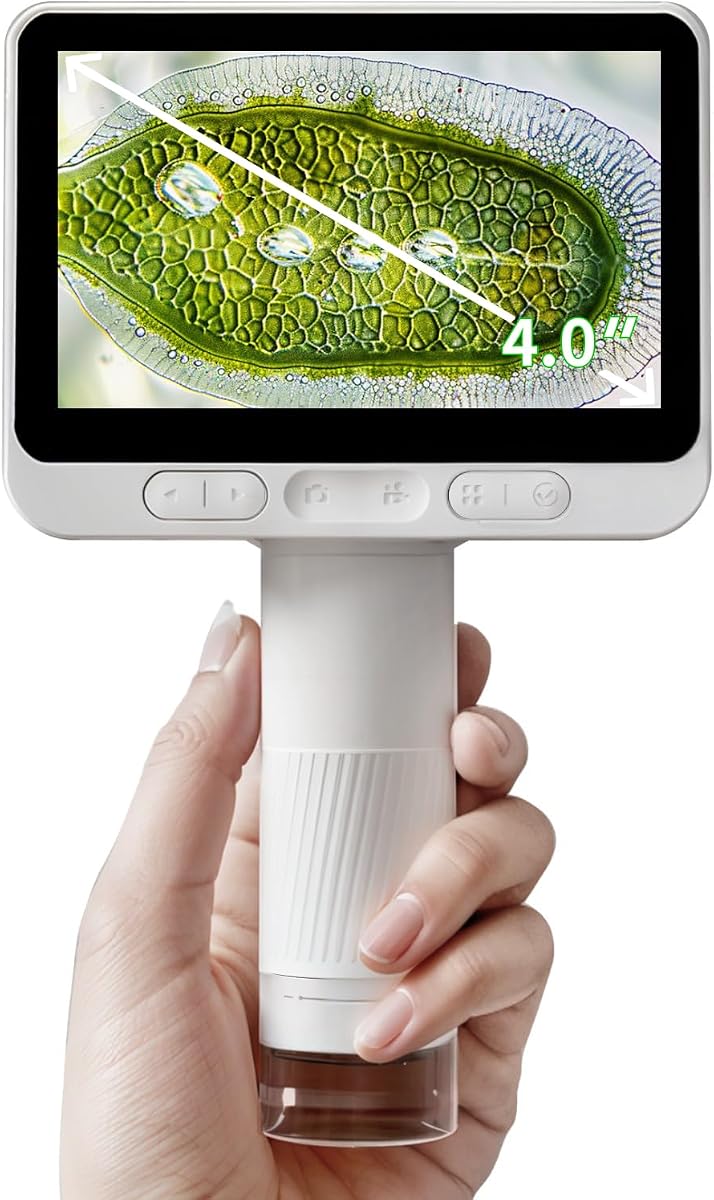
The standout feature here is the 4-inch display which makes viewing details much easier than smaller screens. This reduces eye strain and allows groups to observe together.
We may earn a commission when you buy through this link, at no additional cost to you.
With 1600X magnification you can see significant details like insect eyes or skin textures. The HD video capability means you can record behavior for later study.
While slightly bulkier than other options the larger screen justifies the size. It is a great balance between handheld utility and desktop viewing.
It is ideal for students who want a clear view without connecting to a computer. If screen size is a priority this model leads the category.
The large IPS screen provides vibrant colors and a wide viewing angle.
High magnification allows for detailed inspection of small biological structures.
We may earn a commission when you buy through this link, at no additional cost to you.
This device prioritizes simplicity and ease of use for young explorers. It is designed to be picked up and used immediately without complex setup steps.
We may earn a commission when you buy through this link, at no additional cost to you.
The 8 LED lights with adjustable brightness ensure that images are well lit even in shaded areas. This is helpful when observing insects in dense foliage or dark corners.
While it lacks advanced connectivity options it covers the basics well for a low cost. The battery life is sufficient for typical outdoor sessions.
It is a great secondary microscope for family use. If you need an affordable tool for occasional nature study this is a solid choice.
Minimal setup allows kids to start exploring immediately without frustration.
Adjustable LEDs help compensate for poor natural light in outdoor environments.
We may earn a commission when you buy through this link, at no additional cost to you.
This model introduces AI-driven auto-focus which simplifies the observation process significantly. It is particularly useful for dynamic subjects that move during viewing.
We may earn a commission when you buy through this link, at no additional cost to you.
The 8-inch screen provides a desktop-like experience in a portable form factor. This allows for clear viewing of multiple details without connecting to an external monitor.
While primarily designed for electronics repair its imaging capabilities are excellent for insect study. The split-screen feature allows for comparing specimens side by side easily.
It is best for indoor detailed work where portability is less critical. If you value advanced features and display size this model offers a unique experience.
Automated focusing adjusts quickly to maintain clarity on moving or uneven specimens.
A large screen reduces eye strain and improves visibility of fine details.
We may earn a commission when you buy through this link, at no additional cost to you.
This model focuses on broad compatibility ensuring it works with almost any device. It is a versatile tool for mixed environments with different types of computers or phones.
We may earn a commission when you buy through this link, at no additional cost to you.
The 4K resolution provides crisp images that are suitable for digital presentations. The wide-angle feature helps capture whole insects without needing to stitch images together.
Setup can be a bit tricky due to the various connection methods. Once connected however the performance is reliable for general observation tasks.
It is a good choice for users with multiple devices. If connectivity flexibility is your main concern this is a strong option.
Works with a wide range of operating systems and devices.
Allows for capturing full specimens in a single frame.
We may earn a commission when you buy through this link, at no additional cost to you.
Selecting the right digital microscope involves considering several key factors to ensure it meets your specific needs for insect study.
Magnification determines how close you can see. For studying insects you typically need between 100X and 1000X. Higher magnification reveals cellular details but reduces the field of view which can make it harder to locate specimens.
Choose a model with a range that allows you to see both the whole insect and specific parts.
Camera quality affects how clear your images and videos will be. Look for at least 1080P resolution to ensure details like wing veins or hair patterns are visible. Higher resolution helps with saving evidence for school projects.
Higher resolution is better for recording detailed observations.
If you plan to take the microscope outdoors weight matters. Handheld models are easier to carry during field trips. Desktop models offer stability but are heavier and less convenient for travel.
Select a lightweight option if you need to move it frequently.
Decide if you need WiFi for mobile viewing or USB for computer connection. WiFi allows you to use your phone as a screen but may have lag. USB provides a stable connection for detailed analysis.
Ensure the connection type matches your devices and usage style.
Good lighting is essential for clear images. Many models come with built-in LEDs. Adjustable brightness helps prevent glare on shiny surfaces like insect shells.
Look for adjustable lights to handle different environments.
For children or field work a durable build is key. Plastic housings are lighter and safer while metal stands are more stable. Check for safety certifications if buying for young users.
Choose a build that matches the expected handling conditions.
Consider how easy it is to set up. Some models require app installation which can be frustrating. Others offer direct viewing screens which are simpler for immediate use.
Select a user interface that fits the skill level of the users.
Check if the kit includes slides or storage cards. Some models come with prepared specimens which are great for learning. Storage options ensure you can save your discoveries without extra costs.
A complete kit saves money and time on additional purchases.
To begin use your digital microscope place the insect on a flat surface or slide. Ensure the device is turned on and connected to your display or mobile app. Adjust the focus wheel until the image is clear and stable.
Keep the lens clean by using a soft cloth to wipe off dust. Avoid touching the glass surface with your fingers to prevent smudges. Proper storage in a protective case will extend the life of the device.
Charge the battery fully before outdoor trips to avoid interruptions. Regularly update the software if connected to a computer to ensure compatibility. With proper care your microscope will serve you well for many observations.
Yes you can observe live insects by placing them in a ventilated container. Ensure the lighting does not overheat the specimen. Most digital models allow video recording to capture movement.
For compound eyes a magnification of 200X to 500X is usually sufficient. Higher magnification may make it difficult to see the whole structure. Adjust based on the size of the insect.
Most devices connect via USB cable to a PC or Mac. You may need to install drivers provided by the manufacturer. Check the manual for specific steps for your operating system.
Some models work with standard photo software but others provide custom apps for advanced features. Check compatibility with your device before purchasing. Basic viewing often does not require extra tools.
Handheld models often last between two to four hours on a full charge. This is enough for a day of outdoor study. Check specifications if you need longer usage times.
Most models are designed with safety in mind using durable materials. Ensure supervision during setup to avoid eye strain. Look for non-toxic certifications if buying for younger children.
Yes most models allow you to save media to an SD card or device storage. You can then transfer files to a computer for sharing. Ensure you have enough space for your collection.
Focal length varies by model but typically ranges from a few millimeters to a few centimeters. Adjust the distance carefully to keep the image sharp. Too close may result in a blur.
Our top picks cover a range of needs from budget-friendly options to advanced premium models. Each device offers unique strengths depending on whether you value portability or high-resolution imaging.
Prioritize features like magnification and connectivity based on how you plan to use the tool. Consider your users whether students or hobbyists to find the best fit.
Prices and availability change frequently so always check current listings before purchasing. This ensures you get the best value for your investment in scientific exploration.