
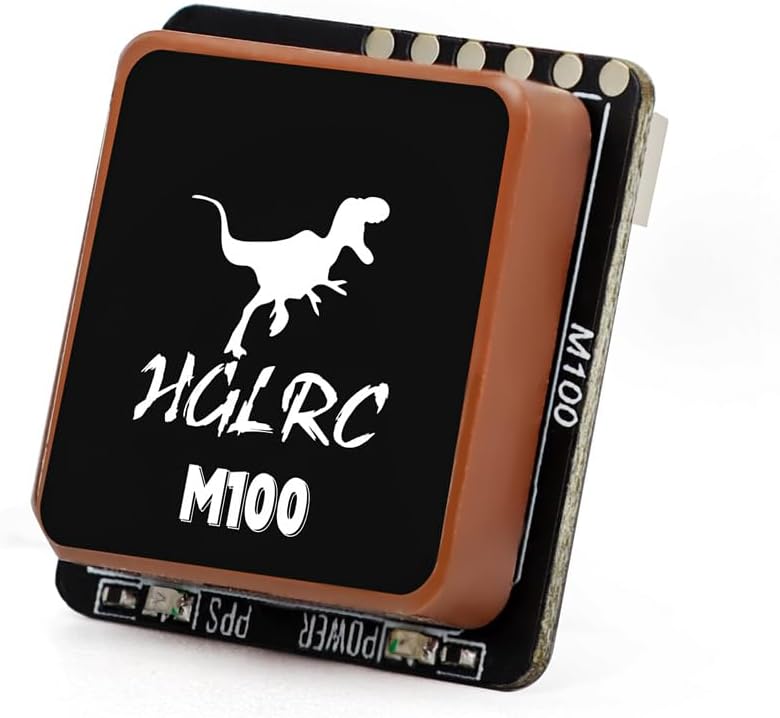
HGLRC Mini M100 GPS Module
4.6Editor score
Supports 3.3V to 5V input
Fits 2 to 7 inch drones
Onboard power indicator lights
This guide compares the top 10 GPS modules for drones in October 2026 to help you find reliable positioning for FPV racing fixed-wing and autonomous flight
GPS modules are essential components for modern drone flight controllers providing accurate positioning and navigation data. A good module ensures reliable return to home functions and stable flight paths even in challenging environments with signal interference.
We compared ten top-rated GPS units based on chip generation signal stability compass integration and flight controller compatibility. Our analysis focuses on real-world performance metrics and ease of installation for various drone configurations.
Each pick highlights specific strengths and ideal use cases for different pilot needs. Please note that product availability and pricing can change frequently so verify current details before making your final purchase decision.
4.6Editor score
4.8Editor score

This side-by-side comparison highlights the key specifications and features of each module to help you make an informed decision for your specific drone build requirements and flight controller setup.


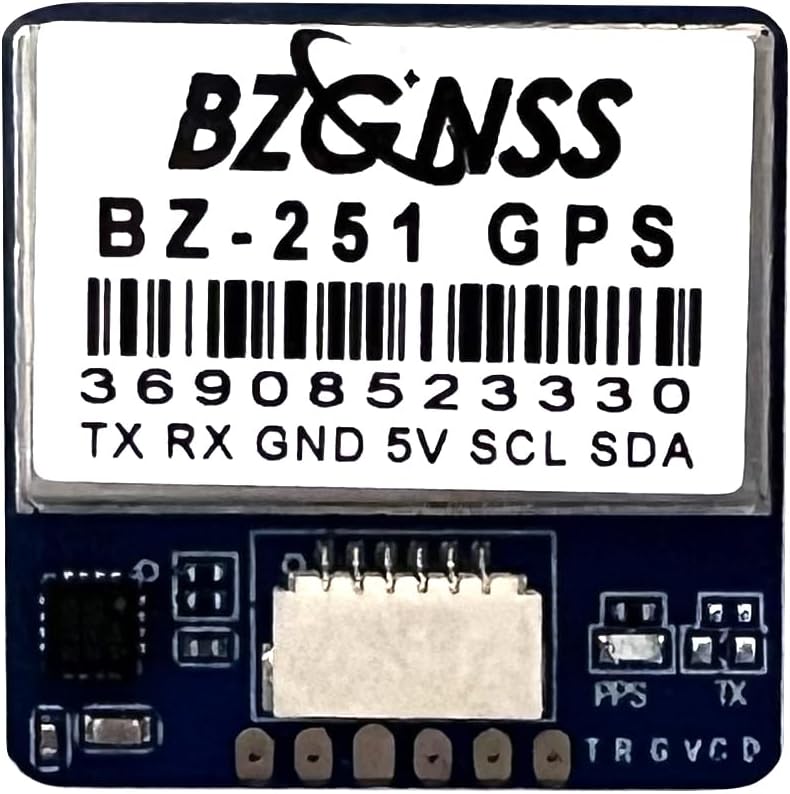


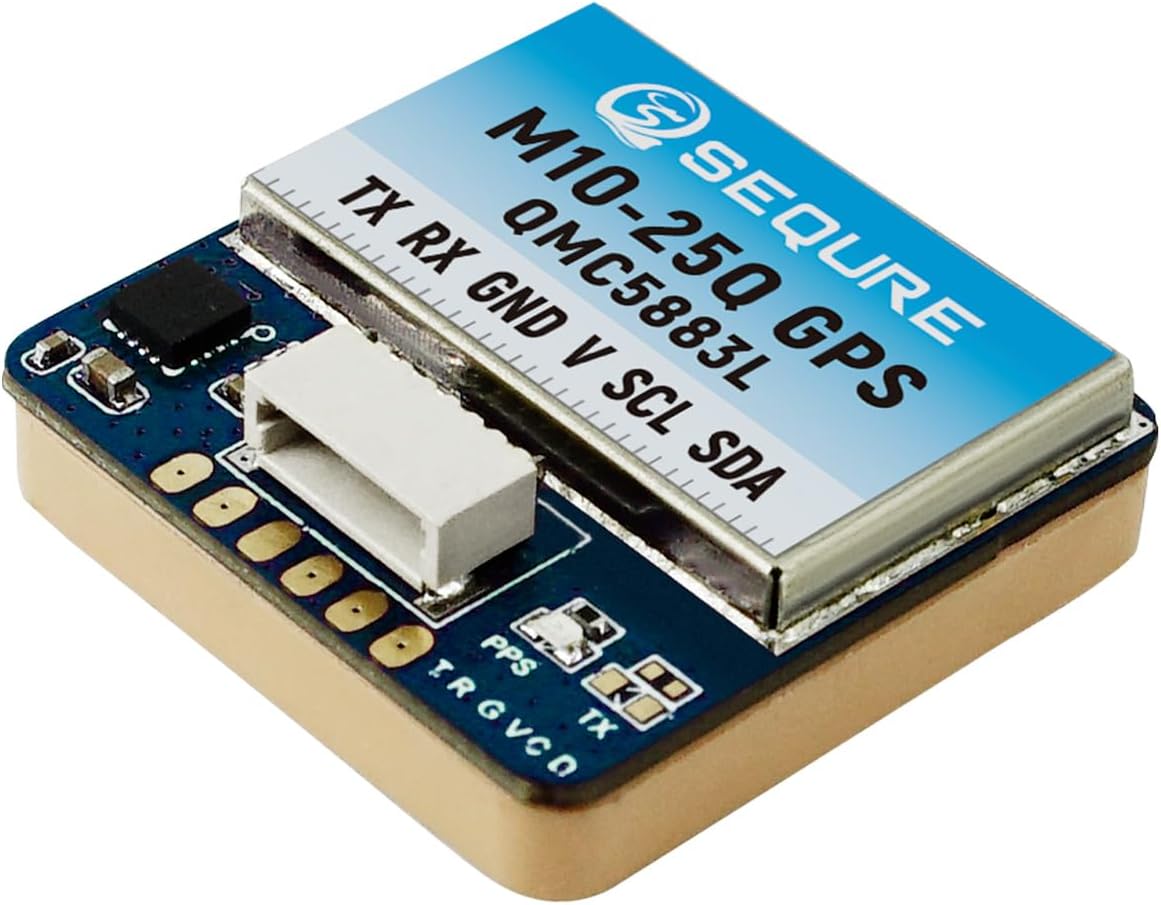
This module stands out for its upgraded 10th generation chip which promises faster satellite acquisition times. It carries a strong rating among users who need reliable positioning for FPV fixed-wing UAVs where stable navigation is key.
We may earn a commission when you buy through this link, at no additional cost to you.
The QMC5883L compass ensures accurate heading data which is critical for autonomous flight modes. With the receiving channel expanded to 120 channels it can lock onto more satellites quickly even in areas with some signal obstruction.
While the manufacturer notes compatibility with fixed-wing drones users should verify their specific flight controller supports the UBLOX protocol to ensure smooth integration. The size is compact but antenna placement remains vital for signal integrity.
Pilots looking for a balance of performance and compatibility for fixed-wing builds will find this module a solid choice. It offers the reliability needed for long-range missions without excessive complexity in setup.
The new chip design significantly reduces the time required to establish a GPS lock before takeoff.
Built-in compass support eliminates the need for separate heading modules in many compact setups.
We may earn a commission when you buy through this link, at no additional cost to you.
This module is designed for FPV fixed-wing UAVs and features the same upgraded 10th generation chip as its siblings. Users appreciate its ability to quickly complete satellite search thanks to support for GPS Galileo and BDS systems.
We may earn a commission when you buy through this link, at no additional cost to you.
The carefully modulated ceramic antenna helps maintain stable signal reception which is vital for long duration flights. Weighing only 7.73 grams it adds minimal burden to the aircraft payload allowing for better flight times.
While it is small and exquisite in design the 21mm square footprint might require careful planning in tight frames. The QMC5883 compass ensures accurate positioning but proper mounting away from motor interference is recommended.
Pilots prioritizing speed of acquisition and weight savings should consider this option. It delivers consistent performance for those building fixed-wing platforms that require precise navigation without heavy components.
Supporting GPS Galileo and BDS simultaneously increases the chance of a quick lock in any geographic area.
At under 8 grams this module helps preserve battery life and flight duration for fixed-wing missions.
We may earn a commission when you buy through this link, at no additional cost to you.
This module targets FPV racing drones from 2 to 7 inches with a design that prioritizes compactness and ease of integration. It offers a reliable solution for pilots who need GPS capabilities without breaking the budget.
We may earn a commission when you buy through this link, at no additional cost to you.
The selected ceramic antenna and expanded PCB ensure signal reception remains steady during high-speed maneuvers. Onboard power and PPS indicator lights make it easy to confirm working status at a glance during checks.
While it supports a wide power input range from 3.3V to 5V users must ensure their flight controller UART pins are configured correctly for UBLOX data. The small footprint is ideal for racing frames where space is scarce.
Pursers looking for a cost-effective entry into GPS-enabled racing or freestyle builds will find this module excellent. It balances performance with size to keep the drone light and fast while maintaining essential navigation data.
Supporting 3.3V to 5V input means it can plug into various flight controller voltage rails easily.
The small form factor ensures it fits cleanly in 2 to 5 inch frames without blocking other components.
We may earn a commission when you buy through this link, at no additional cost to you.
This module is engineered for FPV racing drones with a 10th generation chip that delivers fast satellite positioning. It supports dual protocol connections which allows users to choose between soldered or plug-and-play setups easily.
We may earn a commission when you buy through this link, at no additional cost to you.
The ceramic antenna and expanded PCB design ensure stable signal reception even in challenging environments. With support for GPS GLONASS BDS GALILEO SBAS and QZSS you can tailor the positioning modes to your project needs.
While the dual connection methods offer convenience the soldered option requires careful wiring to avoid shorts during installation. The 10Hz output frequency provides smooth real-time data which is essential for high-speed navigation systems.
Pilots who value flexibility and precision will appreciate the versatility of this unit. It is a top pick for those who want a reliable system that grows with their flight controller capabilities and mission requirements.
Supporting both NMEA and UBX allows compatibility with a wider range of flight controllers.
The 10Hz refresh rate ensures your flight controller gets location updates frequently for smoother control.
We may earn a commission when you buy through this link, at no additional cost to you.
This module is a robust choice for Pixhawk and PX4 users needing high-sensitivity navigation for autonomous flight. The 72-channel Ublox M8N chip tracks multiple satellite systems simultaneously to ensure fast locks and precise location data.
We may earn a commission when you buy through this link, at no additional cost to you.
It supports GPS GLONASS BeiDou and QZSS to deliver sub-meter accuracy under ideal conditions. The blue LED status indicator simplifies troubleshooting by showing lock status clearly during pre-flight checks and missions.
While the included 270mm cable is convenient for mounting on larger aircraft it might be excessive for small racing builds. Note that some PIX models require a firmware update to work correctly and it is not compatible with APM without changes.
Users building professional or heavy-lift drones will find this module delivers the reliability required for complex missions. The wide temperature range and built-in compass provide stability even in varying environmental conditions.
Tracking over 26 satellites ensures continuous data even in areas with partial sky visibility.
Designed specifically for Pixhawk and PX4 systems to integrate seamlessly with advanced flight stacks.
We may earn a commission when you buy through this link, at no additional cost to you.
Designed specifically for Pixhawk 2.4.8 controllers this module ensures compatibility and performance for dedicated users. It offers a new generation M10 GPS solution with low power consumption and high precision for reliable navigation.
We may earn a commission when you buy through this link, at no additional cost to you.
The onboard FLASH memory saves configuration modifications so settings persist even when the power is turned off. This feature simplifies setup and maintenance for users who prefer not to reconfigure after each reboot.
While it provides a solid 1.5m CEP accuracy it is important to note that it cannot work with other flight controllers. Proper mounting and external compass integration are essential to maximize performance.
Pilots building or maintaining Pixhawk 2.4.8 platforms will appreciate the plug-and-play nature of this unit. It eliminates compatibility issues and offers a straightforward path to adding reliable GPS capabilities to your system.
Onboard FLASH memory ensures your configuration remains intact without needing constant reconfiguration.
Efficient power usage helps preserve battery life during long testing sessions or missions.
We may earn a commission when you buy through this link, at no additional cost to you.
This module uses the latest u-blox M10 chip to ensure fast and stable satellite locks in complex signal environments. It provides critical location data to flight controllers to enable reliable failsafe return to home functions for safety.
We may earn a commission when you buy through this link, at no additional cost to you.
The default GPS GLONASS and BDS joint positioning offers high 2D accuracy of 1.5m for confident navigation. Its durable oil-sprayed ceramic antenna prevents scratching and oxidation ensuring long-term signal stability over time.
Supporting both NMEA and UBX protocols it offers versatility for various FPV drone rescue setups. The 10Hz refresh rate ensures real-time positioning which is essential for high-speed return to home maneuvers.
Pilots building aircraft that require robust safety nets will find this module a reliable partner. It balances durability with performance to keep your RC aircraft protected during unexpected flight conditions.
The failsafe capabilities ensure the aircraft can return home automatically if signal or power is lost.
Oil-sprayed coating on the antenna protects against environmental wear for consistent performance.
We may earn a commission when you buy through this link, at no additional cost to you.
Designed for RC FPV drone racing and long-range flight this module ensures precise and dependable location data. Its dual protocol compatibility makes it suitable for various devices including popular F405 and F722 flight controllers.
We may earn a commission when you buy through this link, at no additional cost to you.
The compact and lightweight design makes mounting on any RC airplane or fixed-wing aircraft a breeze for setup. The built-in battery feature helps eliminate issues from poor battery connections that can cause signal interruptions.
While the quick satellite lock is a major benefit users should ensure the flight controller is configured for the chosen protocol. Supporting BDS satellites enhances positioning accuracy especially in regions where GPS signals are sparse.
Pilots focusing on range and endurance will appreciate the reliability and ease of integration. It is a solid choice for those who want a proven module that integrates smoothly with modern speedybee ecosystems.
Dual protocol support allows seamless integration with NMEA and UBX systems for flexible use.
Built-in battery support minimizes signal dropouts due to power fluctuations during flight.
We may earn a commission when you buy through this link, at no additional cost to you.
This module uses an M9 chipset to support multiple constellations including GPS GLONASS Galileo and BeiDou for accuracy. Its 20x20mm size makes it ideal for FPV racing drones where space and weight are critical for performance.
We may earn a commission when you buy through this link, at no additional cost to you.
An integrated IST8310 magnetic compass provides reliable heading data for improved directional control in complex conditions. The blue LED indicator provides real-time feedback making it easy to verify fix status during pre-flight checks.
While it consumes just 80mA of power to stay energy efficient the chip generation is slightly older than newer M10 models. It is designed to operate from -20C to 80C to ensure stability in various weather conditions.
Piloters operating in urban canyons or forests will appreciate the multi-constellation support. It offers a compact solution that delivers robust navigation data without adding bulk to the drone frame.
Multi-constellation support helps maintain lock even when satellite lines of sight are blocked by buildings.
Built-in heading data simplifies wiring and reduces the need for external compass modules on board.
We may earn a commission when you buy through this link, at no additional cost to you.
This module is suited for drones and robotics with a 10th generation chip that delivers fast and accurate positioning. It features a high-gain antenna to ensure optimal performance in challenging conditions like urban areas.
We may earn a commission when you buy through this link, at no additional cost to you.
The built-in flash memory saves user settings for hassle-free operation which eliminates the need for reconfiguration after power cycles. Weighing just 12g it is light enough for easy integration into various drone platforms.
With support for GPS GLONASS BeiDou and Galileo you can track up to 32 satellites for enhanced accuracy. The integrated compass sensor enhances orientation accuracy ensuring reliable flight control and motion tracking.
Developers and hobbyists building autonomous systems will find this module offers the data consistency needed. It balances performance with convenience to simplify setup and ensure reliable navigation across different project types.
The design supports both aerial and ground robotics for versatile positioning needs beyond just flight.
Saved settings mean you do not need to reconfigure every time the power is cycled.
We may earn a commission when you buy through this link, at no additional cost to you.
Selecting the right GPS module involves evaluating chip generation protocol support and compatibility with your flight controller to ensure stable navigation and reliable failsafe functions.
Newer 10th generation chips like u-blox M10 offer faster satellite acquisition and better signal stability in difficult environments. Older chips such as M9 or M8N may be sufficient for basic needs but can struggle with urban canyons.
Prioritize 10th generation chips for reliable performance in complex signal environments.
Check if your flight controller supports NMEA or UBX protocols. Dual protocol modules provide flexibility for various systems like INAV Betaflight ArduPilot and PX4 without requiring firmware changes.
Choose a dual protocol module to maximize compatibility with different flight stacks.
Modules with built-in compasses reduce wiring complexity and ensure accurate heading data. Look for models with QMC5883L or IST8310 sensors which are reliable for orientation data.
Integrated compasses save space and simplify installation for compact drone builds.
Ceramic antennas are standard for GPS modules due to their durability and signal quality. Ensure the antenna is mounted away from metal parts and interference sources like motors.
Secure ceramic antennas provide consistent signal strength during flight.
A 10Hz update rate is ideal for FPV racing and high-speed autonomous flight to ensure smooth real-time navigation data. Lower rates may cause lag in return to home functions during dynamic maneuvers.
Aim for at least 10Hz output frequency for responsive navigation.
Compact modules weighing under 15 grams are better for racing drones to maintain performance. Ensure the physical footprint fits your frame without obstructing other components.
Lightweight modules preserve flight duration and agility.
Verify that the module is compatible with your specific controller. Pixhawk systems often require specific wiring and pinouts while Betaflight users need UART configuration.
Confirm controller compatibility before purchase to avoid integration issues.
Modules that support precise location data enable robust failsafe return to home functions. This is critical for long-range missions where losing control is a risk.
Prioritize modules with accurate positioning to enable reliable safety features.
Install the GPS module as far as possible from motors and power wires to reduce magnetic interference. Mount it on a plastic bracket or dedicated extension board for best signal quality.
Configure your flight controller to recognize the GPS protocol and set the baud rate correctly. Most modern modules work with 115200 baud for UBX and 57600 for NMEA outputs.
Keep the antenna clean and unobstructed during flight. Avoid storing your drone near strong magnetic fields when not in use to preserve compass calibration.
Yes they provide accurate position data that enables failsafe functions like return to home. This is vital for avoiding lost aircraft during long-range or autonomous flights.
Most modern modules support Betaflight via UART connection. Ensure your controller has available UART pins and configure the serial receiver correctly in the Betaflight Configurator.
Ideally you need at least 10 satellites for a stable 3D fix. More satellites improve accuracy and allow for better navigation in challenging environments.
Check wiring connections baud rate and protocol settings. Interference from motors or loose wiring can also cause signal dropouts during preflight checks.
Modules with built-in compasses do not need external ones unless you need extreme precision. Separate compasses add weight and complexity to the flight system.
Use a USB to UART bridge and software like u-center to access internal settings. Most modules also support persistent settings via onboard flash memory.
GPS refers specifically to the US satellite network while GNSS supports multiple constellations including GLONASS Galileo and BeiDou for better global coverage.
Yes many racing modules are designed to be compact and lightweight. GPS enhances safety for long range freestyle missions without sacrificing speed.
The top picks for GPS Modules for Drones cover a range of needs from budget-friendly units to advanced options for autonomous flight.
Prioritize chip generation protocol compatibility and antenna quality to ensure reliable navigation for your specific drone type.
Always check current pricing and availability before ordering to secure the best deal for your build.